

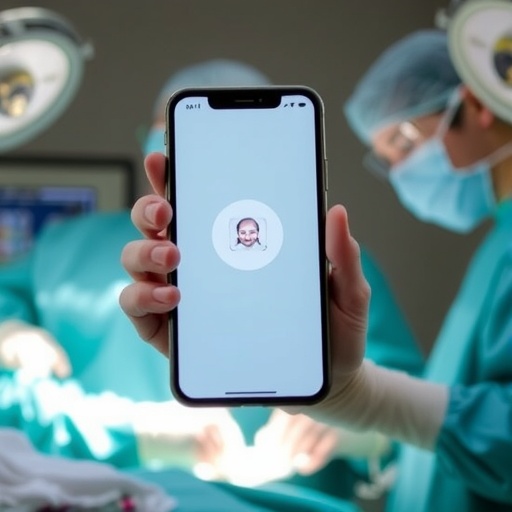
In an era where mobile applications are transforming various fields, a groundbreaking development in medical education has emerged. The SurgeryMate app is making headlines as a pioneering tool designed specifically for training medical professionals on surgical instruments and operating room equipment. This innovative application, recently evaluated by a team of researchers led by Rezayi et al., offers a unique approach to enhancing the knowledge and skills of future surgeons and operating room staff.
Surgical training has long required a blend of theoretical knowledge and practical experience. Traditionally, this involved long hours in the operating room, shadowing experienced surgeons, and a significant commitment to memorizing various surgical instruments and their uses. However, as the demands of medical education evolve, so too does the need for more efficient training methods. The SurgeryMate app promises to bridge this gap by providing a comprehensive, interactive platform for users to familiarize themselves with surgical tools and the nuances of equipment used in the operating room.
The development of the SurgeryMate app reflects a growing trend towards the application of digital technology in medical education. Researchers have focused their efforts on creating a user-friendly interface that caters to the needs of medical students and professionals alike. With clear visual representations and detailed descriptions of instruments, users can build their knowledge base at their own pace, supplementing their hands-on training with theoretical resources available at a fingertip.
One of the most significant advantages of the SurgeryMate app is its ability to provide immediate feedback to users. Unlike traditional manual methods of testing knowledge that can be somewhat stagnant and limited in scope, the app incorporates interactive quizzes and assessments that allow users to gauge their understanding of various topics in real-time. By employing adaptive learning techniques, the app personalizes the user experience, catering to individual learning styles and progress rates. This immersive experience is key to reinforcing information retention and building a stronger foundational knowledge of surgical instruments.
The research team assessed the app’s efficacy through a series of studies, analyzing its impact on medical students’ understanding of surgical instruments. The results were compelling, indicating a marked improvement in the participants’ confidence and competence when handling surgical tools. Students expressed a greater comfort level when entering operating rooms, armed with the knowledge amassed through the app, which demonstrated the potential of technology to reshape how surgical training is approached.
Another critical aspect of the SurgeryMate app is its potential for increased accessibility. With a growing number of medical professionals, particularly in underserved regions, there is an urgent need for effective educational tools that can be accessed remotely. The app enables medical professionals regardless of geographic location to gain valuable insights into surgical instruments and techniques, thus equalizing the playing field in terms of surgical education. This democratization of knowledge could foster better surgical outcomes on a global scale.
Moreover, the SurgeryMate app is designed with continuous updates in mind, ensuring that the information provided remains current and relevant. In a field as dynamic as medicine, where new techniques and instruments are constantly being introduced, the ability to frequently refresh content is invaluable. Users can expect regular updates that include the latest advancements in surgical practices, tool innovations, and operational protocols, allowing for lifelong learning that extends beyond the confines of formal education.
The user engagement metrics following the release of the app have been impressive as well. Initial feedback reveals that users enjoy the gamification elements integrated into the app, which enhance the learning experience. By incorporating elements of competition and achievement, users are more motivated to interact with the material, leading to increased usage rates and, subsequently, better knowledge acquisition. The balance of fun and education creates a non-intimidating atmosphere that encourages exploration and curiosity.
While the major objective of the SurgeryMate app is grounded in surgical education, there’s hope that its successful implementation could pave the way for similar applications across other medical fields. As healthcare increasingly relies on interdisciplinary collaboration, tools that educate various specialties about each other’s instruments and practices can lead to a more integrated approach to patient care. The SurgeryMate concept could set a precedent, inspiring other developers to create training platforms tailored to different branches of medicine.
Despite the clear advantages the SurgeryMate app offers, it is essential to acknowledge that technology is not a replacement for hands-on experience. Instead, it should be viewed as a complementary tool—one that enhances traditional methods of training. Just as flight simulators are vital for pilot training, the SurgeryMate app can prepare future surgeons for the complexities they will face in real operating room settings. The convergence of traditional training methods with modern technology represents a fusion that empowers upcoming generations of medical professionals.
As the SurgeryMate app continues to gain traction, it will be fascinating to observe its long-term impact on surgical training and patient outcomes. The implications of improved surgical education are monumental, potentially resulting in fewer errors, reduced surgical times, and enhanced patient care quality. By investing in the education of surgical teams through innovative technology, the healthcare industry is taking a significant step toward better health futures.
As digital tools like the SurgeryMate app gain footing in medical education, it raises broader questions about the future of training in other high-stakes environments. Will we see more applications designed for paramedics, nurses, or even mental health professionals in the coming years? The prospects are promising, and one thing is sure: the integration of technology and education in healthcare is undoubtedly a path worth exploring.
With its innovative approach to surgical training, the SurgeryMate app is poised to change the landscape of medical education. Its development highlights the potential of digital platforms in creating more informed, confident, and skilled medical professionals. As the app evolves and expands its reach, it will be essential to monitor its adaptation to user needs and the broader medical community’s response. This fusion of technology and training could be what is needed to advance medical education and ultimately improve healthcare outcomes around the world.
By placing cutting-edge education into the hands of aspiring surgeons, the SurgeryMate app reinforces the notion that the future of medical training lies in skillful merging of tradition with innovation. As we move into this new era, the potential for enhancing patient care through improved surgical education has never been more conceivable.
Subject of Research: Surgical education and training methods through mobile applications.
Article Title: SurgeryMate app: developing and evaluating a training app for surgical instruments and operating room equipment.
Article References:
Rezayi, S., Zare, Z., Ashrafi, A.S. et al. SurgeryMate app: developing and evaluating a training app for surgical instruments and operating room equipment. BMC Med Educ (2026). https://doi.org/10.1186/s12909-026-08586-0
Image Credits: AI Generated
DOI:
Keywords: Surgical education, mobile applications, training, medical professionals, digital technology, healthcare innovation, knowledge acquisition, patient care.


