


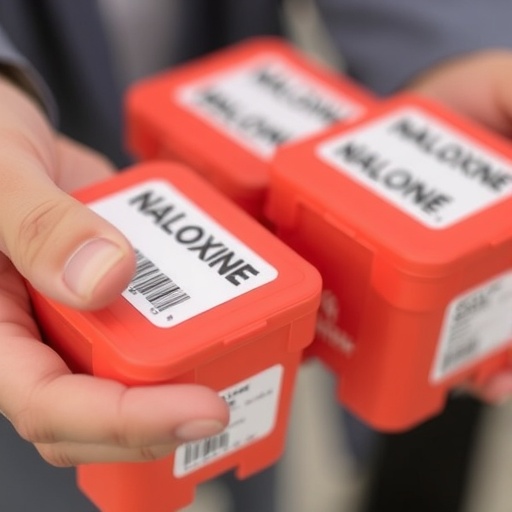
A recent study published in the Canadian Medical Association Journal emphasizes the crucial role of strategically placed naloxone kits in reducing fatalities associated with opioid overdoses. Opioid poisoning has emerged as a pressing public health crisis, particularly in urban centers such as Vancouver, British Columbia. The research presents compelling evidence that optimizing the placement of these life-saving kits can significantly enhance their accessibility, ultimately saving lives in the community.
Naloxone, an opioid antagonist, is essential for reversing the effects of opioid overdoses. By making naloxone available in high-risk areas, it becomes easier for bystanders to administer the drug during emergencies. The study, led by Dr. K.H. Benjamin Leung and his team, focuses on public-access naloxone kits and strategically maps their deployment based on historical data and geospatial analysis. The findings indicate that intentional placements of naloxone kits can address gaps in coverage and respond effectively to opioid-related emergencies.
For the study, researchers analyzed over 14,000 opioid poisoning incidents that occurred over a six-year span. They compared various strategies for the placement of naloxone kits, assessing their effectiveness in reducing fatalities from these incidents. The researchers visited existing naloxone distribution sites, as well as potential new locations such as public transit stations and well-frequented commercial areas. Within the scope of their analysis, they formulated guidelines for optimal placement, utilizing criteria inspired by existing optimization strategies employed for automated external defibrillators.
Notably, the study suggests that naloxone kits placed at public transit locations yield the highest efficiency in terms of coverage. This strategic placement minimizes the number of kits required to effectively serve the population, maximizing the potential to save lives during critical moments. The researchers propose that implementing similar optimization techniques can lead to more strategic deployment of naloxone and potentially save numerous lives, particularly in areas where traditional distribution methods fall short.
By ensuring that naloxone kits are prominently displayed and accessible at transit stations, the authors advocate for a dual approach: combining public placements with existing take-home naloxone programs. These programs already provide free naloxone to community members, and reinforcing their locations with optimized transit placements could create a comprehensive safety net for individuals at risk of opioid overdose. The primary goal is to revolutionize how naloxone is distributed and accessed, especially in urban areas where opioid use is prevalent.
Dr. Leung highlights the importance of addressing opioid poisonings—a public health concern that affects countless individuals and their families. He underscores that an optimization strategy can pinpoint areas experiencing the highest concentration of overdoses and facilitate efficient naloxone kit placement. This proactive approach can ultimately lead to an increase in the availability of life-saving interventions in the most critical zones.
Accessibility plays a pivotal role in the success of public-access naloxone programs. The authors stress that kits must be available 24/7, suggesting that exterior placements, complemented by clear signage, can significantly improve access. Their recommendations center around ensuring the kits are always within reach, thereby reducing any barriers to timely assistance during emergencies.
Furthermore, the researchers advocate for collaboration among local health authorities, transit agencies, and community organizations to implement their findings. An interdisciplinary approach, involving input from various stakeholders, could facilitate a more effective strategy, ensuring that key locations are prioritized for naloxone kit placement. The importance of community involvement is emphasized, as local residents often have valuable insights into high-risk areas where interventions are most needed.
As the opioid epidemic continues to escalate, innovative solutions for addressing this ever-evolving crisis are imperative. The findings from this study contribute to a growing body of evidence advocating for the efficacy of strategic placement in addressing public health challenges associated with drug use. The insights gained from this research could very well inform policy decisions in cities grappling with similar issues, potentially laying the groundwork for a nationwide campaign aimed at curbing opioid overdoses.
In addition to its immediate relevance, the research underlines the importance of continuous evaluation and adaptation of naloxone distribution methods. The opioid landscape is constantly changing, with patterns of use fluctuating and new substances emerging. This underscores the necessity for ongoing research and data collection to ensure that response strategies remain relevant and effective.
In conclusion, the study reinforces the notion that strategic naloxone placement has the potential to save lives by ensuring accessibility in communities heavily impacted by opioid use. The researchers’ findings serve as a call to action for decision-makers to optimize naloxone kit accessibility, ultimately providing a lifeline to those in critical need.
The authors hope that their research will spark discussions among public health officials, community leaders, and stakeholders to advocate for more targeted approaches in the fight against opioid-related deaths. There is a collective urgency to respond to this crisis, and leveraging the insights from studies such as this one may provide the tools necessary to implement transformative changes in public health strategies across the board.
Cite Scienmag News
Phoebe Ingram. (March 17, 2025). Enhancing Public Accessibility of Naloxone Kits: A Life-Saving Strategy. Scienmag. https://scienmag.com/enhancing-public-accessibility-of-naloxone-kits-a-life-saving-strategy/
Phoebe Ingram. "Enhancing Public Accessibility of Naloxone Kits: A Life-Saving Strategy." Scienmag, 17 March 2025, https://scienmag.com/enhancing-public-accessibility-of-naloxone-kits-a-life-saving-strategy/. Accessed 5 September 2026.
Phoebe Ingram. "Enhancing Public Accessibility of Naloxone Kits: A Life-Saving Strategy." Scienmag. March 17, 2025. https://scienmag.com/enhancing-public-accessibility-of-naloxone-kits-a-life-saving-strategy/


