


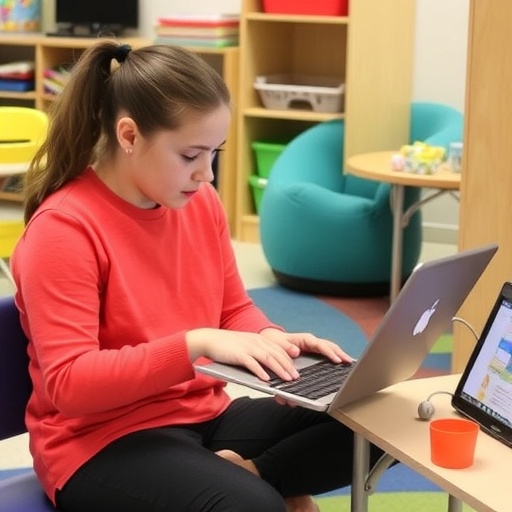
In the rapidly evolving landscape of education, the integration of assistive technology in preschool settings has garnered considerable attention. As early childhood educators strive to create inclusive environments for all children, the role of peer coaching becomes increasingly vital. A recent study published in the Early Childhood Educator Journal examines this pivotal topic through the lens of job-embedded peer coaching and its impact on the effective use of assistive technology within preschool classrooms. This research illuminates the perceptions of both teachers and peer coaches, offering valuable insights into how such collaborative professional development can enhance teaching practices.
The study, conducted by a team of researchers including Schladant, Garilli, and Balzano, delves into the dynamics of peer coaching as a professional development model. Unlike traditional forms of training, job-embedded peer coaching involves educators working alongside one another in their natural environment. This approach allows for immediate feedback and application of strategies that promote effective use of assistive technology. The findings indicate that through this collaborative model, teachers feel more supported and confident in their abilities to integrate technology into their teaching.
The authors identify several key factors that contribute to the success of peer coaching in preschool settings. One critical element is the establishment of a trusting relationship between teachers and their peer coaches. When educators feel safe to share their concerns and challenges, they are more likely to engage deeply in the coaching process. The study emphasizes the importance of developing this trust, as it sets the foundation for productive dialogue and shared learning experiences.
Moreover, the research highlights the significance of ongoing support during the coaching process. Rather than being a one-time event, effective peer coaching requires sustained interaction and follow-up sessions. Teachers who received consistent support reported greater satisfaction with their professional growth and the integration of assistive technology in their classrooms. This ongoing relationship not only reinforces learning but also allows for the continuous refinement of instructional practices.
In terms of outcomes, the study reveals that teachers who participated in job-embedded peer coaching perceived improvements in their ability to use assistive technology effectively. They reported becoming more adept at selecting appropriate tools for individual students and modifying their teaching strategies based on student needs. This adaptability is crucial in the diverse landscape of early childhood education, where each child may have unique learning requirements.
The perceptions of peer coaches themselves were also examined, shedding light on their experiences and challenges in this role. Coaches expressed the rewarding nature of seeing their colleagues grow professionally, as well as the challenges of balancing their coaching responsibilities with their teaching duties. This dual role often requires careful time management and prioritization to ensure that both coaching and classroom responsibilities are met.
Additionally, the study raises important considerations regarding the professional development landscape in education. As the field moves towards more collaborative and integrated models of teaching, the role of peer coaching is likely to expand. Therefore, it is essential for educational leaders to invest in structures that promote peer collaboration and to provide resources for coaches and teachers alike.
The findings of the study align with broader trends in education that emphasize the importance of community and collaboration among educators. By fostering a culture of peer support, schools can create an environment where innovative practices can thrive. The role of technology in this supportive ecosystem cannot be overstated; assistive technology has the potential to empower students with disabilities, ensuring they receive an equitable education.
As education continues to evolve, it is crucial to consider how to best prepare teachers for the integration of new technologies. This research serves as a reminder that professional development should not take place in isolation but should be embedded within the context of educators’ daily practice. By embracing peer coaching as a fundamental aspect of professional growth, schools can better support their teachers and, ultimately, their students.
The study concludes with a call to action for educational institutions to embrace job-embedded peer coaching as a means to enhance the use of assistive technology in preschool settings. As educators navigate the complexities of modern teaching, the value of collaboration and peer support becomes increasingly clear. Investing in these strategies not only benefits teachers but also enriches the educational experience for all students.
In summary, the implementation of job-embedded peer coaching serves as a transformative approach to professional development in early childhood education. The positive perceptions of both teachers and peer coaches underscore the potential of this model to effect meaningful change in the classroom. As schools continue to prioritize inclusivity and the effective use of assistive technology, fostering a culture of peer collaboration will undoubtedly remain at the forefront of educational innovation.
The implications of this research extend beyond the immediate findings, suggesting that successful implementation of peer coaching strategies could lead to broader systemic changes in educational practices. Emphasizing collaboration, support, and the effective use of technology can create a ripple effect that ultimately enhances educational outcomes for all students.
In conclusion, the study sheds light on the importance of peer coaching in the professional development of educators, particularly in the context of integrating assistive technology in preschool education. As we look to the future, it is imperative that educational policies reflect this understanding and support educators in their quest for excellence in teaching and learning.
Schladant, M., Garilli, A., Balzano, G. et al. Job-embedded Peer Coaching Professional Development to Support Preschool Assistive Technology Use: Teachers’ and Peer Coaches’ Perceptions.
Early Childhood Educ J (2025). https://doi.org/10.1007/s10643-025-02048-w
Cite Scienmag News
Courtney Benton. (November 6, 2025). Enhancing Preschool Assistive Tech: Teachers and Coaches’ Insights. Scienmag. https://scienmag.com/enhancing-preschool-assistive-tech-teachers-and-coaches-insights/
Courtney Benton. "Enhancing Preschool Assistive Tech: Teachers and Coaches’ Insights." Scienmag, 6 November 2025, https://scienmag.com/enhancing-preschool-assistive-tech-teachers-and-coaches-insights/. Accessed 5 September 2026.
Courtney Benton. "Enhancing Preschool Assistive Tech: Teachers and Coaches’ Insights." Scienmag. November 6, 2025. https://scienmag.com/enhancing-preschool-assistive-tech-teachers-and-coaches-insights/


