


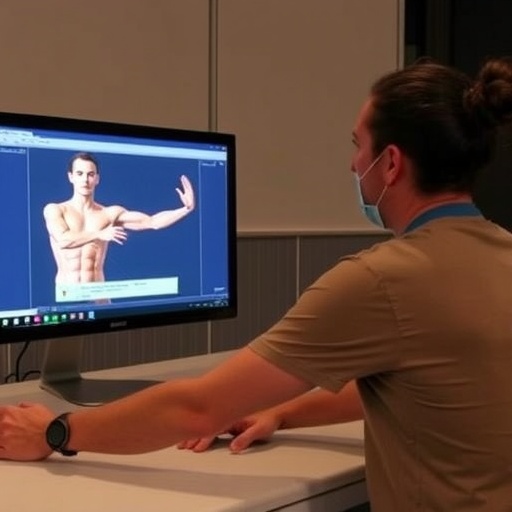
In an era where digital transformation reshapes educational methodologies, innovative approaches are essential for the advancement of clinical education. A groundbreaking study spearheaded by a distinguished group of researchers—Sellitto, Galeoto, and Deodato—aims to revolutionize physiotherapy education through a novel framework known as the Case-Based Learning Challenge (CBLC). This ambitious quasi-experimental study, slated for publication in BMC Medical Education, delves into the efficacy of a digitally mediated, inter-university simulation designed to enhance clinical reasoning among physiotherapy students.
The study’s objectives are multifaceted, focusing on two primary aspects: evaluating the effectiveness of the CBLC as an educational tool and examining its potential to foster collaborative learning across institutions. The insights gleaned from this research not only contribute to the academic discourse surrounding physiotherapy education but also have broader implications for health sciences training in a digital age. By tapping into the potential of technology, the researchers aim to bridge the gap between theoretical knowledge and practical application, preparing students for the complexities of clinical practice.
As the complexity of healthcare challenges continues to evolve, it becomes increasingly vital for educational programs to adopt strategies that promote critical thinking and decision-making. The CBLC is poised to address these needs by creating an immersive learning environment where students can engage with real-life scenarios that they might encounter in their professional practice. This approach contrasts sharply with traditional educational methods, which often rely heavily on rote memorization or passive learning techniques that may not adequately prepare students for active roles in patient care.
One of the most compelling aspects of the CBLC is its emphasis on digitally mediated interactions. In an age where remote learning has gained significant traction, this initiative harnesses technology to facilitate collaboration among students from different universities. Through virtual simulations, participants can engage in case-based discussions, share diverse perspectives, and collaboratively develop clinical solutions. This not only enhances their learning experience but also cultivates a sense of community and collective problem-solving, which are essential skills for future healthcare professionals.
The researchers adopted a quasi-experimental design to rigorously assess the impact of the CBLC on student learning outcomes. By employing a combination of qualitative and quantitative research methods, they amassed a wealth of data that illustrates the effectiveness of this innovative approach. The findings, which are anticipated to be detailed in the upcoming publication, are expected to provide compelling evidence of the CBLC’s positive influence on students’ clinical reasoning capabilities.
In light of the growing emphasis on interprofessional education, the integration of the CBLC into physiotherapy programs aligns perfectly with contemporary educational paradigms. As healthcare becomes increasingly collaborative, the ability to work effectively with colleagues from various disciplines is paramount. The CBLC fosters an environment where students can practice these collaborative skills, ultimately enhancing their readiness to engage in multidisciplinary teams upon graduation.
Furthermore, the study acknowledges the importance of adaptability in educational curricula, particularly in response to the ongoing shifts in the healthcare landscape. By incorporating the CBLC, physiotherapy programs can remain responsive to emerging trends and challenges, ensuring that they equip graduates with the skills necessary to thrive in diverse clinical settings.
As the digital landscape continues to transform educational practices, the implications of the CBLC extend beyond the confines of physiotherapy education. This research exemplifies a broader movement towards integrating technology into training programs across various healthcare disciplines. The success of the CBLC could inspire similar initiatives, paving the way for a more innovative and effective approach to health sciences education on a global scale.
The anticipated outcomes of the study may also resonate with policymakers and educational leaders, who are increasingly seeking evidence-based approaches to curriculum development. The insights garnered from the CBLC could inform future policy decisions and initiatives aimed at enhancing the quality and relevance of healthcare education, ensuring that it meets the demands of a rapidly evolving field.
In conclusion, the exploration of the Case-Based Learning Challenge represents a significant advancement in the realm of physiotherapy education. By leveraging technology to facilitate inter-university collaboration and enhance clinical reasoning, this study signifies a critical step toward modernizing healthcare training. As the findings emerge, they are expected to stimulate discussions within academic circles and contribute to the ongoing evolution of educational practices in the health sciences.
As we await the publication of this pivotal research, the contributions of Sellitto, Galeoto, Deodato, and their colleagues serve as a beacon of innovation in healthcare education. The potential for the CBLC to reshape the learning landscape and foster a new generation of skilled, collaborative physiotherapists is indeed an exciting prospect for the future of clinical education.
Sellitto, G., Galeoto, G., Deodato, M. et al. Exploring the Case-Based Learning Challenge (CBLC): a digitally mediated, inter-university simulation to enhance clinical reasoning in physiotherapy students – a quasi-experimental study.
BMC Med Educ (2026). https://doi.org/10.1186/s12909-026-08610-3
Cite Scienmag News
Courtney Benton. (January 26, 2026). Enhancing Physiotherapy Skills with Digital Case Simulations. Scienmag. https://scienmag.com/enhancing-physiotherapy-skills-with-digital-case-simulations/
Courtney Benton. "Enhancing Physiotherapy Skills with Digital Case Simulations." Scienmag, 26 January 2026, https://scienmag.com/enhancing-physiotherapy-skills-with-digital-case-simulations/. Accessed 4 September 2026.
Courtney Benton. "Enhancing Physiotherapy Skills with Digital Case Simulations." Scienmag. January 26, 2026. https://scienmag.com/enhancing-physiotherapy-skills-with-digital-case-simulations/


