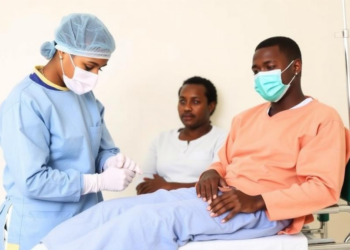
In an era where healthcare is becoming increasingly specialized, the importance of effectively training nursing professionals to cater to the needs of persons with disabilities cannot be overstated. A systematic review, conducted by researchers Geneviève O, Sara D.R.R., and Minerva R.V., sheds light on the significant strides being taken in the adaptation of nursing education. This comprehensive examination focuses on curriculum changes and the effectiveness of training intended to improve care for individuals with various disabilities. The findings from this research offer critical insights into how education can evolve to better meet the unique challenges faced by patients with disabilities.
The study emphasizes that nursing education forms the backbone of healthcare delivery, influencing not only the competence of healthcare providers but also the quality of care received by patients. By adapting curricula to include targeted training around disabilities, nursing programs can empower future nurses with the knowledge and skills needed to address specific needs. This proactive approach is vital in fostering a healthcare system that is inclusive and equitable.
Researchers conducted a systematic review, synthesizing evidence from a broad array of sources to evaluate existing curricular reforms in nursing education. By analyzing various educational models and their respective outcomes, the team highlighted key areas where improvements can be made. The review included both quantitative and qualitative studies, allowing for a nuanced understanding of the training effectiveness across diverse nursing programs. Ultimately, the research aims to provide an evidential basis for ongoing educational reform in nursing practices related to disability care.
The results from this systematic review reveal alarming discrepancies in the preparation of nursing students to handle the complexities associated with providing care for individuals with disabilities. Many nursing curricula still lack comprehensive training modules focused on this demographic, leaving future healthcare professionals inadequately prepared for real-world challenges. The review provides compelling evidence not only of the gaps present in current educational practices but also of the immense potential for transformation through curriculum innovation.
One of the fundamental findings of this research is that students who engaged in specialized training reported higher confidence levels and greater competence in their ability to provide adequate care for persons with disabilities. This has significant implications for patient outcomes, as well-trained nurses are more likely to provide compassionate, informed, and effective care. Therefore, the incorporation of disability-specific education into nursing programs is not merely a suggestion but an urgent necessity.
Furthermore, the systematic review identified various pedagogical strategies that have shown promise in enhancing the effectiveness of training related to disabilities. For example, interprofessional education, which promotes collaborative practice among students from different healthcare disciplines, fosters a more holistic understanding of patient care needs. This approach enables nursing students to see beyond their individual roles and appreciate the value of teamwork in achieving optimal care for disabled patients.
In addition to curricular improvements, the review also stressed the importance of faculty training in the realm of disability education. It is essential for instructors to not only possess a thorough understanding of the subject matter but also to be equipped with effective teaching techniques that engage students meaningfully. Educators must themselves be advocates for inclusivity within the healthcare training landscape to stimulate a culture of empathy and awareness.
The review also underscores the necessity for continuous assessment and feedback mechanisms in nursing education. By evaluating the progress of nursing curricula related to disability care, educational institutions can identify strengths and weaknesses, allowing for iterative enhancements. This development process ensures that nursing education evolves in concert with the needs of the population served, ultimately leading to improved care outcomes.
Another crucial aspect of the review was the exploration of the societal implications of adapted nursing education. As healthcare systems begin to prioritize inclusivity, the broader societal attitudes toward disabilities may also shift positively. When nursing education incorporates specialized training, it sends a message about the value and dignity of all individuals, fostering a more accepting environment for individuals with disabilities in healthcare settings and society at large.
Importantly, the findings necessitate a re-evaluation of healthcare policy concerning professional nursing education. Policymakers need to recognize the critical role of nursing education in shaping the future healthcare workforce. Comprehensive policies should be implemented to mandate the inclusion of disability training in nursing programs, ensuring that future healthcare providers are thoroughly equipped to meet the needs of all patients.
The implications of this research extend beyond education to influence healthcare delivery as a whole. A well-educated nursing workforce can act as advocates for persons with disabilities, influencing not only patient care practices but also broader healthcare policies and practices. The investment in nursing education reform ultimately creates ripple effects that benefit individuals, healthcare systems, and societal attitudes toward disability.
As the authors conclude their fundamental review, it is evident that the future of nursing education must pivot toward inclusivity and adaptability. Their research provides a framework for the evolution of nursing curricula, but it also serves as a call to action for educators, institutions, and policymakers alike. As the healthcare landscape evolves, so too must the strategies we use to prepare the next generation of nurses.
In summary, the study by Geneviève O, Sara D.R.R., and Minerva R.V. is a landmark contribution to the field of nursing education. By systematically reviewing existing practices and advocating for essential curriculum changes, the authors highlight the urgent need to enhance training for nurses who will care for individuals with disabilities. Their work lays a foundational understanding of how nursing education can progress towards a more inclusive, informed, and effective care model for all patients.
In an ever-evolving healthcare environment, it is critical that nursing education keeps pace with the diverse needs of the populations served. The insights garnered from this systematic review will undoubtedly play a pivotal role in shaping the future of nursing education, fostering a new generation of healthcare professionals poised to deliver exceptional and empathetic care for all individuals, regardless of ability.
With the ever-increasing recognition of the value of disability awareness in nursing, the hope is that this research not only sparks discussion but drives actionable change across educational institutions worldwide. After all, every individual deserves high-quality, informed, and compassionate care, and it is the responsibility of nursing educators to ensure that future nurses are adequately prepared to deliver just that.
Geneviève, O., Sara, D.R.R. & Minerva, R.V. Adapting nursing education to improve care for persons with disabilities: a systematic review of curriculum changes and training effectiveness.
BMC Nurs 24, 1257 (2025). https://doi.org/10.1186/s12912-025-03894-0
Cite Scienmag News
Courtney Benton. (October 10, 2025). Enhancing Nursing Education for Better Disability Care. Scienmag. https://scienmag.com/enhancing-nursing-education-for-better-disability-care/
Courtney Benton. "Enhancing Nursing Education for Better Disability Care." Scienmag, 10 October 2025, https://scienmag.com/enhancing-nursing-education-for-better-disability-care/. Accessed 29 October 2026.
Courtney Benton. "Enhancing Nursing Education for Better Disability Care." Scienmag. October 10, 2025. https://scienmag.com/enhancing-nursing-education-for-better-disability-care/