

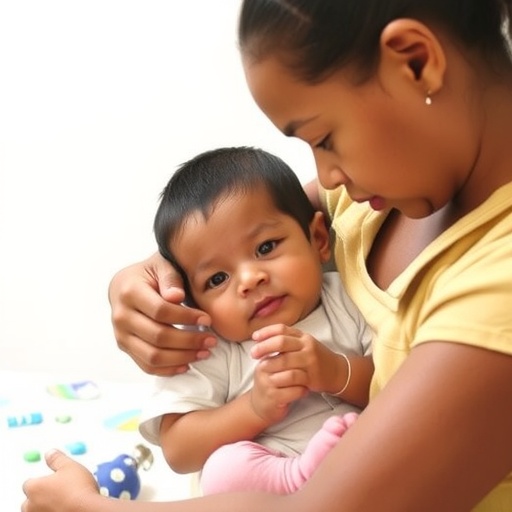
In a groundbreaking study, researchers have shed light on the efficacy of lay health workers in Pakistan in facilitating newborn screening and referrals for congenital anomalies. This project, spearheaded by Junejo, Fatima, and Ali Muhammad, focuses on the pressing need for early identification of congenital conditions, which are a significant public health concern in low- and middle-income countries. The study responds to a gap in existing medical infrastructure, where professional healthcare providers may be limited and unevenly distributed, particularly in rural areas.
The context of this research is particularly compelling. In Pakistan, rates of congenital abnormalities are alarmingly high, contributing to infant mortality and long-term disability. The traditional healthcare system often struggles to reach underserved populations, leaving many infants without essential services. By engaging community health workers, the project aims to create a bridge between healthcare resources and the families who need them, ensuring that critical screening processes are accessible to everyone, regardless of geographic or socioeconomic barriers.
Through a mixed-methods approach, the study evaluates a co-created educational intervention designed for lay health workers. This innovative strategy involves not just training but also community input to ensure that the content is culturally relevant and applicable in local contexts. The research demonstrates that empowering local individuals can not only enhance the uptake of screening programs but also foster a sense of community ownership over health initiatives.
The educational intervention focuses on effectively training lay health workers to recognize signs of congenital anomalies in newborns, as well as to navigate the referral processes. It encompasses various aspects, including the developmental milestones of infants, recognizing physical indicators of abnormalities, and understanding the importance of timely referrals to specialized healthcare. By equipping lay health workers with this knowledge, the study aims to create a more responsive healthcare system that can adapt to the needs of the population it serves.
Moreover, the study employs rigorous evaluation methods to assess the effectiveness of this approach. Quantitative data, collected through surveys and clinical assessments, is complemented by qualitative insights gathered from interviews with both health workers and families. This comprehensive evaluation not only illustrates the impact of the training on screening rates but also highlights the challenges and barriers faced by lay health workers in implementing these practices.
In urban environments, where healthcare resources may be slightly more available, the research underscores the unique challenges encountered in rural settings. It identifies issues such as transportation difficulties, socio-cultural resistance, and limited understanding of congenital anomalies among the general public. These factors contribute to the delay in seeking necessary medical attention for newborns, often jeopardizing their health outcomes.
Adjustments made within the intervention based on feedback illustrate an adaptive approach to healthcare delivery. For example, health communication strategies were modified to include local languages and cultural norms, which significantly improved engagement levels among community members. This highlights the critical role of local context in the implementation of health interventions and the need for flexibility in approaching healthcare challenges.
As the study progresses, ongoing training and support for lay health workers emerge as essential components of its success. The researchers emphasize that training should not be a one-time event but rather an ongoing process that incorporates new information and addresses emerging challenges. This perspective challenges traditional views on medical training and underscores the importance of sustained engagement with health workers.
Furthermore, the study discusses the broader implications of its findings for health policy in Pakistan and similar contexts. If lay health workers can effectively fill the gaps in newborn screening and referral systems, there could be a significant transformation in health outcomes for newborns across the country. Policymakers may need to consider strategies that support and officially recognize the role of lay health workers within the formal healthcare system, potentially leading to enhanced integration of community health initiatives.
In conclusion, this research offers a hopeful perspective on the involvement of lay health workers in tackling congenital anomalies. The combination of educational interventions and community engagement proves to be a powerful tactic in improving health outcomes. As the study suggests, there is considerable potential for scaling this model beyond Pakistan, adapting it to suit various cultural and healthcare contexts around the world.
The call to action for stakeholders—including healthcare providers, educators, and policymakers—is clear. There is a pressing need to invest in community health initiatives that empower individuals to become agents of change in their own communities. With continued support and innovation, lay health workers can help reshape the landscape of neonatal health services, making significant strides in reducing the burden of congenital anomalies worldwide.
Subject of Research: Newborn screening and referral for congenital anomalies by lay health workers in Pakistan.
Article Title: Newborn screening and referral for congenital anomalies by lay health workers in Pakistan: a mixed-methods study to evaluate the effectiveness of a co-created educational intervention.
Article References:
Junejo, S., Fatima, M., Ali Muhammad, A. et al. Newborn screening and referral for congenital anomalies by lay health workers in Pakistan: a mixed-methods study to evaluate the effectiveness of a co-created educational intervention.
BMC Med Educ 25, 1708 (2025). https://doi.org/10.1186/s12909-025-08095-6
Image Credits: AI Generated
DOI: https://doi.org/10.1186/s12909-025-08095-6
Keywords: Newborn screening, congenital anomalies, lay health workers, Pakistan, educational intervention.


