

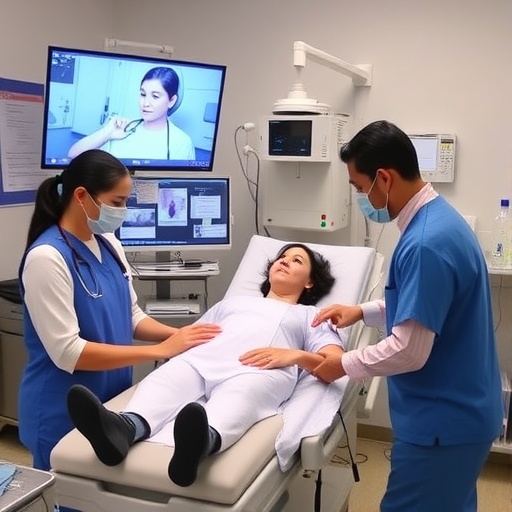
The Future of Medical Training: Elevating Clinical Skills with Virtual Patient Simulations
In the ever-evolving landscape of medical education, the need for innovative training methods is critical. A recent pilot study conducted by a team of researchers, including Dávidovics, Dávidovics, and Hillebrand, has shed light on the transformative potential of virtual patient simulations in enhancing the clinical communication and decision-making skills of medical students. This study marks a significant step towards integrating technology into medical training, promising to bridge the gap between theoretical knowledge and practical application in a controlled, realistic environment.
As medical students face the daunting task of mastering a complex array of skills essential for patient care, traditional training methods often fall short in providing real-time, contextual learning experiences. The introduction of virtual patient simulations offers a dynamic alternative that can replicate the intricacies of real-life medical scenarios. This methodology allows students to engage with digital avatars of patients, facilitating a more immersive learning experience. Students are not merely passive recipients of information; they are active participants in simulated medical encounters that require critical thinking, empathy, and clinical reasoning.
Central to this study is the assertion that effective communication is crucial in clinical settings. Medical practitioners must convey complex information to patients clearly, listen actively, and demonstrate empathy—skills that are often challenging to develop through conventional means. The researchers aimed to determine whether virtual patient simulations could effectively cultivate these skills within medical students. By fostering an interactive learning environment, the study sought to assess students’ abilities to navigate challenging conversations, make informed decisions, and ultimately enhance patient outcomes.
The experimental design of the pilot study involved a group of medical students who were exposed to various simulated patient interactions. These interactions mirrored real-world scenarios, including the symptom inquiry processes, diagnostic reasoning, and treatment discussions. The researchers collected quantitative and qualitative data to evaluate the efficacy of the simulations in improving both communication and decision-making skills. This comprehensive approach provided insight into which aspects of student performance improved following simulated training.
Preliminary findings from the study indicate that students who participated in virtual patient simulations exhibited marked improvements in several key areas. Participants reported increased confidence in their communication abilities, alongside enhanced decision-making skills. Moreover, feedback indicated that engaging in these simulated scenarios helped students retain critical clinical knowledge more effectively. This retention is vital, as it directly correlates to their preparedness for real-life clinical situations, where effective communication and rapid decision-making are paramount.
Another compelling aspect of the study involves the accessibility of virtual patient simulations. As medical schools worldwide grapple with limited resources and opportunities for in-person patient interaction, virtual simulations present a scalable solution. Students can practice their skills anytime, anywhere, without compromising the quality of their education. This expanded access has the potential to equalize learning opportunities, especially for those in remote locations or under-resourced institutions.
In addition to accessibility, the adaptability of virtual patient platforms allows for tailored learning experiences that can meet individual student needs. Each session can be customized to challenge students at varying levels of expertise, focusing on their specific areas for improvement. Furthermore, the continuous feedback loop inherent in these simulations encourages self-reflection and growth, fostering a mindset of lifelong learning essential for medical professionals.
While the pilot study presents promising results, it also highlights areas for future research and development. Questions remain regarding the long-term impact of virtual patient simulations on clinical performance once students graduate and begin their medical careers. Additionally, exploring the integration of these simulations into the broader medical curriculum raises essential considerations for curriculum designers and educators alike.
As technology continues to advance, the potential applications of virtual simulations in medical education are boundless. The incorporation of artificial intelligence, machine learning, and virtual reality could revolutionize how future doctors are trained. By continually refining these tools and integrating them into medical education, the future of healthcare training looks bright, with prospects for better equipped, skilled, and empathetic healthcare providers.
Furthermore, as healthcare systems globally shift towards personalized and patient-centered care models, the need to refine communication skills among future medical practitioners becomes even more pressing. Preparing students to engage meaningfully with patients, consider their unique contexts, and navigate challenging conversations is paramount in developing holistic healthcare providers capable of addressing diverse patient needs.
In conclusion, the pilot study led by Dávidovics and colleagues not only reinforces the significance of effective communication and clinical decision-making skills in medical education, but it also paves the way for the broader adoption of virtual patient simulations. As these simulations prove to be effective educational tools, they offer medical students enhanced opportunities for experiential learning, fostering a generation of clinicians who are not only knowledgeable but also adept at navigating the complexities of patient care. As we look ahead, embracing innovative approaches in medical training will ultimately lead to improved patient outcomes and a more effective healthcare system.
Subject of Research: Virtual patient simulation to enhance medical students’ clinical communication and decision-making skills.
Article Title: Virtual patient simulation to enhance medical students’ clinical communication and decision-making skills: a pilot study.
Article References:
Dávidovics, A., Dávidovics, K., Hillebrand, P. et al. Virtual patient simulation to enhance medical students’ clinical communication and decision-making skills: a pilot study. BMC Med Educ (2025). https://doi.org/10.1186/s12909-025-08507-7
Image Credits: AI Generated
DOI: 10.1186/s12909-025-08507-7
Keywords: virtual patient simulations, medical education, clinical communication, decision-making skills, experiential learning.


