


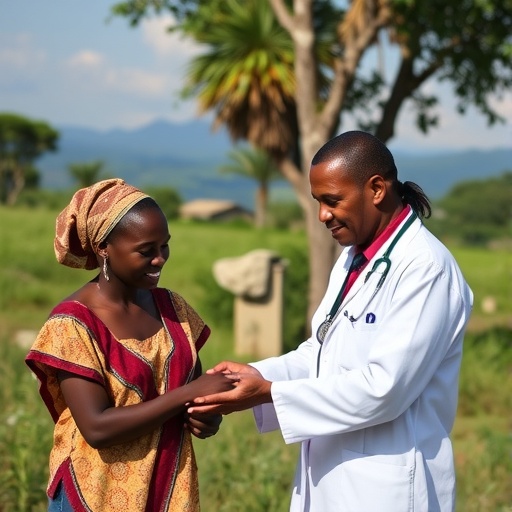
In a groundbreaking study conducted in rural Tanzania, researchers have embarked on a mission to bridge the gap between formal healthcare providers and traditional bonesetters. This pilot collaborative orthopaedic trauma course aims to enhance intersectoral collaboration, ultimately improving patient outcomes in resource-limited settings. The project, led by Binnerts et al., underscores the importance of integrating traditional practices with modern medical approaches, highlighting an often-overlooked aspect of healthcare provisioning in developing regions.
The researchers began their work by identifying the critical role that traditional bonesetters play in their communities. In many rural areas, these practitioners are the primary source of care for musculoskeletal injuries. Their local knowledge and accessibility equip them with a unique position within the healthcare system, although their methods may not always align with evidence-based medical practices. This study seeks to elevate the skills of these traditional healers while ensuring that they collaborate effectively with trained healthcare professionals.
An essential aspect of the course design involved understanding the existing dynamics between formal healthcare workers and traditional bonesetters. Interviews and focus groups revealed a range of perceptions and attitudes, from respect and admiration to skepticism and mistrust. By openly discussing these feelings, the researchers aimed to create a curriculum that not only addressed clinical skills but also fostered mutual respect and understanding. This foundational work proved crucial in setting the tone for the collaborative learning environment.
The curriculum of the orthopaedic trauma course encompassed critical aspects of trauma management, focusing on common injuries such as fractures and dislocations. Participants were exposed to both theoretical knowledge and practical skills. This dual approach was designed to ensure that bonesetters would not only understand the rationale behind modern techniques but also gain hands-on experience in a controlled environment. Such training is vital in building confidence and competence among participants, ultimately leading to greater patient safety.
One of the most significant outcomes of the pilot program was the enhanced communication between traditional bonesetters and healthcare professionals. As participants engaged in collaborative learning, they learned the importance of sharing patient information to devise comprehensive treatment plans. The project emphasized that successful patient care often requires an interdisciplinary approach, where information sharing between sectors can lead to improved health outcomes. Establishing protocols for communication and patient referral was a major focus of the training sessions.
Monitoring and evaluation were integral to the process, allowing the team to gather insights into the program’s effectiveness. Initial feedback from participants indicated a substantial increase in confidence in managing trauma cases. Notably, traditional bonesetters reported feeling more empowered to interact with formal healthcare workers and recognize when to refer patients for advanced care. This newfound partnership holds the potential to create a more cohesive healthcare system, improving the overall quality of care for patients in rural settings.
The next phase of evaluation involved assessing the impact of the training on patient outcomes. As part of the study design, the team collected data on patient management pre- and post-course implementation. Early results are promising, suggesting that clinics employing techniques from the training saw a reduction in complications and improved recovery times. The hope is that these findings will encourage further investment into similar collaborative training programs across other regions facing similar healthcare challenges.
In a broader context, the study sheds light on the necessity for embracing a multifaceted healthcare ecosystem. Conventional healthcare often overlooks the critical contributions of traditional practitioners, leading to fragmented care. By recognizing and legitimizing the role of traditional bonesetters, the researchers advocate for a more inclusive model that incorporates local knowledge and practices into the healthcare framework. This study could serve as a blueprint for future initiatives aimed at improving healthcare access and quality in diverse settings.
The implications of this research extend beyond Tanzania. Many countries worldwide are grappling with the challenges of integrating diverse healthcare systems. The pilot course may provide valuable insights for policymakers and healthcare practitioners aiming to foster collaboration in similar contexts. This study positions itself at the intersection of innovation and tradition, urging medical professionals to reconsider the boundaries of modern healthcare practice.
While challenges will undoubtedly persist, the pilot program’s results illuminate a path forward. The combined efforts of formal healthcare workers and traditional bonesetters could revolutionize patient care in resource-limited settings. By pooling their skills, knowledge, and experiences, these two groups can create a more resilient healthcare delivery system capable of addressing the unique needs of their communities.
The pilot’s success underscores the importance of funding and support for training initiatives that facilitate collaboration between different healthcare sectors. Future efforts must prioritize the development of similar programs tailored to local contexts, ensuring that they resonate with the cultural practices and needs of each community. Through continued investment and research, it may be possible to replicate these positive outcomes on a much larger scale.
Critically, this research advocates for a shift in perspective regarding healthcare delivery. Instead of viewing traditional medicine as a competitor to formal healthcare, it should be embraced as a complementary force. This paradigm shift can lead to healthier, more informed populations who benefit from a holistic approach to medical care. Ultimately, by valuing traditional practitioners alongside their formal counterparts, the healthcare landscape can evolve to become more inclusive, accessible, and effective for all.
The findings from this evaluation present a call to action. As the global community continues to strive for health equity, there is a compelling need to understand the nuances of interdisciplinary collaboration. The pilot program sets a precedent for future interdisciplinary endeavors, emphasizing the potential of innovative training models to reshape the landscape of healthcare delivery in resource-limited settings. This strategic collaboration could yield insights and inspire action, promoting better health outcomes across various populations.
In conclusion, the pilot collaborative orthopaedic trauma course in rural Tanzania represents a significant step toward uniting formal healthcare systems with traditional practices. The insights gained from this study are invaluable, not only for enhancing medical training but also for paving the way for a more integrated approach to healthcare. By fostering collaboration, respecting local traditions, and prioritizing patient care, the project exemplifies how innovative educational frameworks can radically transform healthcare access and quality worldwide.
Binnerts, J.J., Hendriks, T.C.C., J. Meijer, M. et al. Improving intersectoral collaboration between formal healthcare workers and traditional bonesetters in resource-limited settings: evaluation of a pilot collaborative orthopaedic trauma course in rural Tanzania.
BMC Med Educ 25, 1203 (2025). https://doi.org/10.1186/s12909-025-07737-z
Cite Scienmag News
Courtney Benton. (August 26, 2025). Enhancing Healthcare Collaboration in Rural Tanzania. Scienmag. https://scienmag.com/enhancing-healthcare-collaboration-in-rural-tanzania/
Courtney Benton. "Enhancing Healthcare Collaboration in Rural Tanzania." Scienmag, 26 August 2025, https://scienmag.com/enhancing-healthcare-collaboration-in-rural-tanzania/. Accessed 4 September 2026.
Courtney Benton. "Enhancing Healthcare Collaboration in Rural Tanzania." Scienmag. August 26, 2025. https://scienmag.com/enhancing-healthcare-collaboration-in-rural-tanzania/


