

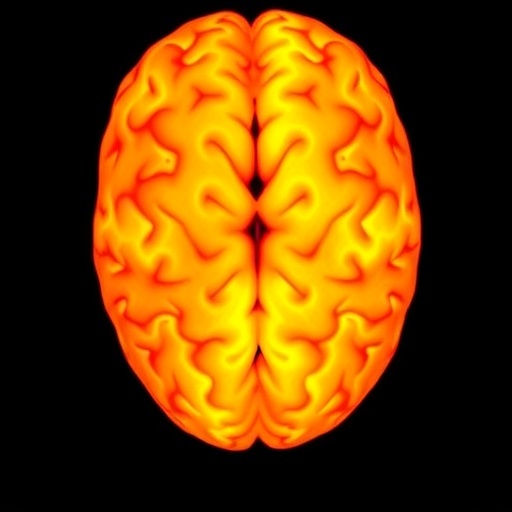
In the rapidly evolving field of brain-computer interfaces (BCI), overcoming the challenge of domain bias resulting from individual variability and diverse recording devices remains a critical hurdle for practical deployment. Addressing this challenge head-on, a team led by Jing Jin at East China University of Science and Technology has unveiled a groundbreaking domain generalization framework designed explicitly for electroencephalogram (EEG) analysis. Their novel architecture, named DGIFE (Domain Generalization method based on Domain-Invariant Feature and Data Augmentation), ambitiously targets robust cross-subject decoding without accessing data from the target domain. This represents a significant leap toward scalable and adaptive BCI systems.
At the core of the DGIFE model lies a sophisticated decoupling mechanism, referred to as the fixed structure decoupler, which distinctly isolates features correlated with specific cognitive categories from those inherently independent features that vary across subjects and recording setups. This decoupling is pivotal because it mitigates the interference of extraneous individual differences that have historically undermined model reliability. Complementing this, the approach harnesses fine-grained patch coding coupled with gated channel attention modules, enabling the model to capture critical spatiotemporal nuances of EEG signals with enhanced precision.
The model architecture is further empowered by the integration of the Interclass Prototype Network (IPN), a module designed to sharpen the feature space’s discriminative power. Utilizing cosine similarity metrics, IPN optimizes the margin between categories, ensuring that feature representations are both distinct and reliable, which is especially vital given the noisy, high-dimensional nature of EEG data. Together, these components form a hybrid structure that not only learns robust and domain-invariant representations but also maintains fidelity in feature discrimination, a balance crucial for cross-subject generalization.
Technical innovation is underscored by the multigranularity patch segmentation approach used in the feature extractor module. This technique segments EEG signals into multiple scales or frequency bands, enabling the model to exploit the diverse oscillatory dynamics inherent in brain signals. The additive gated channel attention mechanism dynamically prioritizes brain regions most relevant to the current cognitive task, aligning computational focus with neurophysiological substrates. Such alignment ensures that model attention is not wasted on irrelevant channels, thereby improving both interpretability and classification accuracy.
Functionally, the domain-invariant feature module incorporates a multi-objective design enforced by four distinct loss functions: classification loss for task accuracy, invariant feature learning to promote consistency across domains, feature alignment to reduce domain discrepancy, and diversity promotion to avoid feature collapse. This ensemble of losses guides the network toward generating stable, generalizable features, effectively countering EEG’s notorious nonstationarity and high intraclass variance.
The DGIFE framework underwent rigorous validation against three publicly available EEG motor imagery datasets—Giga, OpenBMI, and BCIC-IV-2a—achieving state-of-the-art performance metrics. Impressively, the model attained accuracies of 77.36%, 84.08%, and 64.74%, respectively, across these datasets, setting new benchmarks in cross-subject generalization. Stability was evident from the low standard deviation in the results, suggesting that DGIFE’s robustness is not dataset-specific but broadly applicable. Ablation studies, critical for understanding individual module contributions, underscored the indispensability of both patch segmentation and channel attention, with their removal resulting in a notable 3-4% drop in classification accuracy.
In addition to accuracy and stability, DGIFE exhibits profound resilience against noise—a ubiquitous challenge in EEG signal processing. The model maintained a remarkable 69.20% classification accuracy even at 0 dB signal-to-noise ratio (SNR), outperforming established baseline methods by a margin of 8 to 18 percentage points. This noise robustness not only demonstrates the model’s practical viability in real-world, noisy recording environments but also highlights the strength of its feature extraction and alignment strategies.
Neurophysiological validity, a cornerstone often neglected in deep learning EEG studies, was explicitly investigated through feature visualization. The aligned activation patterns corresponded closely to known contralateral brain activations observed during motor imagery tasks. This biological grounding lends both interpretability and credibility to the DGIFE model, suggesting it captures meaningful brain activity rather than superficial patterns in the data.
Despite its impressive performance, the DGIFE model does face limitations. The framework displays sensitivity to hyperparameter settings, particularly temperature coefficients critical to stable feature alignment and prototype learning. Furthermore, its dependence on predefined patch lengths restricts its flexibility across heterogeneous EEG datasets. The research team acknowledges these shortcomings and outlines future directions aimed at adaptive hyperparameter tuning and dynamic patch segmentation to further enhance model versatility and generalization capabilities.
Looking ahead, the research envisions extending DGIFE’s methodology beyond the motor imagery paradigm to other BCI applications such as P300 spellers, substantially broadening its impact spectrum. This transition will be essential to cementing the approach as a universal solution within the BCI domain. Moreover, integrating adaptive learning mechanisms to handle evolving EEG distributions could propel DGIFE towards fully autonomous, real-time brain decoding systems deployed in medical rehabilitation, human-machine interaction, and beyond.
Such advances reflect a broader trend in neuroscience and artificial intelligence, where carefully architected hybrid models integrate domain knowledge and data-driven learning to surmount traditional barriers. DGIFE stands as a testament to the power of this synergy, delivering robust, interpretable, and high-fidelity EEG decoding performance that pushes the frontier of brain-computer interfacing closer to widespread clinical and practical adoption.
Funding for this pioneering research stemmed from a cadre of notable Chinese scientific programs, including the prestigious Brain Science and Brain-like Intelligence Technology National Science and Technology Major Project, alongside grants from the National Natural Science Foundation of China, Shanghai Municipal Science and Technology Major Project, Jiangsu Province Science and Technology Plan, and the Lingang Laboratory. This multi-institutional support underscores the strategic significance attributed to brain-inspired intelligence technologies and their transformative potential.
The detailed technical exposition and empirical validation of this domain generalization method were published in the esteemed journal Cyborg and Bionic Systems in early 2026. The paper presents a meticulous breakdown of the model components, training regime, and comparative analyses, providing a rich resource for researchers and practitioners eager to implement or extend the approach.
Ultimately, the DGIFE model exemplifies how sophisticated AI architectures that honor neurophysiological principles and embrace domain generalization can revolutionize EEG decoding. By effectively neutralizing domain biases and enhancing feature robustness and discriminability, this technology propels brain-computer interfaces towards practical deployment in dynamic, real-world environments, fostering advancements in healthcare, assistive technologies, and human augmentation.
Subject of Research: Domain Generalization in EEG-based Brain-Computer Interfaces
Article Title: A Domain Generalization Method for EEG Based on Domain-Invariant Feature and Data Augmentation
News Publication Date: February 24, 2026
Web References: DOI: 10.34133/cbsystems.0508
Image Credits: Jing Jin, East China University of Science and Technology
Keywords
Domain Generalization, EEG Decoding, Brain-Computer Interface, Domain-Invariant Feature, Data Augmentation, Deep Learning, Motor Imagery, Feature Disentanglement, Channel Attention, Prototype Network, Cross-Subject Classification, Noise Robustness


