


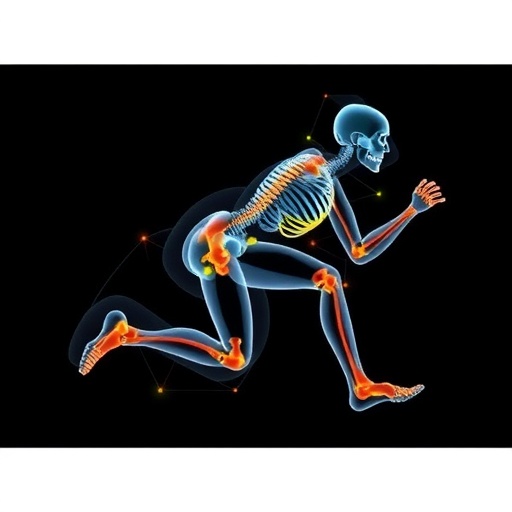
In the ever-evolving landscape of higher education, innovative teaching methodologies are increasingly essential to engage students effectively and enhance their learning experiences. A recent study, spearheaded by S.F. Shady, addresses this need through the implementation of a cutting-edge instructional approach known as Prediction Problem-Based Learning (PPBL) in an undergraduate biomechanics course. The results of this method not only highlight its efficacy but also underscore the transformative potential it holds in academic environments.
Biomechanics, the intricate study that merges principles of mechanics with biological systems, poses unique challenges within educational contexts. Traditionally, students often grapple with theoretical concepts that appear abstract and disconnected from practical applications. In contrast, PPBL aims to bridge this gap by positioning students in real-world problem scenarios that require prediction and analytical reasoning. This hands-on approach encourages deeper engagement and fosters critical thinking skills essential for future professionals in the field.
Under the auspices of PPBL, students in Shady’s biomechanics course participated in a structured learning environment where they were presented with complex problems reflective of challenges faced in biomechanics. For instance, students might predict the outcome of biomechanical changes following an injury or assess how design alterations in prosthetics could enhance performance. These scenarios not only demand theoretical knowledge but also compel students to utilize empirical methods and analytical tools, thereby reinforcing their understanding of core concepts.
As the students navigated these prediction problems, they engaged in collaborative learning strategies that echoed real-world dynamics. Group-based discussions and cooperative problem-solving promoted valuable teamwork skills, mirroring the multidisciplinary collaboration often witnessed in biomechanics research. Through this collective effort, students were able to construct knowledge collectively, enriching their educational experience and nurturing a community of learners.
Moreover, one of the central tenets of PPBL lies in its emphasis on metacognition. By reflecting on their problem-solving processes and strategies, students are encouraged to become more aware of their cognitive approaches, enabling them to regulate their learning pathways more effectively. This level of self-awareness and adaptability is crucial in the dynamic field of biomechanics, where continuous advancements challenge professionals to adapt and innovate.
The implications of Shady’s research extend beyond mere educational enhancement; they suggest a broader paradigm shift in biomechanics education. By adopting PPBL, educators can cultivate a generation of students equipped not only with theoretical knowledge but also with practical skills and a problem-solving mindset. This reimagining of pedagogical strategies signifies a proactive approach in preparing graduates who are competent and confident in their abilities to confront real-world challenges.
Statistical data derived from the study further substantiates the efficacy of the PPBL approach. Feedback from participants revealed a marked increase in engagement levels and overall satisfaction with the course structure. Furthermore, assessments showcased a significant improvement in academic performance, indicating that students who underwent the PPBL method exhibited a stronger grasp of concepts compared to those subjected to traditional learning formats.
Additionally, Shady points out that the implementation of PPBL fosters an inclusive educational environment. Students, regardless of their initial proficiency in biomechanics, found common ground in collaborative problem-solving. This equity in participation underscores the versatility of the PPBL method, making it an undeniable asset in diverse classrooms where varying levels of expertise exist.
While the benefits of PPBL are clear, the study also underscores the challenges faced in its implementation. Educators must balance the directive nature of guiding students while allowing the freedom necessary for exploration and critical thinking. The role of the educator shifts from sole provider of knowledge to facilitator of learning, a transformation that requires careful consideration and training.
Shady’s findings resonate profoundly within the educational discourse, challenging other institutions to reevaluate their instructional strategies. The successful integration of PPBL into the biomechanics curriculum invites dialogue regarding its potential application across other disciplines. As the academic community seeks to adapt to the preferences and learning styles of modern students, methodologies like PPBL position themselves as frontrunners in creating meaningful educational experiences.
Moreover, the longitudinal impact of adopting PPBL remains an exciting avenue for future research. Engaging in follow-up studies to assess how students utilize the skills and knowledge gained through this methodology in their professional careers will provide invaluable insights into its effectiveness. As the biomechanics workforce evolves to meet new technological demands, understanding the enduring benefits of PPBL will be crucial for shaping curricula that stay relevant.
The resonance of Shady’s work reaches far beyond the biomechanics classroom, sparking a critical conversation on the necessity for academia to continually adapt and innovate. The incorporation of PPBL serves as a testament to the commitment to fostering an educational landscape that prioritizes student engagement, skill acquisition, and practical application of knowledge. As this methodology garners attention, various academic institutions may look to its principles as a guide for developing future teaching practices.
Although the research conducted by Shady is centered on biomechanics, its principles can easily be transposed to other disciplines experiencing similar pedagogical dilemmas. Drawing from this methodology allows educators in fields such as engineering, health sciences, and even humanities to cultivate an interactive learning environment that champions inquiry-based strategies and experiential learning.
As we delve further into the intricacies of education in STEM fields, the message is clear: educational strategies must evolve in tandem with the needs of students and professionals. Prediction Problem-Based Learning offers a promising glimpse into a future of academia where real-world problems become catalysts for innovative thinking and comprehensive education. As educators worldwide grapple with the challenge of engaging a new generation of learners, embracing approaches like PPBL can potentially reshape the very foundations of education for the better.
Thus, this groundbreaking study serves as a clarion call for educators everywhere to embrace transformation and seek out methodologies that not only teach but inspire. The integration of real-world problem-solving into curricula resonates with a fervent desire for education to be relevant and dynamic—an aspiration that can make all the difference in the future of learning.
Shady, S.F. Application of a Prediction Problem-Based Learning (PPBL) Method in an Undergraduate Biomechanics Course.
Biomed Eng Education 5, 79–85 (2025). https://doi.org/10.1007/s43683-024-00160-8
Cite Scienmag News
Ophelia Keating. (August 26, 2025). Enhancing Biomechanics Learning with Prediction Problem-Based Method. Scienmag. https://scienmag.com/enhancing-biomechanics-learning-with-prediction-problem-based-method/
Ophelia Keating. "Enhancing Biomechanics Learning with Prediction Problem-Based Method." Scienmag, 26 August 2025, https://scienmag.com/enhancing-biomechanics-learning-with-prediction-problem-based-method/. Accessed 4 September 2026.
Ophelia Keating. "Enhancing Biomechanics Learning with Prediction Problem-Based Method." Scienmag. August 26, 2025. https://scienmag.com/enhancing-biomechanics-learning-with-prediction-problem-based-method/


