

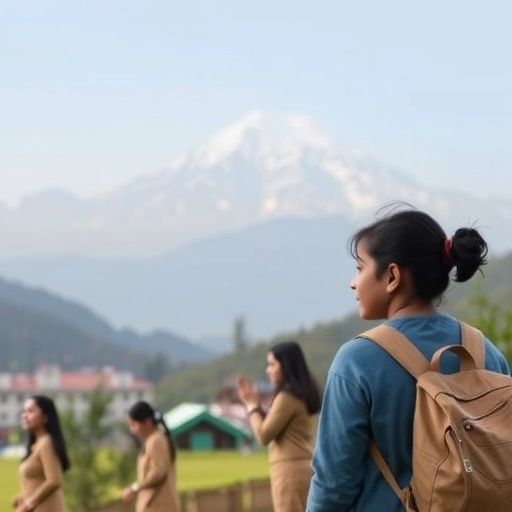
In the realm of mental health research, the resilience of children and youth has garnered significant attention, particularly in regions where societal and environmental stressors can impact developmental outcomes. A groundbreaking study spearheaded by Singh, Chua, and Pant delves into this crucial field by translating and adapting the Child and Youth Resilience Measure-Revised (CYRM-R) and the Rugged Resilience Measure for adolescents in Nepal. This mixed-method approach not only enhances the existing tools used for measuring resilience but also brings to light the unique sociocultural dimensions that can influence resilience in this demographic.
Resilience, the ability to recover from adversity, is a critical construct in understanding mental health outcomes among youth. The underlying components of resilience, including personal strengths, relational supports, and contextual factors, are essential in shaping how adolescents navigate challenges. The current study takes a notable step towards contextualizing these frameworks in Nepal, a country with its own rich tapestry of cultural practices and significant socio-economic challenges that affect young people’s psychological health.
The Child and Youth Resilience Measure-Revised is widely recognized for its comprehensive evaluation of resilience factors among children and adolescents. However, applying this tool in diverse cultural contexts requires careful translation and adaptation to ensure it resonates with local populations. Singh and his team’s methodological rigor highlights the necessity of such adaptations, which not only facilitate accurate measurements but also enhance the relevance of the findings. The dual approach of qualitative and quantitative methods in this study provides a well-rounded perspective, balancing statistical validation with nuanced understanding from the local context.
Utilizing qualitative research methods allowed the researchers to engage directly with adolescents, unraveling their experiences and perceptions of resilience. Focus group discussions offered invaluable insights, showing that resilience is not merely an individual trait, but a collective construct shaped by community relationships and cultural narratives. These discussions illuminated the importance of familial and peer support networks, which play a vital role in helping young people bounce back from adversities they face in their daily lives.
Quantitatively, the adaptation process involved a series of psychometric evaluations that confirmed the reliability and validity of the newly adapted CYRM-R and Rugged Resilience Measure in the Nepali context. This scientific backing is critical, as it ensures that practitioners and policymakers can trust these tools when interpreting resilience data. The successful establishment of measurement invariance across cultural contexts signifies that the adapted scales can reliably compare resilience levels among different groups within Nepal.
The significance of this research extends beyond the immediate findings—it sets a precedent for future studies focusing on adolescent resilience in various global contexts. By acknowledging and addressing cultural factors, researchers can develop more effective intervention programs tailored to specific communities. This approach underscores the emerging understanding that resilience is not a one-size-fits-all concept but rather demands a nuanced appreciation of local experiences and challenges.
Moreover, the resulting tools from this mixed-method study can empower mental health professionals in Nepal. With reliable measures in hand, clinicians and educators can better identify at-risk youth and devise data-informed strategies to bolster resilience. This could be particularly beneficial in educational settings, where early intervention can make a significant difference in students’ academic and personal lives.
The study also advocates for broader dialogue regarding mental health resources in Nepal. While progress has been made, there remains a pressing need for more comprehensive mental health support systems. The tools developed in this study could catalyze discussions about integrating resilience training into school curricula, community programs, and policy initiatives, ultimately aiming to create a more resilient youth population that effectively navigates the complexities of modern life.
As the authors present their findings to the global community, there is a call to action for researchers worldwide to similarly explore and adapt resilience measures specific to their cultural contexts. This could foster a richer understanding of how resilience operates globally, helping to inform international educational and mental health initiatives.
Singh, Chua, and Pant’s research thus embodies a transformative approach to psychological measurement, encouraging greater sensitivity towards cultural diversities. Their findings offer hope for enhancing youth resilience in Nepal and beyond, highlighting the importance of contextually resonant tools to address the mental health needs of adolescents around the world.
In reflecting on this research, we are reminded that the journey towards mental resilience is multifaceted, interwoven with socio-cultural threads that vary from one community to another. The essential takeaway is that localized understanding not only enriches research findings but also has the potential to significantly impact mental health practices positively.
In conclusion, the study illustrates that resilience can be cultivated through community engagement, resources, and support systems, emphasizing the vital role that culturally adapted measures can play in fostering a resilient next generation in Nepal. As the conversation around youth resilience continues to evolve, the implications of this research could reverberate through various sectors, inspiring a global commitment towards nurturing the mental health and well-being of adolescents everywhere.
Subject of Research: Resilience among adolescents in Nepal
Article Title: Translation and Adaptation of the Child and Youth Resilience Measure-Revised and Rugged Resilience Measure: A Mixed-Method Study Among Adolescents in Nepal
Article References: Singh, R., Chua, KC., Pant, S.B. et al. Translation and Adaptation of the Child and Youth Resilience Measure-Revised and Rugged Resilience Measure: A Mixed-Method Study Among Adolescents in Nepal. Child Psychiatry Hum Dev (2025). https://doi.org/10.1007/s10578-025-01944-x
Image Credits: AI Generated
DOI: https://doi.org/10.1007/s10578-025-01944-x
Keywords: Resilience, Adolescents, Nepal, Mental Health, Cultural Adaptation, Mixed-Method Research


