


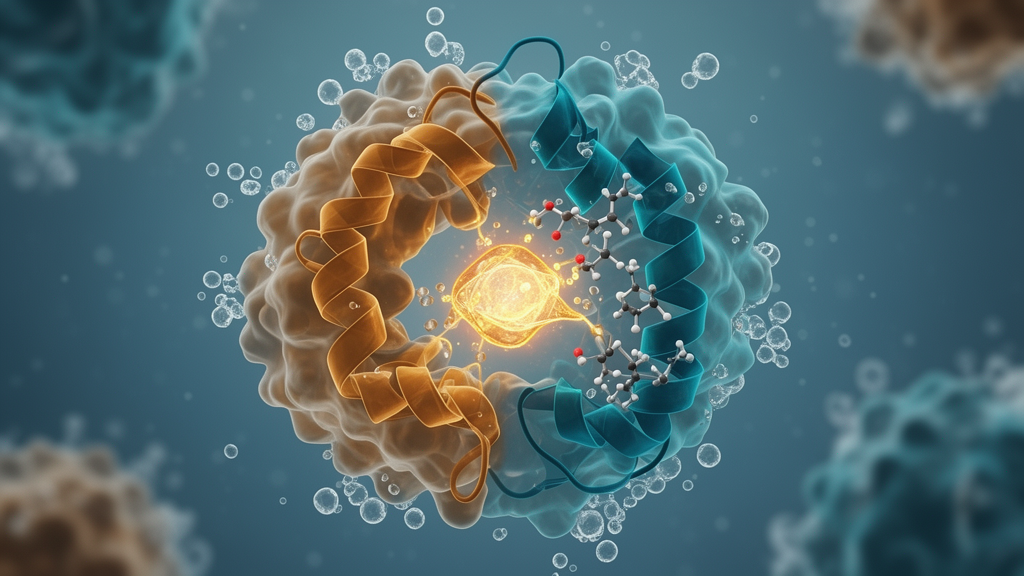
Researchers have identified a specific amino acid substitution in a cytochrome P450 enzyme that significantly enhances its catalytic turnover and apparent coupling efficiency during the oxidation of veratrate. Published in Bioresources and Bioprocessing, the study demonstrates that engineering the second-sphere region of PbdA, a monooxygenase from Rhodococcus jostii RHA1, can improve the productive use of reducing equivalents without compromising substrate binding affinity. The work highlights the potential for precise structural modifications to optimize biocatalytic systems for the production of valuable platform chemicals from lignin-derived aromatics.
The central challenge in cytochrome P450 catalysis is the efficient delivery of electrons from a reductase to the heme center. Kinetic mismatches among substrate binding, oxygen activation, and electron transfer often lead to uncoupling, where reducing equivalents are diverted toward nonproductive pathways such as peroxide or water formation. This inefficiency decreases cofactor economy and can accelerate enzyme deactivation. While mutations in direct-contact residues, or the first sphere, are common, they risk disrupting essential substrate affinities. Conversely, modifications in more distal positions are generally less effective at exerting precise control over local active-site dynamics.
To address these limitations, the research team focused on the second coordination sphere, operationally defined as residues located within approximately 5 to 10 angstroms of the substrate or reactive center. These residues do not necessarily contact the bound ligand but can influence access tunnels, local hydration, and conformational dynamics. By targeting this region, the team aimed to reshape solvent connectivity and restrict non-essential bulk-water diffusion without perturbing the first-sphere catalytic core. This approach sought to reduce water-assisted off-pathway uncoupling while preserving the native substrate affinity of the enzyme.
Using the crystal structure of the PbdA-veratrate complex as a template, the researchers employed a structure-guided semi-rational design strategy. A custom script was used to select amino acid residues located strictly within a 5 to 7 angstrom radius around the substrate. These candidates were further filtered based on physicochemical properties such as polarity, hydrophobicity, electrostatic charge, and aromaticity. Ultimately, 13 second-sphere positions were identified for site-saturation mutagenesis. A mutant library was constructed and subjected to high-throughput screening in a 96-well plate format to identify variants with improved activity.
Among the screened variants, the D242V substitution emerged as a key beneficial mutation. This hydrophobic variant approximately doubled the catalytic turnover number, kcat, compared to the wild-type enzyme. Crucially, the mutation largely preserved substrate binding affinity, as indicated by comparable spectral dissociation constants (Kd) and apparent Michaelis constants (Km). In contrast, a hydrophilic counterpart, D242S, exhibited drastically reduced catalytic activity, suggesting that local hydrophobicity is a critical determinant of catalytic efficiency at this specific node rather than structural geometry alone.
Quantification of NADH consumption and product formation revealed that the D242V variant increased apparent coupling efficiency from 43.88% to 57.30%. Apparent coupling efficiency is defined as the ratio of vanillic acid generated to the amount of NADH consumed, estimating the fraction of NADH oxidation that leads to product formation. This improvement corresponds to a reduction in the NADH cost for the reaction. Direct hydrogen peroxide quantification further supported these findings, showing lower peroxide accumulation for D242V than for the wild-type enzyme, consistent with reduced peroxide-forming uncoupling.
Molecular dynamics simulations provided mechanistic insight into these kinetic improvements. The simulations suggested that the V242 substitution remodels active-site hydration, reducing local water occupancy. The wild-type active site displays a densely populated continuous water network, whereas the spatial water density is decreased in D242V. This desolvation effect may limit the persistence of bulk-like water networks near reactive intermediates, thereby reducing the probability of water-assisted off-pathway events. The D242S variant, conversely, led to excessive water accumulation, which likely exacerbated non-productive uncoupling.
Pathways analysis further revealed modest differences in the sampling of putative electron-transfer geometries in the D242V variant. However, the authors emphasize that these computational descriptors should be interpreted as relative structural indicators rather than direct evidence for altered electron-transfer rates. The analysis lacks absolute validation and does not independently prove an electron-transfer gating mechanism. Instead, the findings suggest that precise structural matching at position 242 primarily enhances turnover by remodeling the active-site water network.
To translate these intrinsic enzymatic advantages into macroscopic biocatalytic performance, the team coupled the engineered PbdA with glyoxylate carboligase (GCL). O-demethylation reactions stoichiometrically release formaldehyde, a toxic C1 species that can inhibit biocatalysis through nonspecific reactions with proteins. The GCL enzyme consumes formaldehyde to synthesize glycolaldehyde, a high-value C2 building block. This multi-enzyme cascade system is designed to continuously scavenge inhibitory formaldehyde, thereby relieving inhibition and improving net conversion.
Optimization of the biocatalytic system revealed that overall flux depends on kinetic matching among PbdA, putidaredoxin, and putidaredoxin reductase. The highest product titer was obtained at a molar ratio of 1:10:1 for PbdA, putidaredoxin, and reductase, respectively. The system performed best under mild conditions of 25 degrees Celsius and pH 7.0. These optimizations increased the overall substrate conversion from approximately 20% to 58% in the reconstituted system without GCL.
In the presence of GCL, the D242V variant outperformed all other groups, achieving approximately 90% substrate conversion after 8 hours. The final accumulated yield of glycolaldehyde plateaued at approximately 70%. Direct formaldehyde quantification showed that GCL supplementation reduced formaldehyde accumulation in both wild-type and D242V cascade reactions. The improvement in conversion is likely attributable to enhanced enzyme stability resulting from in situ formaldehyde consumption, rather than thermodynamic driving of the P450 reaction.
The study concludes that while predictable second-sphere engineering remains highly challenging and context-specific, precise substitutions at isolated sensitive nodes can effectively modulate P450-catalyzed oxidation. The striking divergence between the D242V and D242S variants emphasizes the necessity of exact physicochemical pairing. The discovery of D242V provides a targeted blueprint for related biocatalytic cascades, demonstrating that formaldehyde removal can improve prolonged cascade performance. However, the authors note that previous CYP199 enzymes have shown higher rates for veratrate oxidation, suggesting that further optimization of the electron-transfer system is needed to improve practical utility.
The study was conducted by a team including Haiyan Song, Zeyang Li, Andong Li, Xinyu Cui, Shangxian Xie, and Zhiguang Zhu, and was published in Bioresources and Bioprocessing in September 2026. The research utilized the crystal structure of the PbdA-veratrate complex, designated PDB ID 9G9S, as the primary template for structural analysis. To systematically target the second-sphere topological region, the researchers employed a custom PyMOL script to select amino acid residues located strictly within a 5 to 7 angstrom radius around the substrate. This specific spatial constraint allowed the team to focus on residues that are close enough to influence the active site microenvironment but are not part of the direct first-sphere contact network. The selected candidates were further filtered based on physicochemical properties, including polarity, hydrophobicity, electrostatic charge, and aromaticity, to identify positions that might modulate the local environment without disrupting essential binding interactions.
Following the identification of 13 target positions for site-saturation mutagenesis, the team constructed a mutant library and subjected it to high-throughput screening in a 96-well plate format. Variants exhibiting activity greater than 1.5-fold relative to the wild type in the primary screen were selected for rescreening. To minimize false positives arising from expression variability, hit variants were purified from shake-flask cultures and evaluated in vitro using NADH as the electron donor and putidaredoxin/putidaredoxin reductase as redox partners. Reactions containing 1 mM veratrate were incubated for 30 minutes, and vanillic acid formation was quantified by high-performance liquid chromatography. Among the purified hits, the D242 variant displayed approximately two-fold higher substrate conversion than the wild type, with clear depletion of veratrate accompanied by increased vanillic acid formation. DNA sequencing confirmed the beneficial substitution as D242V, motivating further mechanistic analysis and system-level optimization.
To evaluate the mechanistic basis of the kinetic improvements, the researchers performed 200 nanosecond molecular dynamics simulations using the AMBER 24 software package. The systems were solvated in a cubic TIP3P water box containing approximately 15,510 water molecules with a 12 angstrom buffer distance. During the simulations, the SHAKE algorithm was utilized to constrain bonds involving hydrogen atoms, allowing for a time step of 2 femtoseconds. Long-range electrostatic interactions were computed using the Particle Mesh Ewald algorithm, and the non-bonded cutoff distance was set to 10.0 angstroms. To monitor active site hydration dynamically, the radial distribution function between the heme iron and water oxygen atoms was calculated. The average radial distribution function values within a 10 angstrom radius were extracted as a function of simulation time to evaluate solvation changes at the active site. Because these analyses are based on finite sampling, the molecular dynamics results are interpreted as qualitative, hypothesis-generating trends rather than robust quantitative estimates.
In the multi-enzyme cascade system, the reaction mixture contained 1 micromolar PbdA, 2 grams per liter glyoxylate carboligase, 10 micromolar putidaredoxin, 1 micromolar putidaredoxin reductase, 100 units catalase, 2 millimolar NADH, 2 millimolar magnesium ions, 2 millimolar thiamine pyrophosphate, and 1 millimolar veratrate. The assay was performed in a total volume of 3 milliliters at 25 degrees Celsius. During the reaction incubation, two 100 microliter aliquots were collected every hour and immediately quenched with 10 percent sulfuric acid. The samples were then centrifuged at 12,000 revolutions per minute for 10 minutes to remove precipitated proteins. The resulting supernatants were analyzed to quantify the concentration of vanillic acid and glycolaldehyde. For the detection of glycolaldehyde, a 100 microliter aliquot of the reaction mixture was derivatized with 100 microliters of 10 millimolar MBTH at room temperature for 24 hours before high-performance liquid chromatography analysis. This detailed protocol ensured accurate tracking of the reaction progress and product formation over the 8-hour period.
Subject of Research: A second-sphere variant of cytochrome P450 PbdA improves turnover and apparent coupling in veratrate oxidation
Article Title: A second-sphere variant of cytochrome P450 PbdA improves turnover and apparent coupling in veratrate oxidation
Article References: Song, H., Li, Z., Li, A., Cui, X., Xie, S., & Zhu, Z. (2026). A second-sphere variant of cytochrome P450 PbdA improves turnover and apparent coupling in veratrate oxidation. Bioresources and Bioprocessing, 13(1), Article 131. https://doi.org/10.1186/s40643-026-01130-4
Image Credits: AI Generated
DOI: 10.1186/s40643-026-01130-4
Keywords: second-sphere, variant, cytochrome, P450, PbdA, improves, turnover, apparent, coupling, veratrate, oxidation, scientific research
Cite Scienmag News
Gregory Coleman. (November 11, 2026). Engineered P450 Variant Boosts Veratrate Oxidation Efficiency. Scienmag. https://scienmag.com/engineered-p450-variant-boosts-veratrate-oxidation-efficiency/
Gregory Coleman. "Engineered P450 Variant Boosts Veratrate Oxidation Efficiency." Scienmag, 11 November 2026, https://scienmag.com/engineered-p450-variant-boosts-veratrate-oxidation-efficiency/. Accessed 11 November 2026.
Gregory Coleman. "Engineered P450 Variant Boosts Veratrate Oxidation Efficiency." Scienmag. November 11, 2026. https://scienmag.com/engineered-p450-variant-boosts-veratrate-oxidation-efficiency/




