

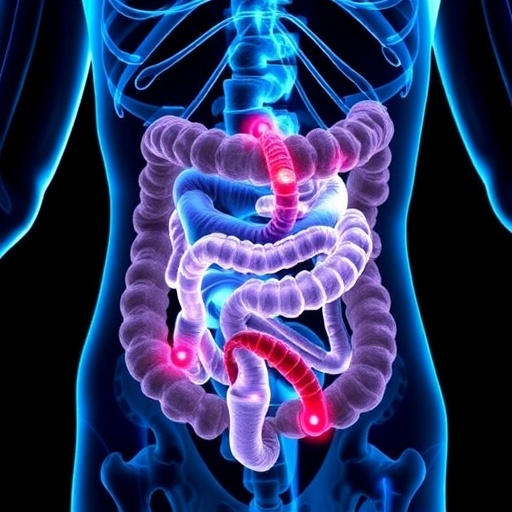
In a groundbreaking stride toward revolutionizing the treatment of inflammatory bowel disease (IBD), researchers have engineered a novel biological system that harnesses the power of living bacteria as responsive therapeutic agents. This innovative approach employs genetically modified nonpathogenic Escherichia coli bacteria designed to autonomously detect pathological signals—specifically gastrointestinal bleeding—and respond by secreting targeted therapeutic proteins. This development not only overcomes the traditional limitations associated with engineered bacterial therapies, such as poor sensing capabilities and transient therapeutic effects but also establishes a new paradigm for long-term localized treatment within the gastrointestinal tract.
The foundation of this technology lies in a sophisticated, blood-inducible gene circuit embedded within the E. coli chassis. This circuit is finely tuned to activate the secretion of specific proteins in response to the presence of blood, a biological hallmark of active IBD flare-ups. Central among the secreted proteins are CP43K, an adhesive protein originally derived from barnacles, and TFF3, a gut-barrier-healing factor with a well-established role in mucosal repair. Together, these proteins orchestrate a dual therapeutic effect: CP43K promotes robust adhesion of the bacteria to the inflamed tissue surfaces, while TFF3 accelerates epithelial healing and reinstates intestinal barrier integrity.
One of the key innovations demonstrated in this study is how bacterial adhesion, mediated by CP43K secretion, dramatically enhances the therapeutic potential of the living delivery system. In both rectal and oral administration models tested in mice, adhesive bacterial populations were able to maintain stable colonization on the inflamed mucosa for extended periods—up to 10 days following rectal delivery and 7 days after oral dosing. This sustained presence ensures continuous, site-specific release of TFF3 directly at the locus of inflammation, circumventing the rapid washout and degradation challenges that often plague protein-based therapies in the dynamic gut environment.
The research utilized two well-established mouse models of IBD to rigorously evaluate the therapeutic efficacy of the engineered bacteria: the dextran sulfate sodium (DSS)-induced colitis model and the genetically predisposed interleukin-10 knockout (IL-10 KO) mouse model. Both models mimic key pathological and immunological features of human IBD, including mucosal ulceration, bleeding, inflammation, and impaired barrier function. Administration of the engineered bacteria resulted in markedly improved clinical outcomes including improved weight regain, reversal of colon shortening—a physical marker of colonic inflammation—and a measurable reduction in intestinal bleeding.
At a mechanistic level, the team demonstrated that this bacterial therapy reduces intestinal inflammation by downregulating inflammatory cytokines and cellular infiltration while simultaneously promoting mucosal repair processes. Importantly, the restoration of gut barrier function, evidenced by decreased permeability and enhanced tight junction integrity, highlights the therapy’s potential to interrupt a critical vicious cycle in IBD pathogenesis—where ongoing barrier dysfunction perpetuates inflammation and tissue damage. These findings underscore the dual function of the engineered bacteria as both anti-inflammatory and epithelial-restorative agents.
Another major advantage of this approach is the autonomous, context-dependent activation of therapeutic secretion. Unlike traditional drug delivery systems that release drugs either continuously or at fixed intervals, this bacterial platform activates secretion precisely in response to bleeding cues. Such on-demand therapy minimizes potential off-target effects and optimizes therapeutic dosing to coincide with active disease processes, embodying a form of synthetic biology-enabled precision medicine.
The study also addresses a longstanding challenge in the field of engineered microbial therapeutics: the difficulty of maintaining therapeutic bacteria in a competitive and dynamic gut ecosystem. Through the secretion of CP43K, the engineered E. coli effectively anchors itself to the gut mucosa where inflammation and bleeding occur, creating a niche that protects them from washout and enhances their competitive fitness without resorting to antibiotic selection pressure. This adhesive property fundamentally transforms the bacterial population’s interaction with the host tissue and sets a new standard for persistent microbial therapies.
To engineer the blood-inducible gene circuit, the researchers leveraged a comprehensive understanding of bacterial sensing systems and molecular signaling pathways. By integrating promoters responsive to heme or blood breakdown products, the bacterial circuit precisely triggers the synthesis and secretion of functional CP43K and TFF3. This complex regulatory network ensures that therapeutic protein production is tightly coupled to disease state, an achievement that required meticulous tuning of gene expression elements and secretion systems for optimal performance.
The implications of this research extend beyond IBD treatment, offering a versatile platform for engineering living medicines tailored to a myriad of diseases characterized by localized pathological cues. The concept of “living glue” bacteria could be adapted to other tissues and conditions where site-specific adhesion and sustained local drug release are desired. The modular design of the gene circuits and the diverse repertoire of therapeutic proteins that can be deployed position this technology as a transformative tool in synthetic biology and medicine.
From a clinical perspective, this living therapeutic addresses critical unmet needs in IBD management by enabling prolonged mucosal healing, reducing reliance on systemic immunosuppressants, and mitigating the risk of side effects associated with conventional therapies. Because the bacteria are designed from nonpathogenic strains and their therapeutic action is self-contained and inducible, safety profiles are potentially enhanced. Future translational studies will focus on scaling up production, validating long-term safety, and integrating this technology into existing treatment regimens.
Moreover, this approach exemplifies how cross-disciplinary innovation—melding microbiology, synthetic biology, protein engineering, and gastroenterology—can converge to generate next-generation therapies. The incorporation of barnacle adhesive proteins into a bacterial delivery system demonstrates creative protein repurposing and highlights the untapped potential of biomaterials from the natural world for medical applications.
In conclusion, the development of engineered E. coli strains capable of sensing gastrointestinal bleeding and secreting therapeutic proteins in a sustained, localized manner represents a paradigm shift in the treatment of inflammatory bowel disease. This living glue technology offers a multifaceted therapeutic strategy that not only ameliorates inflammation but also fosters durable tissue repair and barrier restoration. As this field advances, engineered microbial therapeutics may become an integral component of personalized medicine, offering targeted interventions informed by real-time pathological signals and engineered for prolonged efficacy in complex biological environments.
Through this study, the boundaries of living drug delivery systems have been remarkably expanded, pioneering a roadmap for integrating environmental sensing, synthetic adhesion, and therapeutic protein secretion into a cohesive treatment platform. The promising preclinical findings provide a compelling case for further development and clinical evaluation, heralding a new era in the management of chronic inflammatory diseases through engineered living medicines with dynamic and programmable functionality.
Subject of Research: Engineered bacterial therapeutics for inflammatory bowel disease
Article Title: Engineered living glues secrete therapeutic proteins for treatment of inflammatory bowel disease
Article References:
Ge, C., Jiang, S., Dong, X. et al. Engineered living glues secrete therapeutic proteins for treatment of inflammatory bowel disease. Nat Biotechnol (2026). https://doi.org/10.1038/s41587-025-02970-9
Image Credits: AI Generated


