

Sunday, July 26, 2026
Science
No Result
View All Result
  • Login
  • HOME
  • SCIENCE NEWS
  • CONTACT US
  • HOME
  • SCIENCE NEWS
  • CONTACT US
No Result
View All Result
Scienmag
No Result
View All Result
Home Science News Biology

Endocytosis-Independent Biomolecule Delivery: Direct Translocation Past Cellular Barriers

July 26, 2026
in Biology
Reading Time: 2 mins read
0
Endocytosis-Independent Biomolecule Delivery: Direct Translocation Past Cellular Barriers

Endocytosis-Independent Biomolecule Delivery: Direct Translocation Past Cellular Barriers

65
SHARES
587
VIEWS
Share on FacebookShare on Twitter
ADVERTISEMENT

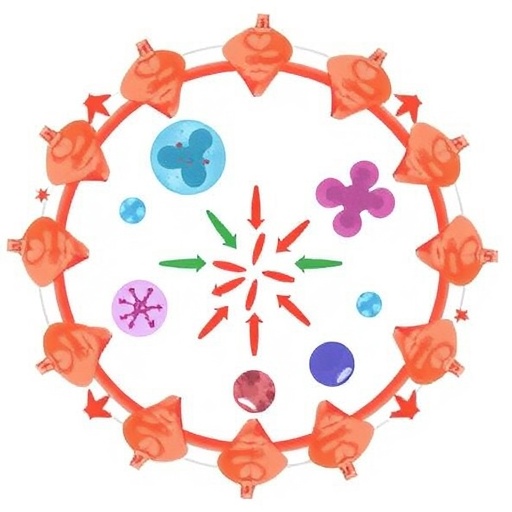
Gene therapy and other macromolecule-based medicines face a persistent obstacle: most delivery routes rely on endocytosis, after which therapeutic cargos are trapped and degraded inside endosomes. In particular, poor endosomal escape efficiency has limited how reliably mRNA, proteins, nucleic acids, and gene-editing tools can reach the cytosol where they must work. A new review in Biomedical Analysis argues that the field is increasingly moving toward strategies that bypass these canonical uptake routes.

Led by Dr. Yang Liu, the authors map recent progress in non-endocytic transmembrane delivery technologies designed for direct cytosolic access. Instead of forcing cargos through endosomes, these approaches aim to cross the cell membrane through mechanisms that are more controllable, potentially more efficient, and better suited to functional biomacromolecule delivery.

The review organizes six major categories of emerging platforms, reflecting both physical and biomimetic engineering trends. The first group uses transient membrane permeabilization, including electroporation-like, sonoporation, photothermal, and mechanical modulation methods that create reversible pores while attempting to limit cellular damage.

Next come cell-penetrating peptides, which promote cargo translocation through a combination of electrostatic interactions and membrane-associated processes. Membrane fusion systems and virus-like particles follow, both borrowing from natural membrane-remodeling events to enable carrier bilayers or viral envelopes to merge with cellular membranes in a receptor-influenced manner.

More recently, phase-separated carriers—often described as membrane-wetting, liquid-like droplets—add an unusual route to membrane entry that leverages phase transitions rather than classical vesicular uptake. At the frontier of design are engineered biological machines that use contractile, injection-like mechanisms to physically breach the membrane and deliver functional payloads.

By surveying these modalities in chronological context, the authors also highlight how micro- and nanoscale engineering is improving delivery performance while focusing on safety constraints. Key remaining challenges include achieving cell-specific targeting, minimizing immune activation, supporting scalable clinical manufacturing, and ensuring long-term tolerability.

Overall, the review frames non-endocytic delivery as a strategic route to unlock precision medicine applications that require cytosolic activity. If these systems can overcome specificity and safety hurdles, they could accelerate next-generation gene therapy, mRNA treatments, protein therapeutics, and cellular engineering workflows.

Subject of Research: Cells
Article Title: Progress in non-endocytic dependent transmembrane delivery of biological macromolecules
News Publication Date: 20-Jun-2026
Web References: https://www.sciencedirect.com/journal/biomedical-analysis
References: DOI: 10.1016/j.bioana.2026.05.003
Image Credits: Maosong Yang, Jiheng Wang, Chang Chen & Yang Liu
Keywords: non-endocytic delivery, transmembrane delivery, cytosolic access, endosomal escape, gene therapy, mRNA, proteins, phase-separated carriers, viral-like particles, cell-penetrating peptides

Tags: advances in gene editing delivery methodsbiomimetic delivery platformsbypassing endosomal entrapmentcell-penetrating peptides for drug deliverydirect cytosolic translocationelectroporation and sonoporation methodsmembrane fusion systems in gene therapymembrane permeabilization techniquesnon-endocytic biomolecule deliveryphysical and biological translocation mechanismstherapeutic macromolecule cytosolic accessvirus-like particles for intracellular delivery
Share26Tweet16
Previous Post

São Paulo Archipelago Acts as Breeding Haven for Endangered Sharks

Next Post

Alan Turing’s Gay Short Story Portrays Playful Man Obsessed with Sex, Literature

Related Posts

Scientists uncover molecular mechanisms of Pirsonia diadema infection in diatoms
Biology

Scientists uncover molecular mechanisms of Pirsonia diadema infection in diatoms

July 26, 2026
T-Cell Engagers: Balancing Activity and Safety in Engineering Designs
Biology

T-Cell Engagers: Balancing Activity and Safety in Engineering Designs

July 26, 2026
SPF2 and SGO2/CTF18 limit centromere-near crossovers by regulating SUMOylation
Biology

SPF2 and SGO2/CTF18 limit centromere-near crossovers by regulating SUMOylation

July 26, 2026
Gene transfer between infecting bacteria drives extreme antibiotic resistance in lungs
Biology

Gene transfer between infecting bacteria drives extreme antibiotic resistance in lungs

July 26, 2026
Biomolecular Condensates Act as Unexpected Catalysts, Study Finds
Biology

Biomolecular Condensates Act as Unexpected Catalysts, Study Finds

July 26, 2026
Reproductive Isolation and Gene Introgression Sculpt Genomic Landscape in Hawaiian Alga
Biology

Reproductive Isolation and Gene Introgression Sculpt Genomic Landscape in Hawaiian Alga

July 26, 2026
Next Post
Alan Turing’s Gay Short Story Portrays Playful Man Obsessed with Sex, Literature

Alan Turing’s Gay Short Story Portrays Playful Man Obsessed with Sex, Literature

  • Mothers who receive childcare support from maternal grandparents show more

    Mothers who receive childcare support from maternal grandparents show more parental warmth, finds NTU Singapore study

    27656 shares
    Share 11059 Tweet 6912
  • University of Seville Breaks 120-Year-Old Mystery, Revises a Key Einstein Concept

    1061 shares
    Share 424 Tweet 265
  • Bee body mass, pathogens and local climate influence heat tolerance

    682 shares
    Share 273 Tweet 171
  • Researchers record first-ever images and data of a shark experiencing a boat strike

    546 shares
    Share 218 Tweet 137
  • Groundbreaking Clinical Trial Reveals Lubiprostone Enhances Kidney Function

    531 shares
    Share 212 Tweet 133
Science

Embark on a thrilling journey of discovery with Scienmag.com—your ultimate source for cutting-edge breakthroughs. Immerse yourself in a world where curiosity knows no limits and tomorrow’s possibilities become today’s reality!

RECENT NEWS

  • Parents’ socioeconomic status outweighs prenatal behaviors in shaping future health
  • Ancient Fossil Reveals Where It Lived 200 Million Years Ago
  • ACLM Lifestyle Medicine Residency Curriculum Wins 2026 AAMSE Profiles of Excellence Award
  • Eco-Friendly Ionic Liquid Cuts Energy Use in Industrial Chemical Separations by Half

Categories

  • Agriculture
  • Anthropology
  • Archaeology
  • Athmospheric
  • Biology
  • Biotechnology
  • Blog
  • Bussines
  • Cancer
  • Chemistry
  • Climate
  • Earth Science
  • Editorial Policy
  • Marine
  • Mathematics
  • Medicine
  • Pediatry
  • Policy
  • Psychology & Psychiatry
  • Science Education
  • Social Science
  • Space
  • Technology and Engineering

Subscribe to Blog via Email

Enter your email address to subscribe to this blog and receive notifications of new posts by email.

Join 5,146 other subscribers

© 2025 Scienmag - Science Magazine

Welcome Back!

Login to your account below

Forgotten Password?

Retrieve your password

Please enter your username or email address to reset your password.

Log In
No Result
View All Result
  • HOME
  • SCIENCE NEWS
  • CONTACT US

© 2025 Scienmag - Science Magazine

Discover more from Science

Subscribe now to keep reading and get access to the full archive.

Continue reading
