

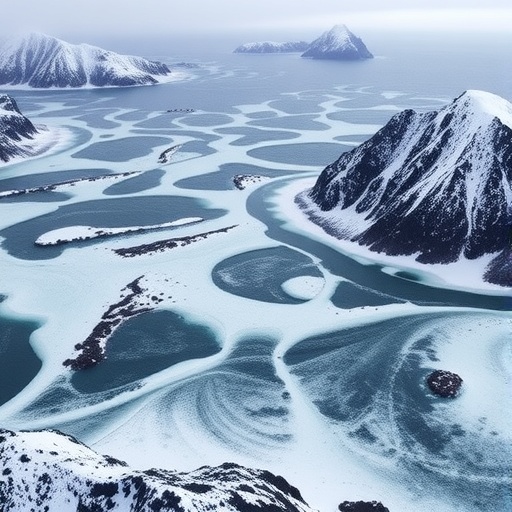
The world’s enclosed seas stand as pivotal ecological and climatic indicators, revealing the urgent necessity for comprehensive emission reductions and societal adaptation strategies. These semi-isolated bodies of water, bordered by landmasses and connected to the open ocean through narrow straits, serve as unique microcosms of global marine environments, yet face intensifying threats from anthropogenic activities. A recent groundbreaking study elucidates the complex interactions between climate change, pollution, and socio-economic factors impacting these marine ecosystems, underscoring their vulnerability and significant influence on regional and global climate systems.
Enclosed seas, such as the Mediterranean, Baltic, Black, and Caspian Seas, possess distinct physical and biogeochemical dynamics due to their limited exchange with the wider ocean. This characteristic intensifies the retention of pollutants, nutrients, and heated waters, magnifying ecological disruptions. The study highlights that these seas experience amplified warming rates compared to open oceans, a consequence of reduced water circulation and increased absorption of solar radiation. This disparity exacerbates stratification, limits oxygen availability in deeper waters, and promotes the proliferation of harmful algal blooms, threatening the biodiversity dependent on these habitats.
The emission of greenhouse gases plays a critical role in driving climate-related changes in enclosed seas. Elevated atmospheric CO2 concentrations not only raise sea surface temperatures but also contribute to ocean acidification, altering carbonate chemistry critical for calcifying organisms such as corals and shellfish. The research presents compelling evidence that enclosed seas are acting as hotspots for ocean acidification, with pH declines occurring at rates far exceeding those observed in open ocean settings. This accelerated acidification jeopardizes the structural integrity of marine ecosystems and their capacity to provide essential services, including fisheries and coastal protection.
Importantly, the study reveals the cascading effects of these environmental stressors on regional human populations. The livelihoods of millions who depend on fisheries and tourism industries linked to enclosed seas are increasingly at risk. Overfishing, combined with habitat degradation and climate impacts, threatens food security and economic stability. The authors draw attention to the urgent need for adaptive governance frameworks that integrate climate mitigation efforts with sustainable resource management to safeguard these vulnerable coastal communities.
Beyond direct human pressures, the biogeochemical cycles within enclosed seas are undergoing profound transformations. Enhanced nutrient runoff from agriculture and urbanization has led to eutrophication, fueling hypoxic zones that decimate marine life. The study finds that warming temperatures exacerbate the severity and duration of these low-oxygen events by strengthening water column stratification and reducing vertical mixing. This creates a feedback loop where diminished oxygen levels amplify greenhouse gas production, particularly nitrous oxide, further intensifying warming and climate change.
The research also shines a light on the intricate balance between positive and negative feedback mechanisms in enclosed seas. While some systems display resilience through biological adaptation and shifts in species composition, many are approaching tipping points with irreversible consequences. Coral reefs and seagrass meadows, critical for carbon sequestration and habitat provision, are especially vulnerable, with localized extinctions already reported. The study emphasizes the importance of early warning systems and real-time monitoring to detect and mitigate impending ecological collapses.
Advanced modeling techniques employed in the research offer unprecedented insights into future scenarios under varying emission pathways. By simulating coupled climate, oceanographic, and socio-economic dynamics, the authors demonstrate that the trajectory of enclosed seas can be decisively altered through rapid emission reductions. Scenarios consistent with the Paris Agreement goals project significant reductions in sea temperature rise and acidification impacts by mid-century, providing a window of opportunity for ecological recovery and societal adaptation.
However, the study also cautions that without immediate and sustained intervention, enclosed seas will face profound degradation with cascading effects on adjacent economies and global climate regulation. The synergistic impact of warming, acidification, pollution, and overexploitation could render some enclosed seas as “dead zones,” with irreversible loss of biodiversity and ecosystem function. Such outcomes would not only imperil marine life but also compromise carbon sinks, exacerbating atmospheric greenhouse gas concentrations.
Encased in the geography of enclosed seas are diverse cultural and political realms, posing challenges and opportunities for transboundary cooperation. The research underscores the essential role of multinational agreements and integrated management approaches to address the complex social-ecological systems dependent on these waters. Adaptive policies that incorporate scientific findings and prioritize ecosystem-based management are critical for enhancing resilience and ensuring equitable resource sharing.
The authors advocate for enhanced public awareness and engagement in protecting enclosed seas. Communicating the scientific urgency through accessible platforms can galvanize global citizens and policymakers to support emission targets and conservation measures. Education initiatives emphasizing the interconnectedness of marine health and human well-being are vital for fostering a sense of stewardship and collective responsibility.
Technological innovations, including improved remote sensing, autonomous monitoring systems, and biogeochemical sensors, are pivotal tools facilitating continuous assessment of environmental changes in enclosed seas. The study highlights how integrating these advanced technologies with traditional ecological knowledge can inform adaptive management practices and optimize responses to emerging threats.
The complex interplay between natural variability and anthropogenic influence in enclosed seas requires multidisciplinary research approaches. The study employs robust datasets encompassing oceanography, climatology, ecology, socio-economics, and policy analysis to provide a comprehensive understanding of the multifaceted challenges facing these systems. Such integrated research is paramount for devising actionable solutions and guiding sustainable development in coastal regions.
In conclusion, enclosed seas are critical natural laboratories and barometers of planetary health, accentuating the acute need for rapid emission reductions to curb climate change and its deleterious impacts. They epitomize the confluence of environmental, economic, and social narratives that define humanity’s future on Earth. Addressing the challenges posed by enclosed seas demands unprecedented global collaboration, innovative science, and transformative societal adaptation to secure the resilience of these invaluable ecosystems and the communities they sustain.
Subject of Research: Enclosed seas’ response to climate change, emission impacts, and societal adaptation strategies
Article References:
Gröger, M., Börgel, F., Dutheil, C. et al. The world’s enclosed seas highlight the need for urgent emission reductions and societal adaptation. Commun Earth Environ (2026). https://doi.org/10.1038/s43247-026-03412-3
Image Credits: AI Generated
DOI: 10.1038/s43247-026-03412-3
Keywords: Enclosed seas, climate change, greenhouse gas emissions, ocean acidification, marine ecosystems, eutrophication, hypoxia, biogeochemical cycles, emission reductions, societal adaptation, sustainable management, biodiversity loss, carbon sequestration, transboundary governance


