

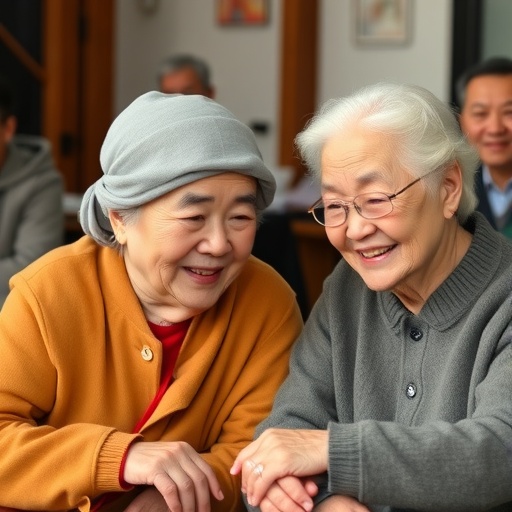
In recent years, the aging population has become a prominent global issue, raising critical questions about the most effective modes of elder care. A comprehensive study conducted by Zhang et al. (2026) delves into the preferences of older individuals in Northwest China regarding their care options, focusing distinctly on how these preferences are influenced by socioeconomic status. The research employs a multilevel analytical approach, thus providing a nuanced understanding of the factors that shape elderly individuals’ choices for care arrangements.
This groundbreaking study underscores the diversity of elder care preferences within the aging demographic in Northwest China. It recognizes that older adults are not a monolith; rather, their care preferences can vary significantly based on their socioeconomic circumstances. By stratifying the data according to economic status, the researchers reveal critical insights that could facilitate more tailored, effective elder care solutions in the region.
The implications of these findings resonate deeply, especially in a rapidly aging society. Elderly individuals in different socioeconomic classes exhibit distinct preferences for care, reflecting their unique life experiences and expectations. For example, those with higher socioeconomic status may prefer more autonomous living arrangements with professional support, while those from lower socioeconomic backgrounds might favor community-based programs or family-centered care, which they perceive as beneficial and accessible.
Through a multilevel lens, the research highlights how variables such as income, education, and social networks interact to shape individual preferences for elder care. It essentially maps out a complex web of influences where each layer—personal, communal, and systemic—plays a significant role in the decision-making process of the elderly. Such insights are invaluable, as they can lead to more informed policy-making and better resource allocation in elder care services.
Moreover, this research invites stakeholders in the healthcare system to reconsider current care models in light of the diverse needs articulated by older adults across socioeconomic divisions. By understanding that preferences are not uniform, care providers can design more nuanced interventions that address the specific desires of varying demographic groups. This approach is crucial for constructing a more inclusive and effective elder care system.
The connection between socioeconomic status and care preferences brings to light the broader societal implications as well. For instance, as income disparities widen, the challenge for policymakers and health administrators becomes even more pronounced. Ensuring equitable access to high-quality elder care services necessitates targeted efforts to bridge gaps in care stemming from economic inequalities.
As society grapples with the implications of an aging populace, insights from research like Zhang et al. pave the way for a more adaptable and responsive healthcare system. By equipping care facilities, policymakers, and community organizations with a better understanding of older individuals’ preferences, we create a foundation for enhanced care that prioritizes individual experiences and needs.
The study ultimately emphasizes the necessity for ongoing dialogue among healthcare professionals, researchers, and the older community itself. Older individuals’ voices and experiences should serve as guiding principles in the evolution of elder care frameworks. It is through this collaboration that we can ensure sustainable and high-quality care solutions that honor aging individuals’ rights and dignity.
In summary, Zhang et al.’s study articulates a pressing need to investigate and respect the preferences of older adults concerning their care. It argues convincingly that socioeconomic status plays a fundamental role in shaping these preferences, reinforcing the necessity for a multi-faceted approach to elder care. As the population ages, the insights provided by this research can serve as a catalyst for transforming elder care policies and practices, making them more personalized, effective, and equitable.
Understanding the intricacies of elder care preferences is paramount for future research as well. This study serves as a stepping stone toward a deeper exploration of how diverse socioeconomic factors influence not just preferences, but the overall experience of care for older adults. Given the critical demographic trends, ongoing research will be essential to adapt to the changing landscape of elder care needs.
In conclusion, the findings of Zhang et al. shed light on an often-overlooked aspect of elder care—how socioeconomic status can distinctly shape the preferences and needs of the elderly. As the global population ages, these discussions will only become more crucial. Continuing to prioritize diverse voices within healthcare dialogue will ultimately forge paths to more compassionate, effective, and equitable elder care policies moving forward.
Ultimately, the aging population poses both challenges and opportunities. By grounding elder care strategies in empirical research, we can usher in an era of care that respects older adults’ preferences and upholds their dignity across socioeconomic divides.
Subject of Research: Preferences for Elderly Care Modes in Northwest China
Article Title: Older people’s preferences for elderly care mode in Northwest China: a multilevel analysis stratified by socioeconomic status
Article References:
Zhang, J., Feng, Y., Wang, J. et al. Older people’s preferences for elderly care mode in Northwest China: a multilevel analysis stratified by socioeconomic status.
BMC Geriatr (2026). https://doi.org/10.1186/s12877-026-07048-y
Image Credits: AI Generated
DOI: 10.1186/s12877-026-07048-y
Keywords: Elderly care, socioeconomic status, care preferences, Northwest China, multilevel analysis


