

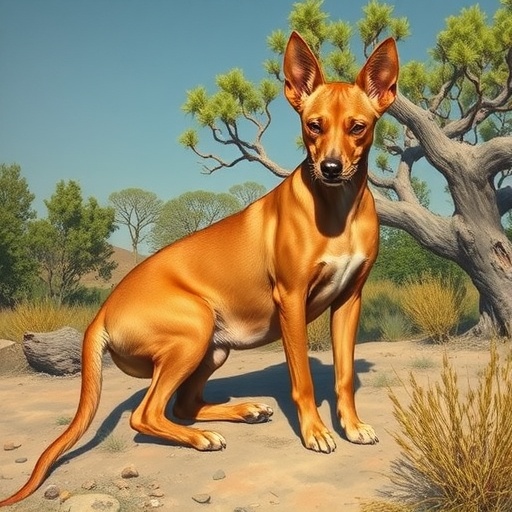
In a groundbreaking study exploring the relationship between canids and humans, researchers have uncovered fascinating evidence of broad-spectrum feeding behavior and the use of psychoactive plants among diaguita dogs in the semi-arid regions of northern Chile. This research, conducted at the archaeological site of El Olivar, reveals significant insights into how dogs coexisted with humans and the implications of their diet on understanding ancient human behaviors and domestication processes.
The El Olivar site serves as a crucial lens through which researchers can examine the interwoven lives of humans and dogs, shedding light on how these relationships evolved over time. By analyzing the remnants of food and other organic materials, the team has reconstructed the dietary patterns of diaguita dogs, highlighting their role in human subsistence strategies. Unlike the narrow focus seen in contemporary dog diets, the research indicates that these ancient canids had a remarkably varied diet, which may have included not only traditional protein sources but also plants with psychoactive properties.
Psychoactive plant use in canids is an intriguing aspect of this study, as it suggests that these dogs might have experienced altered states of consciousness. The implications of such findings can extend beyond mere curiosity; they could provide valuable insights into the cultural practices of ancient diaguita communities. Would these dogs have been companions in rituals, or might they have played a role in communal storytelling? Understanding this element of their existence can reshape our perception of how animals were integrated into the social fabric of these communities.
Moreover, the significance of using psychoactive plants opens up discussions regarding the knowledge systems of these ancient peoples. The researchers speculate that the intentional feeding of these plants to dogs might have involved a deep understanding of their effects, indicating a sophisticated form of animal husbandry and companionship that goes beyond basic survival instincts. How might this knowledge of plant use have been transferred across generations? Such questions remain open for further investigation but highlight the complexity of human-animal relationships.
Equally important is the adaptation of diaguita dogs to the harsh environmental conditions of northern Chile. The semi-arid landscape presents unique challenges for survival, making the discovery of a broad-spectrum diet particularly noteworthy. As the team analyzed archaeological evidence, they discovered that diaguita dogs likely adapted their feeding behaviors over time, which could reflect the shifting dynamics of their human counterparts. When humans faced resource scarcity or climatic changes, did the dogs adjust their diets accordingly? Such adaptations could offer insights into the resilience of both species amid environmental pressures.
Additionally, examining the remains found at El Olivar has prompted discussions about domestication. The study opens up questions regarding when and how these dogs were integrated into human societies. Was their incorporation a deliberate act based on their hunting capabilities, or did it arise more serendipitously through shared living spaces? The nuances of this relationship might provide clues into the domestication processes that shaped modern canine breeds we recognize today.
The processes of daily living and sustenance forms an essential pillar of studying these ancient communities. The archaeological findings reveal that the diaguita people relied not only on agriculture but also on their relationship with dogs for various aspects of their livelihood. Dogs may have assisted with herding, hunting, and even task-related support, showcasing a mutualistic relationship that benefited both parties. The ways in which these dogs contributed to human survival adds depth to the narrative of domestication and partnership.
At the core of these insights is the broader question of how ancient humans viewed their animal companions. Through the lens of this research, the diaguita dogs of El Olivar emerge not merely as animals but as integral parts of cultural and social identities. The intersection of feeding behaviors, cultural practices, and the use of psychoactive plants speaks to a complex relationship that was likely characterized by mutual respect and utility.
As science continues to unravel the past, studies like this one have laid foundations for future research into the nuances of human-animal interactions. It beckons scholars to further investigate how different cultures interacted with canids similarly or differently, accounting for environmental factors that shaped these interactions. Thus, the partnership between humans and dogs is less of a single narrative and more of a rich tapestry woven across diverse civilizations.
While the study presents compelling arguments for the unique relationships in Canids–humans dynamics, it also highlights the general importance of interdisciplinary approaches to archaeology. By merging anthropological insights with botanical and zoological understandings, researchers develop a more accurate portrayal of the lived experiences of ancient people and their canine companions. Such integrative research can help paint broader pictures of cultural evolution and environmental adaptation.
The stories we draw from the past, such as those at El Olivar, cannot be underestimated—they document the evolution of companionship, nurturance, and shared existence. The integration of psychoactive plants into dog diets suggests a profound relationship not just limited to practical benefits but enriched with cultural and emotional complexities that might have shaped the trajectory of human and animal destinies.
In conclusion, the revelations from El Olivar stand at the confluence of archaeology, anthropology, and ethics regarding animal rights. As we beckon the voices of the past, these findings urge us to reconsider our current relationships with dogs and the implications of those ties. By understanding how our predecessors lived with their canine companions, we gain perspectives that can foster more compassionate and thoughtful connections with animals today.
Ultimately, as research continues to unveil these complex narratives, the partnership between humans and dogs reflects an enduring relationship that has withstood the test of time, evolving through generations and across cultures—a testament to the bonds that unite species beyond mere survival.
Subject of Research: Canids–humans relationships at El Olivar
Article Title: Canids–humans relationships at El Olivar: broad-spectrum feeding behavior and psychoactive plant use in diaguita dogs (Semi-Arid North of Chile)
Article References:
González Venanzi, L., Saghessi, D., López Mendoza, P. et al. Canids–humans relationships at El Olivar: broad-spectrum feeding behavior and psychoactive plant use in diaguita dogs (Semi-Arid North of Chile). Archaeol Anthropol Sci 18, 8 (2026). https://doi.org/10.1007/s12520-025-02356-7
Image Credits: AI Generated
DOI: https://doi.org/10.1007/s12520-025-02356-7
Keywords: canids, diaguita dogs, psychoactive plants, human-animal relationships, broad-spectrum diet, archaeology, northern Chile, domestication processes.


