

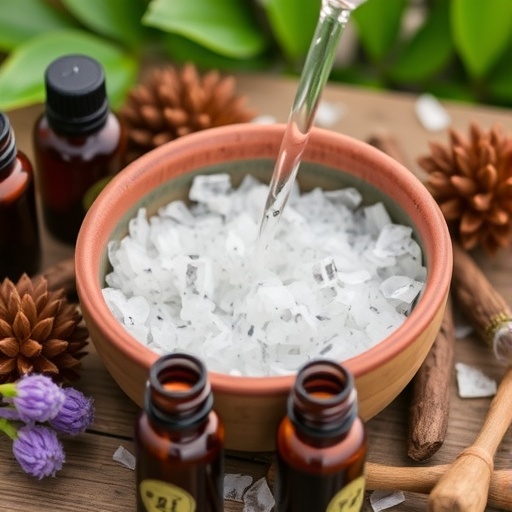
In an era where sustainability intersects with innovation, the extraction of essential oils from spices and herbs has garnered unprecedented attention. A groundbreaking comprehensive review published in Food Science and Biotechnology in late 2025 delineates the latest sustainable techniques revolutionizing this ancient yet continually evolving practice. Essential oils—volatile, aromatic compounds extracted from botanicals—serve critical roles in industries ranging from pharmaceuticals to cosmetics and food flavoring. However, traditional extraction processes often entail substantial environmental footprints, spurring an urgent need for greener alternatives.
The study, authored by Panigrahi, Shams, and Dash, meticulously evaluates a spectrum of extraction methods that harmonize efficiency with ecological responsibility. Central to the discourse is the transition from energy-intensive and solvent-heavy conventional techniques to innovative methodologies leveraging renewable resources and minimizing waste. These advancements signify a pivotal shift aimed at reducing carbon footprints while elevating yield quality and purity.
Hydrodistillation and steam distillation have historically dominated essential oil extraction, relying heavily on significant volumes of water and thermal energy that can degrade sensitive aromatic compounds. The review highlights how emerging technologies such as supercritical fluid extraction (SFE), particularly with carbon dioxide, mitigate such drawbacks by operating under milder conditions that preserve molecular integrity. SFE’s ability to replace hazardous organic solvents with benign carbon dioxide exemplifies the intersection of safety and sustainability.
Microwave-assisted extraction (MAE) emerges as another promising technique spotlighted in the review. By utilizing microwave radiation to rapidly heat plant matrices, MAE drastically reduces extraction time and energy consumption. This process enhances efficiency without compromising the chemical profile of the essential oils, demonstrating a scalable solution perfectly aligned with green chemistry principles. Coupled with intelligent solvent selection, MAE represents a significant leap forward in eco-friendly extraction protocols.
Ultrasound-assisted extraction (UAE) also commands attention for its unique mechanism of action—acoustic cavitation—that disrupts plant cell walls to facilitate oil release. This nondestructive approach not only accelerates extraction but also diminishes solvent usage. When integrated with biocompatible solvents, UAE fosters an extraction environment that is gentler on both product quality and the planet, underscoring the technique’s sustainability credentials.
Enzymatic extraction methods introduce an additional dimension, utilizing specific enzymes to degrade cell wall components and liberate essential oils without resorting to harsh chemicals or excessive heat. Though still under refinement, enzymatic processes promise to amplify yield while curtailing environmental impacts by reducing reliance on solvents and energy inputs. The review underscores the potential of enzyme-assisted extraction as an innovative frontier demanding further exploration.
The convergence of green solvents with novel extraction platforms forms a critical theme punctuating the discourse. Ionic liquids, deep eutectic solvents, and bio-based solvents are evaluated for their low toxicity and biodegradability. Their compatibility with emerging physical extraction techniques marks a paradigm shift in sustainable extraction design, achieving both environmental stewardship and industrial viability.
Moreover, the integration of process intensification strategies, such as combining ultrasound or microwave with supercritical fluids or enzymatic systems, is explored for synergistic effects. These hybrid approaches optimize mass transfer, reduce extraction cycles, and maximize resource efficiency, setting new benchmarks for sustainability metrics in essential oil production.
A notable emphasis is placed on the life cycle assessment (LCA) frameworks applied to evaluate the environmental impacts of these techniques comprehensively. The detailed accounting of energy consumption, greenhouse gas emissions, water use, and waste generation across various extraction modalities offers critical insights for stakeholders aiming to implement greener processes on an industrial scale.
The review further stresses the importance of preserving the chemical integrity and bioactivity of essential oils during extraction, which directly influences product efficacy in therapeutic and commercial applications. Sustainable extraction methods must therefore balance environmental considerations with quality retention, a challenge addressed through advanced analytical characterization techniques discussed in the article.
Socioeconomic dimensions, such as cost-effectiveness, scalability, and regulatory compliance, are also dissected to provide a holistic overview. The authors underscore that technological feasibility must be married with economic viability to foster industry-wide adoption of sustainable practices, fueling market growth aligned with consumer demand for environmentally conscious products.
In addressing the global spice and herb industry, where production practices vary geographically, the review calls for localized adaptation of sustainable extraction technologies. Tailoring methods to specific plant matrices and environmental contexts can maximize efficiency and sustainability, empowering producers from smallholders to large enterprises.
Importantly, the review acknowledges ongoing challenges, including technical bottlenecks, initial capital investments, and knowledge gaps in enzyme technology and solvent recycling systems. It advocates for multidisciplinary research and collaborative innovation to overcome these hurdles, paving the way for mainstreaming green extraction technologies.
In conclusion, this comprehensive review not only synthesizes existing knowledge but also charts a visionary pathway for future research and industrial application in sustainable essential oil extraction. The vibrant synergy between cutting-edge technologies and ecological mindfulness promises to redefine the spice and herb sector’s contribution to a greener, healthier world.
Subject of Research: Sustainable techniques for extracting essential oils from spices and herbs
Article Title: Sustainable techniques for extracting essential oils from spices and herbs: A comprehensive review
Article References:
Panigrahi, A., Shams, R. & Dash, K.K. Sustainable techniques for extracting essential oils from spices and herbs: A comprehensive review. Food Sci Biotechnol (2025). https://doi.org/10.1007/s10068-025-02004-9
Image Credits: AI Generated
DOI: 24 November 2025


