

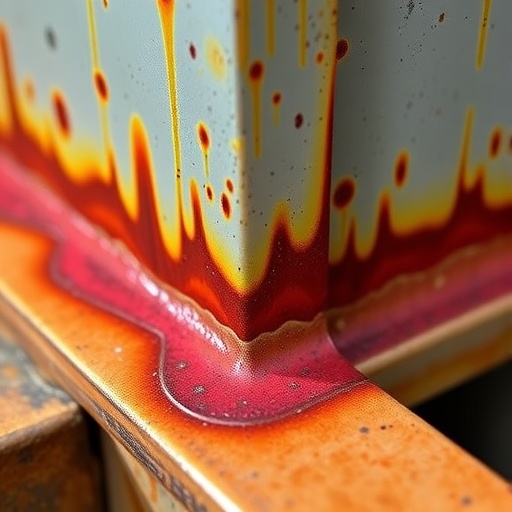
Recent investigations have illuminated a remarkable approach to combating corrosion in mild steel, emphasizing the eco-friendly properties of plant-based compounds. The research conducted by Tluangi et al. has spotlighted the essential oil derived from Zingiber mioga, a member of the ginger family, as a potent corrosion inhibitor in acidic environments. The findings suggest that this natural compound not only mitigates the corrosion of metal surfaces but also aligns seamlessly with increasing global sentiments toward green chemistry and sustainability. This furthers the discourse on how natural products can contribute to industrial applications, especially in contexts where synthetic inhibitors may pose environmental hazards.
Corrosion, particularly in acidic media, remains a formidable challenge for industries reliant on mild steel for construction and manufacturing. Traditional methods of combating corrosion often involve the use of harsh chemicals, which can inflict environmental damage and pose health risks. The innovative insights provided by Tluangi et al. highlight an imperative shift towards eco-friendly strategies that harness natural resources. Essential oils have been recognized for their biocompatibility and minimal toxicity, paving the way for their inclusion in corrosion inhibition strategies.
In analyzing the electrochemical behavior of Zingiber mioga essential oil, researchers conducted a series of experiments that demonstrated a significant reduction in corrosion rates on mild steel surfaces. Utilizing potentiodynamic polarization and electrochemical impedance spectroscopy (EIS), they provided quantitative confirmation of the oil’s efficacy as a corrosion inhibitor. The essential oil exhibited a notable ability to form protective films on the steel surface, subsequently hindering the electrochemical reactions that lead to corrosion.
These electrochemical measurements indicated that the essential oil’s inhibitory effects increased with concentration, showcasing its potential for scalable applications. By understanding the relationship between concentration and efficacy, industries can optimize the usage of this natural resource, thereby enhancing durability while reducing the ecological footprint. Such findings resonate deeply with industries striving to comply with more stringent environmental regulations and consumer preferences for sustainable practices.
The theoretical studies accompanying the experimental data employed quantum chemical calculations, hinting at the active sites within the Zingiber mioga oil responsible for its inhibition capabilities. Molecular docking simulations revealed the potential interactions between the oily compound and mild steel atoms, allowing for a literate understanding of how these natural inhibitors can effectively intervene in corrosion processes. This theoretical framework complements the experimental results, presenting a well-rounded investigation into the mechanics of corrosion inhibition.
The implications of this research extend beyond mere corrosion management. It essentially opens avenues for interdisciplinary exploration, merging the fields of materials science, bioengineering, and environmental chemistry. As researchers delve deeper into the utilization of bio-based inhibitors, the potential for life cycle analyses emerges, comparing the environmental impacts of plant-derived inhibitors against synthetic counterparts. This holistic approach may redefine industry standards and influence decision-making processes concerning materials choice in various sectors.
Moreover, the application of Zingiber mioga essential oil reflects a broader acceptance of natural alternatives in technical fields traditionally dominated by synthetic products. This trend underscores a paradigm shift where the long-standing practices of relying solely on man-made chemicals are being reassessed in favor of nature-inspired solutions. Such shifts not only aim to mitigate environmental impacts arising from industrial processes but also resonate with ethical considerations concerning biodiversity conservation.
In practical terms, industries can incorporate Zingiber mioga essential oil into existing corrosion-resistant formulations, thus enhancing the performance of their products. By leveraging bio-based solutions, manufacturers stand to achieve both regulatory compliance and consumer approval, aligning their operations with an increasingly eco-conscious market. As knowledge disseminates through scientific literature, it could herald a wider adoption, prompting collaboration between researchers and industry experts in the quest for innovative corrosion solutions.
In conclusion, the work presented by Tluangi et al. epitomizes a pivotal movement toward incorporating nature-derived substances in industrial practices. With extensive testing corroborating the efficacy of Zingiber mioga essential oil, the research not only addresses the critical challenge of metal corrosion but also reaffirms the utility of green chemistry in fostering sustainable advancements. As we continue to explore the boundaries of material science, the lessons learned from this study may inspire a new era of research and innovation focused on harmonizing technology with environmental stewardship.
This groundbreaking study invites further exploration, setting a precedent for future research into other natural compounds that might possess similar corrosion-inhibiting properties. The potential of these plant derivatives is vast, and as more scientists embark on similar investigations, the hope is to uncover a plethora of natural solutions that could replace harmful synthetics across various sectors.
The convergence of scientific inquiry, environmental needs, and industrial application underscores the significance of this research. Engaging a wider audience through clear communication of these findings could inspire additional studies and propel the industry toward more sustainable principles. The journey toward a corrosion-free future, led by nature’s own arsenal, has taken an exciting turn, and the implications are just beginning to unfold.
This shift towards green corrosion inhibitors represents a golden opportunity for those in the field to innovate and explore new methodologies that harmonize economic interests with ecological responsibilities. The future of materials science will be marked not just by advancements in technology but by a renewed commitment to preserving our planet while achieving industrial objectives.
With ongoing conversations about environmental sustainability becoming more prevalent, the insights gleaned from studying Zingiber mioga essential oil are timely. As industries worldwide grapple with the pressing need to reduce their carbon footprints, such natural solutions offer a hopeful pathway toward an eco-friendly industrial revolution.
As we look toward the horizon, the message is clear: harnessing nature’s wisdom can illuminate the path to progress, and a comprehensive understanding of the mechanisms underpinning these natural inhibitors can enhance our approach to modern challenges, enabling us to build a materially sustainable world.
Subject of Research: Corrosion inhibition of mild steel in acidic media using Zingiber mioga essential oil.
Article Title: Green corrosion inhibition of mild steel in acidic media: electrochemical behavior and theoretical studies of Zingiber mioga essential oil.
Article References: Tluangi, L., Mishra, R.K., Rajan, J.P. et al. Green corrosion inhibition of mild steel in acidic media: electrochemical behavior and theoretical studies of Zingiber mioga essential oil. Environ Sci Pollut Res (2026). https://doi.org/10.1007/s11356-025-37257-8
Image Credits: AI Generated
DOI: https://doi.org/10.1007/s11356-025-37257-8
Keywords: Corrosion inhibition, Zingiber mioga, essential oil, mild steel, green chemistry, eco-friendly solutions, electrochemical behavior.


