

Monday, July 27, 2026
Science
No Result
View All Result
  • Login
  • HOME
  • SCIENCE NEWS
  • CONTACT US
  • HOME
  • SCIENCE NEWS
  • CONTACT US
No Result
View All Result
Scienmag
No Result
View All Result
Home Science News Technology and Engineering

Echocardiography Hemodynamics in Preterm Infants Predict Neurodevelopment Through Age Three

July 27, 2026
in Technology and Engineering
Reading Time: 2 mins read
0
Echocardiography Hemodynamics in Preterm Infants Predict Neurodevelopment Through Age Three

Echocardiography Hemodynamics in Preterm Infants Predict Neurodevelopment Through Age Three

65
SHARES
587
VIEWS
Share on FacebookShare on Twitter
ADVERTISEMENT

Early life cardiology may be a window into later brain development, according to a new Pediatrics Research study published in 2026. Researchers examined preterm infants during the first days after birth, focusing on how their cardiovascular systems functioned at a critical moment when the circulatory system is still adapting outside the womb. The team then tracked neurodevelopmental outcomes three years later, looking for links between early cardiac physiology and later learning and behavior.

The work centered on echocardiography-based hemodynamic profiling. Instead of relying on single measurements, the investigators used ultrasound readouts to characterize how blood moved through the heart and large vessels in the early postnatal period. Such measurements can capture the balance of pressures and flow patterns that reflect underlying adaptation, including how effectively oxygen delivery may be supported during a time of vulnerability.

Preterm birth is known to increase the risk of developmental delays, but predicting which infants will experience the most significant challenges remains difficult. The study suggests that cardiovascular function measured soon after delivery may help identify infants at higher neurodevelopmental risk. In other words, the heart’s early “performance” could act as a proxy for the broader physiologic stability needed for brain growth.

Across follow-up, neurodevelopmental assessment at age three was used to evaluate outcomes in domains that matter for daily functioning and future development. The researchers analyzed whether echocardiographic hemodynamics observed early in life were associated with these later measures. The findings support the idea that early circulatory dynamics are not just transient clinical observations—they may carry prognostic information.

Technically, echocardiography provides a noninvasive way to infer cardiac output-related physiology and to observe flow trajectories within the neonatal circulation. These parameters can be influenced by factors such as transitional vascular resistance and the degree of cardiopulmonary stability. When the transition is incomplete, the downstream effects on systemic perfusion could plausibly affect the developing brain.

By connecting early hemodynamic phenotypes to later neurodevelopment, the study points toward a future in which neonatal monitoring is more integrative. Echocardiography could become part of risk stratification strategies, guiding closer follow-up or early interventions for infants most likely to benefit. The study also highlights how timing matters: measurements during the early postnatal window may be especially informative.

Overall, the research advances the emerging field of “cardio-neuro” biomarkers in neonatology, where physiological signals serve as early indicators of long-term outcomes. With DOI 10.1038/s41390-026-05324-6, the full article—authored by Toyoshima, Masutani, Isayama and colleagues—adds evidence that the neonatal heart can forecast the developmental trajectory of preterm children.

Subject of Research: Pediatrics / Neonatology / Neurodevelopment
Article Title: Echocardiographic hemodynamics during early postnatal period and 3-year neurodevelopment outcomes in preterm infants.
Article References: Toyoshima, K., Masutani, S., Isayama, T. et al. Pediatric Research (2026). https://doi.org/10.1038/s41390-026-05324-6
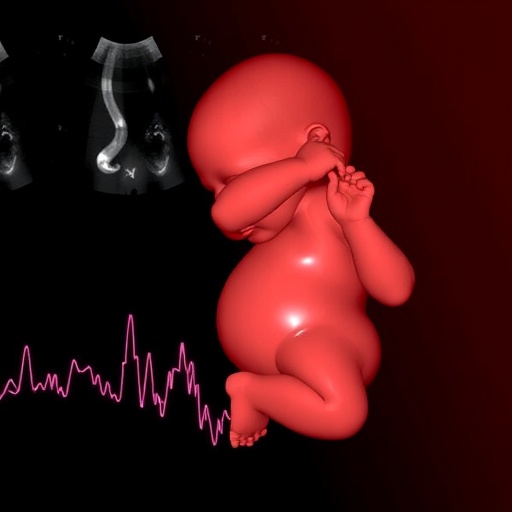
Image Credits: AI Generated
DOI: https://doi.org/10.1038/s41390-026-05324-6
Keywords:

Tags: cardiovascular assessment in preterm infantsearly cardiovascular biomarkers for brain developmentearly life cardiovascular health and cognitive outcomesearly postnatal blood flow measurementechocardiography in preterm neonateslink between cardiac function and neurodevelopmentneonatal circulatory adaptationneonatal hemodynamics and brain developmentpediatric cardiology and developmental assessmentprediction of neurodevelopmental outcomesPreterm infant echocardiographyultrasound-based hemodynamic profiling
Share26Tweet16
Previous Post

Breast Milk Odor Exposure Influences Early Oral Feeding in Preterm Infants

Next Post

Personalized Phage Therapy in ICU Patient Treating Polymicrobial Lung Infections

Related Posts

Phase-Uniform Mixed-Halide Perovskites Enable Stable Tandem Solar Cells
Medicine

Phase-Uniform Mixed-Halide Perovskites Enable Stable Tandem Solar Cells

July 27, 2026
UC Irvine Researchers Develop California Wildfire Damage Risk Map
Technology and Engineering

UC Irvine Researchers Develop California Wildfire Damage Risk Map

July 27, 2026
Pyridoxal Photoenzymes Enable Asymmetric Radical–Radical Cross-Coupling Reactions
Medicine

Pyridoxal Photoenzymes Enable Asymmetric Radical–Radical Cross-Coupling Reactions

July 27, 2026
Hospital Padrino Program Linked to Lower Perinatal Mortality in Colombia’s Pacific
Technology and Engineering

Hospital Padrino Program Linked to Lower Perinatal Mortality in Colombia’s Pacific

July 27, 2026
UNC-Chapel Hill Astronomers Detect One of the Universe’s Rarest Black Hole Events
Technology and Engineering

UNC-Chapel Hill Astronomers Detect One of the Universe’s Rarest Black Hole Events

July 27, 2026
Non-Gaussian Fluctuations in Order Parameter Across a Phase Transition
Medicine

Non-Gaussian Fluctuations in Order Parameter Across a Phase Transition

July 27, 2026
Next Post
Personalized Phage Therapy in ICU Patient Treating Polymicrobial Lung Infections

Personalized Phage Therapy in ICU Patient Treating Polymicrobial Lung Infections

  • Mothers who receive childcare support from maternal grandparents show more

    Mothers who receive childcare support from maternal grandparents show more parental warmth, finds NTU Singapore study

    27656 shares
    Share 11059 Tweet 6912
  • University of Seville Breaks 120-Year-Old Mystery, Revises a Key Einstein Concept

    1061 shares
    Share 424 Tweet 265
  • Bee body mass, pathogens and local climate influence heat tolerance

    682 shares
    Share 273 Tweet 171
  • Researchers record first-ever images and data of a shark experiencing a boat strike

    546 shares
    Share 218 Tweet 137
  • Groundbreaking Clinical Trial Reveals Lubiprostone Enhances Kidney Function

    531 shares
    Share 212 Tweet 133
Science

Embark on a thrilling journey of discovery with Scienmag.com—your ultimate source for cutting-edge breakthroughs. Immerse yourself in a world where curiosity knows no limits and tomorrow’s possibilities become today’s reality!

RECENT NEWS

  • Study Targets Rwanda to Combat Online Propaganda in Underrepresented Languages
  • Stomach Signals Help Brain Build Memories, New Study Reveals
  • UCSB-Led Researchers Assess Anoxic Marine Basins for Carbon Sequestration Potential
  • Phase-Uniform Mixed-Halide Perovskites Enable Stable Tandem Solar Cells

Categories

  • Agriculture
  • Anthropology
  • Archaeology
  • Athmospheric
  • Biology
  • Biotechnology
  • Blog
  • Bussines
  • Cancer
  • Chemistry
  • Climate
  • Earth Science
  • Editorial Policy
  • Marine
  • Mathematics
  • Medicine
  • Pediatry
  • Policy
  • Psychology & Psychiatry
  • Science Education
  • Social Science
  • Space
  • Technology and Engineering

Subscribe to Blog via Email

Enter your email address to subscribe to this blog and receive notifications of new posts by email.

Join 5,146 other subscribers

© 2025 Scienmag - Science Magazine

Welcome Back!

Login to your account below

Forgotten Password?

Retrieve your password

Please enter your username or email address to reset your password.

Log In
No Result
View All Result
  • HOME
  • SCIENCE NEWS
  • CONTACT US

© 2025 Scienmag - Science Magazine

Discover more from Science

Subscribe now to keep reading and get access to the full archive.

Continue reading
