


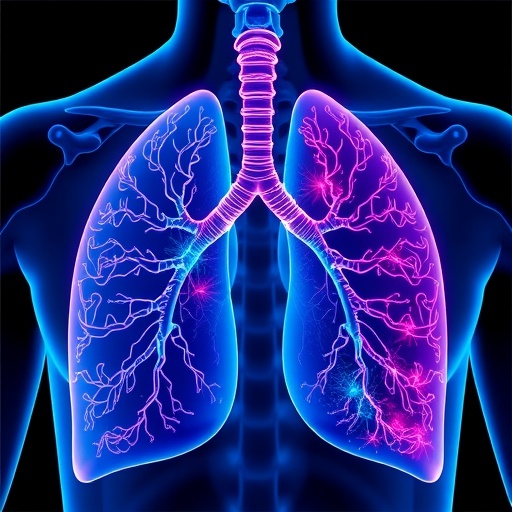
Munich, Germany — In a landmark advancement for respiratory medicine and pharmaceutical science, Ebenbuild GmbH, an innovative deep-tech healthcare enterprise based in Munich, has released the results of an extensive validation study published in the prestigious journal Nature Communications Medicine. This study confirms the accuracy and reliability of Ebenbuild’s patient-specific lung digital twin technology, designed to predict the precise lung deposition patterns of inhaled drugs with unprecedented spatial resolution. The validation against in vivo 3D SPECT/CT imaging—a gold standard in measuring pulmonary drug distribution—sets a new benchmark in computational respiratory modeling and opens transformative pathways for both drug development and clinical respiratory care.
Understanding the dynamics of drug delivery deep within the lungs has long been a formidable challenge. The difficulty lies in the intricate variability of human lung anatomy, airflow mechanics, disease-induced structural alterations, and aerosol properties, none of which are uniformly measurable in live patients or consistently accounted for during drug development. Traditional approaches have often relied on population averages or indirect clinical endpoints, leaving a gap in precision medicine applications and personalized treatment strategies. Ebenbuild’s digital twin technology addresses these gaps by converting standard computed tomography (CT) scans into comprehensive, patient-specific computational models that simulate airflow, tissue mechanics, and particle transport throughout the conducting airways and alveolar regions.
The core achievement of Ebenbuild’s model lies in its holistic construction. Unlike existing computational models that typically focus on either proximal airway deposition or distal alveolar regions, the Ebenbuild lung digital twin encompasses the entire respiratory tract. This integration facilitates high-fidelity simulations of how aerosolized drugs navigate the complex pulmonary geometry over the full breathing cycle. The ensuing predictions of local drug deposition volumes reflect real-world pharmacokinetic and pharmacodynamic conditions at the individual patient level, providing quantifiable insights that were previously inaccessible outside specialized imaging facilities.
The validation study published in Nature Communications Medicine rigorously compared lung twin model predictions to clinical SPECT/CT scans obtained from controlled inhalation studies. Across a spectrum of inhalation patterns and drug formulations, the correlation between predicted and measured lobar deposition reached an impressive coefficient of 0.95, underscoring the robust quantitative accuracy of the approach. These results affirm the model’s ability to replicate physiological particle transport and deposition not only in healthy lungs but also within heterogeneous pathological states, which exemplifies its broad translational applicability.
Highlighting the model’s versatility, the research further explored its utility in simulating pulmonary drug delivery in the context of idiopathic pulmonary fibrosis (IPF), a disease characterized by fibrotic remodeling and altered lung mechanics. By adjusting mechanical parameters and regional structural features, the digital twin effectively demonstrated how fibrotic lung tissue influences local aerosol deposition, providing a non-invasive virtual platform to assess treatment efficacy and tailor therapeutic regimens for patients with complex respiratory pathologies. Though modeling disease progression was not the primary focus of the study, these findings underscore the potential for integrated mechanistic and anatomical analyses in personalized respiratory medicine.
From a computational perspective, Ebenbuild’s platform incorporates an automated workflow encompassing image segmentation, three-dimensional model generation, and high-performance numerical simulations powered by computational fluid dynamics and tissue mechanics algorithms. This seamless integration delivers simulation outcomes within hours—an exponential improvement over the extended timelines traditionally associated with computational modeling. The computational efficiency and automation lend themselves to scalable applications, ranging from early-phase pharmaceutical research to regulatory submission support and clinical decision-making tools.
Moreover, the platform anchors its value proposition in the generation of model-informed drug development insights. It facilitates in silico trials that can optimize inhaler design, particle size distribution, dose, and formulation characteristics before costly clinical studies commence. Ebenbuild’s application, TWINHALE, deploys these digital twins to simulate diverse patient populations, capturing inter-individual variability to inform dose selection and formulation development with precision. Alongside, AEROGRAM, a clinical application under regulatory development, promises to extend lung digital twin technology into intensive care units, assisting clinicians with tailored ventilatory support strategies for mechanically ventilated patients.
The clinical validation of such a technology signifies a paradigm shift in respiratory drug development and clinical practice. Historically, therapeutic aerosol delivery has been challenged by uncertainties in the exact dose that reaches the therapeutic target within the lung. With Ebenbuild’s digital twin platform, pharmaceutical scientists and clinicians gain access to a quantitative window into these regional dosimetry patterns. This empowers evidence-driven decision-making, potentially accelerating the development of more effective inhaled therapies and reducing variability in clinical responses.
Industry leaders recognize the broader implications of Ebenbuild’s breakthrough. Dr. Kei W. Müller, CEO and Co-founder, emphasized the critical nature of replacing assumptions with robust evidence at the patient level to enhance the translational value of preclinical modeling. Equally, Dr. Jonas Biehler, CTO and Co-founder, highlighted that integrating multiple physiological domains—geometry, mechanics, airflow, and aerosol transport—enables a comprehensive understanding of drug dynamics that surpasses prior modeling frameworks limited in scope and scale.
Importantly, this study strengthens the foundation for regulatory acceptance of in silico methods in inhaled drug product evaluation. Regulatory agencies worldwide increasingly acknowledge the role of computational modeling as an adjunct or surrogate to traditional clinical studies, especially when backed by rigorous validation. Ebenbuild’s work positions digital lung twins as scalable, physiologically credible tools for regulatory science, fostering streamlined development and assessment pathways in respiratory therapeutics.
Beyond drug delivery, Ebenbuild’s digital lung twins have the potential to impact personalized medicine approaches for various pulmonary diseases by modeling ventilation-perfusion mismatch, predicting disease progression, and guiding interventional procedures. As computational power continues to grow and imaging techniques evolve, these digital twins could become integral to routine clinical workflows, offering real-time, patient-specific insights into lung function, mechanics, and treatment responses hitherto unattainable by current diagnostic modalities.
Through this achievement, Ebenbuild not only exemplifies the convergence of biomedical engineering, artificial intelligence, and clinical science but also sets a precedent for future digital health innovations. Their validated platform confirms that digital twins—once a conceptual aspiration—are now a realistic and practical reality in respiratory medicine, capable of transforming how inhaled therapies are conceived, developed, and tailored to patients’ unique physiological contexts.
Cite Scienmag News
Mallory Mcbride. (April 15, 2026). Ebenbuild Publishes Validation Study in Nature Communications Medicine Showcasing Robust Predictive Power of Lung Digital Twins. Scienmag. https://scienmag.com/ebenbuild-publishes-validation-study-in-nature-communications-medicine-showcasing-robust-predictive-power-of-lung-digital-twins/
Mallory Mcbride. "Ebenbuild Publishes Validation Study in Nature Communications Medicine Showcasing Robust Predictive Power of Lung Digital Twins." Scienmag, 15 April 2026, https://scienmag.com/ebenbuild-publishes-validation-study-in-nature-communications-medicine-showcasing-robust-predictive-power-of-lung-digital-twins/. Accessed 3 September 2026.
Mallory Mcbride. "Ebenbuild Publishes Validation Study in Nature Communications Medicine Showcasing Robust Predictive Power of Lung Digital Twins." Scienmag. April 15, 2026. https://scienmag.com/ebenbuild-publishes-validation-study-in-nature-communications-medicine-showcasing-robust-predictive-power-of-lung-digital-twins/


