

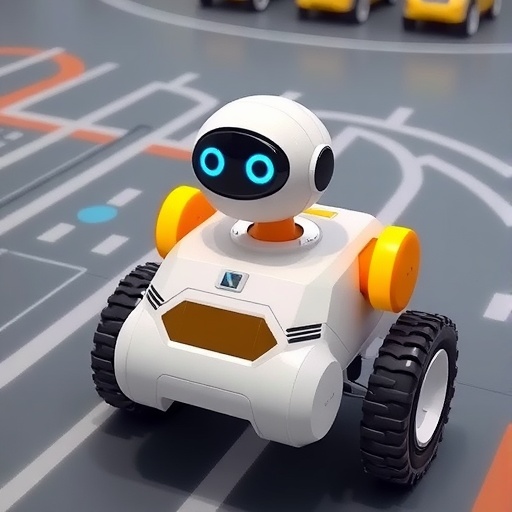
In the near future, the field of robotics stands on the brink of a monumental leap, courtesy of groundbreaking research that promises to redefine how robots navigate through dynamic environments. A recent study by Li, Yi, and Niu introduces an innovative model known as EAST—Environment-aware Safe Tracking. This sophisticated approach aims to empower robots with the ability to operate effectively in environments filled with unpredictable variables, ensuring their navigation remains safe and efficient. With the global increase in autonomous systems across various sectors, the adoption of EAST could mark a significant turning point in robotics.
The essence of the EAST model lies in its capacity to blend perception with real-time environmental data. By equipping robots with advanced sensors and leveraging machine learning algorithms, EAST enables these machines to discern not only their surroundings but also the behaviors of moving objects within those environments. This capability is particularly crucial in settings where human and robotic interactions are frequent, such as urban areas or logistics hubs. As robots become an integral part of our daily lives—from delivery drones to industrial automation—the need for effective navigation systems that prioritize safety is paramount.
At the heart of the EAST framework is the environment-awareness feature, which is designed to assess various parameters that can impact robot navigation. The research articulates how factors such as dynamic obstacles, varying terrain, and even weather conditions can be monitored and accounted for. As a robot moves through an unpredictable landscape, the EAST model continuously updates its internal map, allowing real-time adjustments to its path. This adaptability not only enhances efficiency but also reduces the risk of accidents, making robotics a safer venture for both machines and humans alike.
A remarkable aspect of the EAST methodology is its algorithmic foundation, which utilizes deep learning techniques. Researchers have trained the EAST system using vast datasets that encompass diverse environments. This training has enabled the system to recognize patterns and anticipate potential hazards that may arise. By simulating various scenarios, the model can improve its predictive accuracy, thereby fostering a more robust navigation system. This leap in computational power and machine learning signifies that future robots will be far more intelligent, capable of making informed decisions akin to their human counterparts.
One of the anticipated benefits of EAST is its application in real-time scenarios. Whether navigating through busy streets, managing warehouse logistics, or assisting in healthcare settings, robots can be programmed to react swiftly and appropriately to changing conditions. For instance, in a hospital environment, a delivery robot using EAST would be equipped to navigate tight corners while avoiding patients and staff with agility. Such capabilities are set to enhance operational efficiencies in numerous sectors, thereby revolutionizing workflows and productivity.
Additionally, the EAST model has implications for improving human-robot interaction dynamics. As robots become increasingly pervasive, fostering trust between humans and machines is crucial. By prioritizing safety and awareness in navigation, EAST aims to alleviate safety concerns that often accompany the deployment of autonomous systems. The transparency of the robot’s decision-making process, informed by real-time environmental analysis, could help in establishing a sense of security among users. This could lead to wider acceptance and reliance on robotic systems in everyday scenarios.
Furthermore, the EAST framework provides a strong foundation for future research, opening avenues for innovations that enhance robot capabilities. With the rapid advancements in artificial intelligence and robotics, enhancing the decision-making processes of robots will continue to be a focal point. Scholars and engineers can build upon the EAST model, exploring additional algorithms that might further improve safety protocols and efficiency measures in robotics.
A major challenge that EAST addresses is the unpredictability of human behaviors. In many environments, especially urban settings, humans are the wild card. Their movements can be erratic, and anticipating these actions is incredibly complex for autonomous systems. The EAST model incorporates predictive analytics that can analyze historical data of human movement patterns, thereby equipping robots with the tools needed to navigate through human-dense areas more effectively. This predictive capability could substantially mitigate the risks of accidents and improve the overall safety of robotic navigation systems.
Moreover, the collaboration of EAST with other emerging technologies may lead to even more enhanced systems. For instance, integrating EAST with communication protocols for autonomous vehicles could set a new precedent for smart city developments. Imagine a networked system where all forms of autonomous transport communicate with each other, sharing real-time data and insights to optimize overall traffic flow and safety. The intertwining of these technologies could lead to the advent of fully autonomous urban ecosystems that prioritize both efficiency and safety.
As researchers continue to refine the EAST model, its implications extend beyond immediate applications. This model represents a shift in how robots can perceive and interact with their environments, opening the door to new paradigms in robotics. By focusing on safety and adaptability, EAST could become a cornerstone technology that sets the standard for future robotic systems.
As we look ahead, the promising results from this research align with broader trends in robotic development focused on human-centric designs. The push for safety, combined with the integration of intelligent systems like EAST, bodes well for the future of robotics. This research not only highlights important technological advancements but also insists on a necessary dialogue about the ethical implications of deploying autonomous technologies in public spaces.
The EAST model is primed to pioneer a new era in the robotics landscape, where intelligent navigation meets safety, paving the way for machines that coexist harmoniously alongside humans. As industries continue to adopt robotic solutions, ensuring that these systems can function safely in dynamic environments will be crucial for fostering trust and acceptance among users. The advent of EAST signifies both technological progress and the promise of enhanced safety in robotics.
As we delve into the future of autonomous systems, it is essential to keep these developments in perspective. The confluence of machine learning, robotics, and real-time environmental awareness heralds an exciting age of innovation. Ultimately, EAST exemplifies how combining technology with a focus on safety can lead to the creation of reliable, efficient, and human-friendly robots that hold immense potential for transforming our world.
Subject of Research: Environment-aware safe tracking in robot navigation.
Article Title: EAST: environment-aware safe tracking for robot navigation in dynamic environments.
Article References:
Li, Z., Yi, Y., Niu, Z. et al. EAST: environment-aware safe tracking for robot navigation in dynamic environments.
Auton Robot 49, 36 (2025). https://doi.org/10.1007/s10514-025-10219-2
Image Credits: AI Generated
DOI: https://doi.org/10.1007/s10514-025-10219-2
Keywords: autonomous robotics, robot navigation, environment awareness, safety, machine learning, dynamic environments.


