

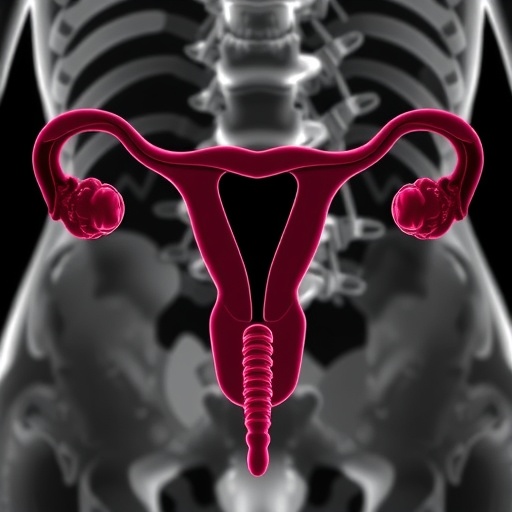
In a groundbreaking phase II proof-of-concept clinical trial published recently in Nature Communications, researchers led by Tabata, Huang, and Giudice have unveiled promising therapeutic insights into recurrent ovarian cancer by testing a combinatorial regimen involving durvalumab, cediranib, and olaparib. This study marks a significant stride in oncology, as it explores the synergistic potential of immune checkpoint inhibition alongside anti-angiogenic therapy and PARP inhibition, specifically in the challenging landscape of recurrent ovarian malignancies.
Recurrent ovarian cancer remains one of the most formidable challenges in gynecologic oncology, characterized by poor prognosis and limited effective treatment options. Conventional therapies often fall short due to the aggressive nature of the disease and its tendency to develop resistance to platinum-based chemotherapies. Consequently, innovative therapeutic strategies that can overcome tumor heterogeneity and therapeutic resistance are urgently needed, making this study exceptionally relevant to current clinical practice and future research.
The study’s core therapeutic agents — durvalumab, cediranib, and olaparib — represent three distinct mechanisms of action targeting the tumor microenvironment and DNA repair pathways. Durvalumab is an immune checkpoint inhibitor targeting PD-L1, essentially reinvigorating the host immune system to recognize and eliminate cancer cells. Cediranib is a potent inhibitor of vascular endothelial growth factor receptors (VEGFRs), exerting anti-angiogenic effects that disrupt the blood vessel formation critical for tumor growth and metastatic dissemination. Olaparib, a PARP inhibitor, exploits the concept of synthetic lethality by targeting cancer cells harboring defects in homologous recombination repair, a hallmark of many ovarian tumors.
This carefully designed phase II trial explored two arms: the combination of durvalumab plus cediranib with and without the addition of olaparib. The rationale for this combination stems from accumulating preclinical data suggesting that disrupting angiogenesis could modulate the tumor immune microenvironment, potentially enhancing the efficacy of immune checkpoint inhibitors. Simultaneously, PARP inhibition was hypothesized to amplify DNA damage, thereby increasing tumor antigenicity and sensitivity to immune-mediated clearance.
Patients enrolled in this study all had recurrent ovarian cancer, a cohort characterized by heavily pretreated, resistant disease profiles. The investigators set out to determine whether the triple combination could produce durable responses and acceptable safety profiles compared to the doublet regimen of durvalumab and cediranib alone. Clinical endpoints included objective response rates, progression-free survival, overall survival, and biomarker analyses aimed at deciphering mechanisms of response and resistance.
The trial results demonstrated a notable improvement in response rates and progression-free survival in patients receiving all three agents compared to the doublet therapy alone. This enhancement of therapeutic efficacy provides a compelling argument for the inclusion of olaparib in the combinatory approach, especially in patients with underlying homologous recombination deficiencies. Importantly, median progression-free survival was extended significantly, suggesting the potential for a new standard of care in this population.
From an immunological perspective, the addition of olaparib appeared to potentiate immune activation, as evidenced by increased infiltration of cytotoxic T cells within tumor biopsies and elevated expression of interferon-stimulated genes. These findings support a mechanistic synergy whereby DNA damage induced by PARP inhibition generates neoantigens that prime an enhanced anti-tumor immune response, especially when coupled with checkpoint blockade.
Cediranib’s anti-angiogenic activity also contributed to reshaping the tumor microenvironment. By normalizing aberrant vasculature and reducing hypoxia, cediranib improved immune cell trafficking and function within the tumor milieu. This vascular modulation may counteract some immunosuppressive barriers typically encountered in the ovarian cancer microenvironment, facilitating more effective immune checkpoint blockade by durvalumab.
Safety and tolerability profiles were carefully monitored and reported. While the addition of olaparib introduced some expected hematological toxicities and manageable side effects, these were generally well-tolerated with dose modifications as needed. The overall safety landscape of the triple combination was consistent with the known profiles of each individual drug, with no new or unexpected adverse events, underscoring the regimen’s feasibility for clinical use.
The investigators also implemented comprehensive biomarker analyses to identify predictive indicators of response. Tumor mutational burden, BRCA1/2 mutation status, PD-L1 expression levels, and angiogenic gene signatures were among the evaluated parameters. This biomarker integration is crucial for patient stratification and personalized therapy optimization in future trials.
Furthermore, the study provides exciting mechanistic insights into the interplay between DNA repair deficiency, angiogenesis inhibition, and immune activation. The data suggest a multi-axis approach might overcome some intrinsic and acquired resistance mechanisms that plague monotherapy regimens in ovarian cancer. This concept could reshape treatment paradigms beyond ovarian cancer, extending to other tumor types exhibiting similar pathological features.
Experts in the field have praised the trial’s innovative design and comprehensive approach. By marrying complementary therapeutic modalities, this research highlights how synergistic drug combinations can unleash previously untapped anti-cancer effects. It also underscores the increasing importance of rational drug design strategies informed by tumor biology and immune landscape considerations.
Looking ahead, these findings warrant larger, randomized studies to validate clinical benefits and refine combination dosing regimens. Importantly, integrating additional immunologic and genomic biomarkers may enable real-time adaptations in therapy, ushering in an era of dynamic precision oncology tailored to individual tumor and host characteristics.
This study exemplifies the power of translational research bridging laboratory discoveries with clinical practicality. It also reaffirms the critical role of phase II trials in demonstrating proof-of-concept efficacy prior to larger confirmatory studies, accelerating the development pipeline for novel cancer therapies.
In conclusion, the combination of durvalumab, cediranib, and olaparib in recurrent ovarian cancer represents a promising new therapeutic avenue. The compelling evidence from this phase II trial provides hope for improved patient outcomes in a disease that has historically had limited treatment success. As research advances, such innovative strategies could redefine survivorship and quality of life for countless patients facing ovarian cancer worldwide.
Subject of Research: Recurrent ovarian cancer treatment using combinational immunotherapy, anti-angiogenic therapy, and PARP inhibition.
Article Title: Durvalumab and Cediranib With and Without Olaparib in Recurrent Ovarian Cancer: A Phase II Proof-of-Concept Study
Article References:
Tabata, J., Huang, T.T., Giudice, E. et al. Durvalumab and cediranib with and without olaparib in recurrent ovarian cancer: a phase II proof-of-concept study. Nat Commun (2026). https://doi.org/10.1038/s41467-026-70785-6
Image Credits: AI Generated


