


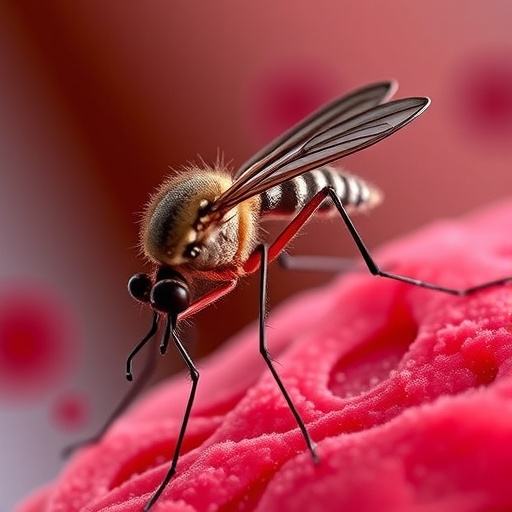
Nestled in the tropical and subtropical regions globally, dengue continues to challenge both public health and scientific communities alike. Infecting millions annually, this mosquito-borne virus manifests in a spectrum of disease severities—from mild febrile illnesses to deadly hemorrhagic fevers and multi-organ failures. As researchers strive to untangle the complex web of dengue’s pathogenesis and immune evasion, an illuminating new study from Duke-NUS Medical School sheds light on a fascinating and previously underappreciated aspect of dengue virus biology: its capacity to reprogram the host immune system at a genetic and cellular level, imprinting a lasting “memory” that skews subsequent immune responses.
Published in the prestigious journal Med in September 2025, this groundbreaking research reveals that natural dengue virus infection induces profound and durable shifts in baseline innate immune gene expression. This reprogramming alters the immune system’s starting point, or baseline, effectively resetting the parameters by which the body detects and responds to future encounters—be it from subsequent dengue infections or dengue vaccines. Crucially, this genetic imprinting phenomenon, often termed “trained immunity,” appears absent in individuals who have only received dengue vaccination, highlighting innate biological differences between immune responses elicited by infection versus immunization.
The team’s approach involved a meticulously designed clinical trial conducted between 2018 and 2020 in the United States, complemented by additional sampling of dengue-naïve volunteers in Singapore. Volunteers received the TAK-003 dengue vaccine in two doses separated by a 90-day interval. The researchers then undertook comprehensive genomic analyses of blood samples, focusing on immune cell populations relevant to dengue pathogenesis. Strikingly, they found that individuals previously infected with dengue harbored unique patterns of gene expression in innate immune cells susceptible to dengue infection, even before vaccination. This innate immune “reprogramming,” intriguingly, did not extend to antibody-producing memory cells but was instead localized within innate cellular machinery.
Dr. Eugenia Ong, the study’s first author, emphasizes the magnitude of these findings: “Natural dengue infection does not simply ‘reset’ the immune system to its prior state post-clearing the virus. Instead, it establishes a new baseline,” she explains. “This recalibration may provide a crucial explanatory framework for the often-observed increased severity seen in secondary dengue infections, which occur with distantly related serotypes of the virus.”
This discovery carries significant ramifications for dengue vaccine design and deployment. Current dengue vaccines, including TAK-003, are more efficacious in individuals with previous dengue exposure, suggesting that prior infection primes the immune system in ways that vaccination alone cannot replicate. Notably, the first dose of dengue vaccine in previously infected individuals triggered a robust immune response reminiscent of natural infection, whereas the same dose was insufficient to induce comparable immunity in dengue-naïve subjects. This differential highlights the role of infection-induced immune reprogramming in shaping vaccine responsiveness.
Professor Ooi Eng Eong, senior author of the study, analogizes this phenomenon with sports training. “If natural infection is a full competitive game that thoroughly conditions the immune system, then vaccination is akin to a practice drill. The latter may not always provoke the metabolic and genetic changes required to achieve sustained immune memory,” he remarks. This analogy underscores the threshold effect observed: only vigorous antigenic stimulation—as seen in wild-type dengue infection—triggers the durable imprinting of innate immunity.
At the molecular level, the researchers identified a specific cohort of antiviral response genes that were paradoxically suppressed in individuals with prior dengue exposure. These genes, typically rapidly activated upon viral infection, appeared downregulated at baseline, suggesting a form of immunomodulatory tolerance. This dampened immediate antiviral response likely facilitates higher antibody titers post-vaccination by modulating the immune milieu but simultaneously might expose individuals to enhanced risk during secondary infections owing to delayed interferon signaling or altered cytokine profiles.
From a clinical and public health perspective, these insights refine our understanding of the immunopathogenesis of dengue and its challenges. Dengue’s four distinct viral serotypes predispose individuals to multiple infections in a lifetime, each with the potential for exacerbated disease severity. Understanding how the immune system’s baseline state—modified by past infections—influences this risk is crucial for tailoring vaccination strategies and anticipating vaccine efficacy in diverse populations.
Moreover, the study adds dengue to the growing list of pathogens where trained immunity plays a role, alongside malaria and the Bacillus Calmette-Guérin (BCG) vaccine. By elucidating how infection intensity and viral genotype influence long-lasting innate immune imprints, the research broadens the horizon for immunological memory beyond classical adaptive immunity.
Professor Patrick Tan, Senior Vice-Dean for Research at Duke-NUS, highlights the translational significance: “This is not merely an academic exercise. By bridging fundamental immunology with translational vaccine science, we aim to deliver tangible protection to millions vulnerable to dengue worldwide. Our findings will inform vaccine policy and future vaccine design, balancing efficacy with safety in heterogeneous populations.”
Despite the hope stirred by this research, the team tempers expectations regarding the near-term development of a perfect dengue vaccine. They stress that current vaccines, though imperfect and exhibiting variable performance based on previous infection status, remain indispensable tools to diminish the global dengue burden, which approximates 100 million cases annually.
Importantly, the discovery prompts renewed calls for broader research into the epigenetic and transcriptomic underpinnings of immune reprogramming not only for dengue but across infectious diseases. Such investigations may unlock new avenues for harnessing trained immunity therapeutically, potentially augmenting vaccine-induced protection or modulating detrimental immune responses.
In summary, this compelling study fundamentally reshapes our comprehension of how dengue virus infection indelibly alters the immune landscape. By uncovering the nuanced interplay between innate immune gene expression and vaccine responsiveness, it propels the field into a new era—where immune memory is not solely the preserve of adaptive immunity but a complex, dynamic tapestry woven by infection history, gene regulation, and cellular programming.
News Publication Date: 8-Sep-2025
Web References: 10.1016/j.medj.2025.100841
References: TAK-003 dengue vaccine clinical trial data (2018-2020); additional cohort studies in Singapore (2022-2023)
Cite Scienmag News
Kristina Jarvis. (September 8, 2025). Duke-NUS Study Uncovers How Dengue Virus Alters Immune System, Impacting Vaccine Efficacy. Scienmag. https://scienmag.com/duke-nus-study-uncovers-how-dengue-virus-alters-immune-system-impacting-vaccine-efficacy/
Kristina Jarvis. "Duke-NUS Study Uncovers How Dengue Virus Alters Immune System, Impacting Vaccine Efficacy." Scienmag, 8 September 2025, https://scienmag.com/duke-nus-study-uncovers-how-dengue-virus-alters-immune-system-impacting-vaccine-efficacy/. Accessed 5 September 2026.
Kristina Jarvis. "Duke-NUS Study Uncovers How Dengue Virus Alters Immune System, Impacting Vaccine Efficacy." Scienmag. September 8, 2025. https://scienmag.com/duke-nus-study-uncovers-how-dengue-virus-alters-immune-system-impacting-vaccine-efficacy/


