

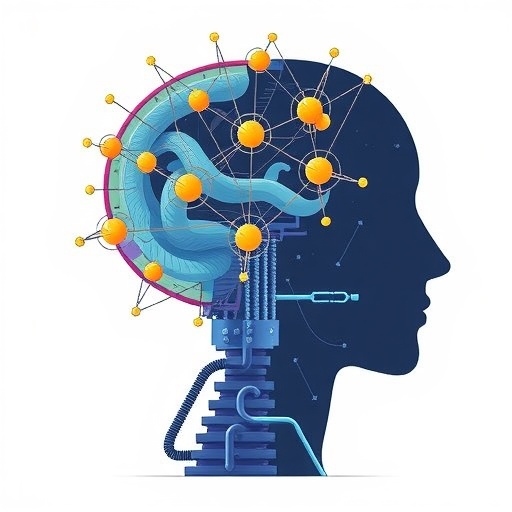
In a groundbreaking study on artificial intelligence, Ajay Bajaj presents a novel approach that integrates neural codification with normative reasoning, exploring a two-layered AI architecture. This innovative concept, which is set to be published in Discov Artif Intell, represents a significant shift in how we perceive AI’s potential impact across various domains, including ethics, decision-making, and machine learning efficiency. Bajaj’s work aims to bridge the gap between raw data processing, typically associated with neural networks, and the more sophisticated decision-making processes informed by ethical and normative frameworks.
The core idea behind this research is to enhance the capabilities of traditional neural networks by adding a layer that allows machines to apply rules and ethical considerations to their decision-making processes. At its essence, this two-layered AI system tests the boundaries of what we define as intelligence, blurring the lines between mere computation and reasoned thought. By embedding normative reasoning into the AI structure, Bajaj provides a foundation for machines to evaluate information not just on data accuracy but also through an ethical lens.
Neural networks have made significant strides in their ability to process large sets of data and derive patterns through training. However, these networks typically operate entirely based on the input data’s statistical properties. While powerful, this approach lacks a framework to evaluate the implications of decisions, leading to risks in contexts where ethical considerations are paramount. Bajaj’s exploration suggests that by layering normative reasoning over this neural foundation, we can transform AI from mere pattern recognition systems into entities capable of making thoughtful decisions.
Central to Bajaj’s study is the concept of normative reasoning, which refers to the ability to apply ethical principles and societal norms to decision-making processes. This reasoning model introduces criteria that go beyond factual correctness, allowing AI systems to weigh the consequences and moral implications of their actions. For example, in scenarios involving autonomous vehicles or medical diagnoses, incorporating these ethical guidelines could lead to safer, more socially responsible outcomes.
The paper details the theoretical framework for building this two-layered AI model, providing a roadmap for implementation. It postulates that the integration of neural codification and normative reasoning can take a number of forms, depending on the context and area of application. For instance, the system could involve logic programming techniques that formally define ethical guidelines within AI systems, or machine learning approaches that adaptively learn from past ethical decisions, evolving as they gain more contextual data.
Through various experimental setups, Bajaj presents empirical data demonstrating the advantages of his two-layered approach over traditional models. By employing simulations and real-world scenarios, the research showcases how this method can lead to more equitable decision-making processes, ultimately setting a higher ethical standard for AI applications across different sectors.
Critically, this paper raises discussions surrounding the transparency and accountability of AI systems that utilize normative reasoning. As algorithms increasingly govern critical aspects of human life, from healthcare to law enforcement, establishing accountability becomes a significant challenge. Bajaj’s research suggests that adopting a two-layered approach allows for clearer explanations of how decisions are made, as the normative layer provides a visible framework for stakeholders to understand the ethical reasoning behind specific actions the AI performs.
One of the most compelling aspects of Bajaj’s exploration is the potential for widespread societal impact. As AI transitions from tools of calculation to agents of decision-making, the ethical implications of these systems grow more significant. For policymakers and developers, having a robust framework that allows AI to not only process information but also judge it through a moral lens could redefine how we interact with technology. The application of normative reasoning could lead to better legislation, more responsible AI deployment, and ultimately, a more ethical digital future.
The research also underscores the potential applications of this two-layered AI model beyond conventional domains. Fields such as finance, environment, and public policy could greatly benefit from AI systems that not only yield profitable or efficient results but also consider the ramifications of those results within societal contexts. This broader applicability hints at a future where AI systems contribute positively and responsibly to everyday life by aligning their outputs with human values and norms.
However, the transition to this new conceptual framework is not without challenges. The integration of ethical reasoning into AI is complex and may face resistance from current technological ecosystems that favor optimization and efficiency over ethical considerations. Bajaj anticipates that the transition to this two-layered model will require careful thought, collaboration among researchers, ethicists, and practitioners, as well as a willingness from the AI community to embrace a reflective stance toward technology’s role in society.
In conclusion, Bajaj’s exploration of a two-layered artificial intelligence system offers a fresh lens through which to view the future of AI. By integrating neural networks with normative reasoning, we could move towards a paradigm where machines are not only capable of responding to the complexities of human needs but are also equipped to do so ethically. This study could catalyze further research and discussions about the role of AI in society, ultimately leading us toward technology that reflects and respects the diverse ethical frameworks that govern human interaction.
As we stand on the precipice of this new era in AI, Bajaj’s insights invite us to reflect on our relationship with technology and how we can harness its power for the collective good. The implications of this two-layered approach are vast, potentially reshaping our understanding of intelligence, ethics, and the role of machines in our lives.
Subject of Research: Two-layered Artificial Intelligence Integrating Neural Codification with Normative Reasoning
Article Title: An exploration of a two-layered artificial intelligence: integrating neural codification with normative reasoning
Article References: Bajaj, A. An exploration of a two-layered artificial intelligence: integrating neural codification with normative reasoning. Discov Artif Intell (2025). https://doi.org/10.1007/s44163-025-00665-3
Image Credits: AI Generated
DOI:
Keywords: Artificial Intelligence, Neural Networks, Normative Reasoning, Ethical AI, Two-layered AI System


