


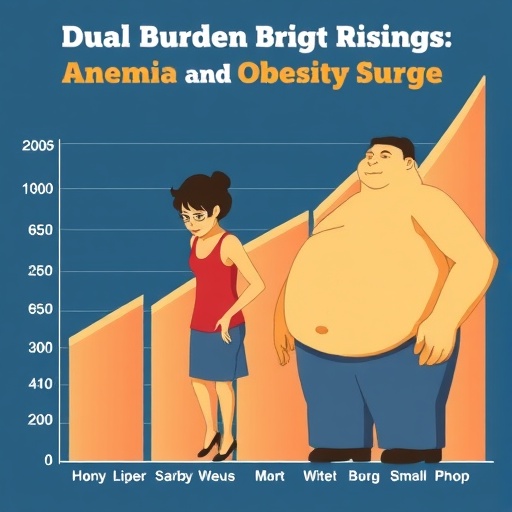
In an era where global health challenges are increasingly complex, the coexistence of seemingly contradictory conditions such as anemia and obesity presents a perplexing public health conundrum. Recent research conducted by Valladolid-Sandoval and colleagues shines a revealing light on this paradox within a significant population subset: Peruvian women aged 20 to 49 years. Their study, published in the International Journal for Equity in Health in 2025, uncovers troubling trends and disparities in the prevalence of concurrent anemia and obesity over the past two decades. This comprehensive work taps into two decades of national surveillance data, illustrating an alarming doubling in the prevalence of these overlapping conditions that defy traditional nutritional understanding.
Anemia and obesity are conventionally viewed as two ends of the nutritional spectrum: anemia often results from chronic nutritional deficiencies, particularly iron deficiency, while obesity is linked to excess caloric intake and metabolic dysregulation. The study challenges this binary, revealing how these two conditions, previously considered mutually exclusive, are escalating concurrently within the same demographic group. This coexistence signals a troubling transformation in public health dynamics, with critical implications for the development of intervention programs tailored to this dual burden of malnutrition.
Drawing on robust national data sets spanning two decades, the researchers utilized sophisticated epidemiological tools to identify patterns in the prevalence of anemia and obesity, both individually and in combination. The findings reveal not only a stark increase in combined prevalence but also significant disparities linked to socioeconomic status, geographic location, and access to health services. These variables underscore complex systemic inequalities that influence health outcomes in Peru, casting a spotlight on vulnerable groups disproportionately affected by this dual health burden.
The biological interplay between anemia and obesity involves intricate physiological and metabolic pathways. Obesity is associated with chronic low-grade inflammation, which can interfere with iron metabolism and contribute to anemia of chronic disease. This inflammatory milieu may alter hepcidin levels, a key regulator of iron homeostasis, thereby reducing iron availability for red blood cell production despite sufficient dietary intake. The study emphasizes these physiological mechanisms, highlighting how obesity-related systemic inflammation could exacerbate or trigger anemia, thereby elucidating the biological plausibility underpinning their coexistence.
From a public health perspective, these findings demand a reevaluation of nutrition and health policies in Peru and similar settings. Traditional approaches that address anemia through iron supplementation programs or obesity via caloric restriction may be insufficient or even counterproductive when these conditions coexist. The dual burden necessitates integrated strategies that consider the complexity of nutrition transitions occurring in developing countries, where shifts towards processed food, sedentary lifestyles, and persistent micronutrient deficiencies intersect.
The data also reveal heterogeneity among subpopulations of women, with indigenous and rural communities exhibiting distinct prevalence patterns. This finding underscores the influence of cultural dietary practices, economic barriers, and healthcare infrastructure disparities on nutritional health. Addressing these disparities requires culturally competent community outreach, expanding access to nutrition education, and improving healthcare delivery systems to reach marginalized groups effectively.
Longitudinal analysis over 20 years allows the researchers to illuminate temporal trends that inform the evolution of these health challenges. The doubling of coexisting anemia and obesity prevalence suggests a rapid nutritional transition fueled by urbanization, globalization of food systems, and socioeconomic shifts. This trend portends serious complications, as the compounded health risks of anemia and obesity include heightened vulnerability to infections, impaired cognitive and physical function, and increased risk of chronic diseases such as cardiovascular disorders and diabetes.
The methodological rigor of this study is noteworthy, incorporating both anthropometric measurements and biochemical markers to accurately ascertain obesity and anemia status. This dual assessment strengthens reliability and validity compared to reliance on self-reported data or single-dimensional evaluations. Furthermore, the multidisciplinary analysis integrates epidemiology, nutrition science, and social determinants of health, presenting a holistic view essential for understanding and addressing this pressing health issue.
Public health experts contend that the emergence of a double burden malnutrition scenario reflects broader global health challenges in low- and middle-income countries undergoing rapid societal transformations. Peru’s experience, as documented in this study, echoes a regional and possibly global pattern where development gains coexist with persistent nutritional inadequacies. These insights contribute to the growing discourse on how to optimize resource allocation, design effective interventions, and foster equity in health outcomes in transforming societies.
Moreover, the study raises critical questions about the long-term implications for reproductive health among women of childbearing age. Anemia can cause adverse pregnancy outcomes, while obesity is linked to gestational diabetes and hypertensive disorders, compounding maternal and neonatal risks. The coexistence of these conditions may synergistically impair maternal health and developmental trajectories of offspring, indicating an urgent need for integrated antenatal care protocols.
Policy implications arising from this research advocate for multi-sectoral collaboration involving health, agriculture, education, and social welfare domains. Policymakers are encouraged to devise evidence-based guidelines that address nutrient adequacy, inflammation management, physical activity promotion, and social determinants simultaneously. Enhanced surveillance systems and regular monitoring are also crucial to track progress, refine interventions, and mitigate widening health disparities.
Critically, this research underscores the importance of not viewing obesity solely as a problem of excess energy intake, but as a multifactorial condition influenced by inflammation, micronutrient deficiencies, and socioeconomic factors. Such nuanced understanding challenges prevalent stigmatization and promotes compassionate, scientifically grounded approaches to care. It encourages clinicians and public health practitioners to adopt integrative assessment models that consider the full spectrum of nutritional status and related morbidities.
Moving forward, the study points to avenues for further research, including exploring genetic predispositions, microbiome influences, and environmental exposures contributing to this double burden. Additionally, intervention trials testing combined nutritional supplementation and lifestyle modifications tailored to culturally specific contexts could illuminate effective pathways to mitigate this emerging public health threat.
In conclusion, the groundbreaking work by Valladolid-Sandoval et al. lays bare an unsettling rise in the coexistence of anemia and obesity among Peruvian women, reflecting deeper socioeconomic and biological complexities. This dual epidemic represents a formidable challenge for health systems grappling with the dualistic nature of malnutrition in the 21st century. It demands innovative, integrative, and equity-focused approaches to ensure that no woman is left behind in the pursuit of health and well-being.
Valladolid-Sandoval, L.A.M., Vásquez-Romero, L.E.M., Loayza-Castro, J.A. et al. Trends and disparities in the coexistence of anemia and obesity among Peruvian women aged 20–49 years: doubling prevalence in two decades of National surveillance. Int J Equity Health 24, 200 (2025). https://doi.org/10.1186/s12939-025-02576-2
Cite Scienmag News
Daisy Hatcher. (July 31, 2025). Dual Burden Rising: Anemia and Obesity Surge. Scienmag. https://scienmag.com/dual-burden-rising-anemia-and-obesity-surge/
Daisy Hatcher. "Dual Burden Rising: Anemia and Obesity Surge." Scienmag, 31 July 2025, https://scienmag.com/dual-burden-rising-anemia-and-obesity-surge/. Accessed 4 September 2026.
Daisy Hatcher. "Dual Burden Rising: Anemia and Obesity Surge." Scienmag. July 31, 2025. https://scienmag.com/dual-burden-rising-anemia-and-obesity-surge/


