


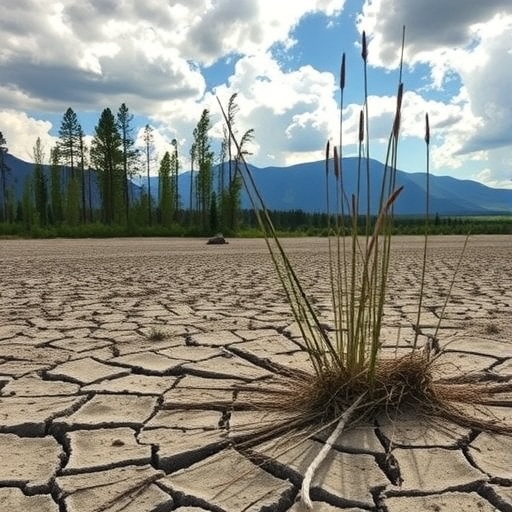
A new study is challenging one of the most persistent assumptions in climate science: that vegetation, once relieved from drought or extreme heat, will broadly return to its previous condition. Research led by Feng, Wang, Wu and colleagues shows that recovery is far more uneven. In some regions, plants can rebound rapidly after an extreme event, while in others, vegetation remains suppressed long after rainfall returns and temperatures moderate. The difference becomes especially striking when drought and heat arrive together. Published in Communications Earth & Environment, the study describes a world in which ecosystems do not respond to climate extremes with a single, predictable pattern. Instead, recovery is shaped by the type of stress, its intensity, its duration and the sequence in which multiple hazards strike.
The finding matters because “recovery” is often treated as a simple ecological endpoint. A landscape loses green cover during a drought, receives rain, and is then assumed to return to normal. But vegetation is not a switch that moves cleanly from healthy to damaged and back again. Plants must rebuild leaves, restore root systems, replenish carbohydrate reserves and repair tissues damaged by heat and water stress. Trees may survive an extreme season but grow more slowly for years afterward. Grasslands can green up quickly when moisture returns, yet their species composition may have changed. The study’s emphasis on divergent recovery captures this complexity: two ecosystems exposed to apparently similar climate extremes may follow entirely different trajectories once the event is over.
Drought and heat are closely connected, but they do not place identical demands on plants. Drought reduces the water available to roots and forces vegetation to close microscopic pores on leaves, known as stomata, to limit water loss. That response also restricts the intake of carbon dioxide, weakening photosynthesis and slowing growth. Heat adds another layer of stress. High temperatures increase evaporative demand, meaning the atmosphere pulls water from plants and soils more aggressively. They can damage photosynthetic machinery, accelerate respiration and push tissues beyond their thermal limits. When heat and drought occur simultaneously, plants face both a shortage of water and an unusually strong atmospheric demand for it. The combined pressure can therefore be greater than the sum of the individual stresses.
This interaction is known as a compound extreme, and it is one of the central reasons that ecological forecasts are becoming more difficult. A drought occurring during mild temperatures may be partly tolerated by deep-rooted vegetation, while the same lack of rainfall during a heatwave can trigger rapid canopy decline. Timing is also critical. An early-season event may prevent plants from establishing leaves or flowers, whereas a late-season shock may shorten the period during which recovery is possible. Repeated extremes can further reduce resilience by leaving plants with fewer stored resources. Feng and colleagues’ analysis highlights that vegetation recovery must therefore be evaluated in relation to the complete climate event, rather than by examining rainfall, temperature or drought indices in isolation.
The word “divergent” points to a major ecological signal: recovery is not uniform across the planet. Climate, soil, plant traits and land-use history all influence how quickly an ecosystem responds after stress. Vegetation in moist environments may benefit from greater water availability once an extreme event ends, but it can also suffer severe damage if heat overwhelms shallow-rooted plants. Arid ecosystems may appear highly resistant because their species are adapted to water scarcity, yet their recovery can be slow when an event exceeds the limits of those adaptations. Forests, shrublands, croplands and grasslands also operate on different biological clocks. Annual crops may be replanted within a season, while mature forests may require decades to restore lost biomass.
The distinction between resistance and resilience is essential to interpreting these patterns. Resistance describes how little vegetation changes during an extreme event. Resilience usually refers to the ability to recover afterward. An ecosystem can be highly resistant but recover slowly if its vegetation changes only slightly while hidden damage accumulates. Another ecosystem may experience a dramatic decline in greenness but rebound quickly after rainfall. Measuring only the initial drop in vegetation activity could therefore produce a misleading assessment of ecological vulnerability. The study’s focus on recovery extends the climate-risk conversation beyond the moment of impact and asks a more consequential question: what condition will ecosystems occupy months or years after the headline-making extreme has passed?
For scientists, this question requires careful separation of short-term fluctuation from lasting ecological change. Vegetation indices derived from satellite observations can reveal variations in canopy greenness and photosynthetic activity across large areas, allowing researchers to compare ecosystem responses over time. However, greenness is not identical to biomass, carbon storage or species survival. A landscape can become green again while having lost mature trees, altered its plant community or suffered reduced productivity. Temperature and precipitation records, soil moisture estimates and measures of atmospheric dryness help provide additional context. Together, these data can show whether a decline was driven primarily by water shortage, thermal stress or their combination, and whether the post-event rebound represents genuine recovery or only a temporary surface response.
The research has direct implications for carbon-cycle projections. Vegetation removes carbon dioxide from the atmosphere through photosynthesis and stores carbon in leaves, wood, roots and soil. If plants recover quickly, some of the carbon uptake lost during an extreme event may be restored. If recovery is delayed or incomplete, the carbon deficit can persist, potentially weakening the land biosphere’s role as a carbon sink. Forest mortality, reduced growth and shifts toward less woody vegetation may also alter how ecosystems respond to future fires, pests and heatwaves. Climate models that represent vegetation as recovering at a fixed rate could therefore underestimate the long-term consequences of compound extremes, particularly in regions where repeated events leave insufficient time for biological repair.
The findings also challenge how adaptation and restoration are designed. A single rainfall event should not be interpreted as proof that an ecosystem has fully recovered, and planting efforts may fail if they use species suited to historical conditions rather than the increasingly hot and dry climate now developing. Monitoring programs will need to track recovery over multiple seasons and distinguish temporary greening from the restoration of ecosystem function. Farmers, forest managers and conservation planners may need strategies that protect soil moisture, maintain species diversity and preserve refuges where plants can survive extreme conditions. The most resilient landscapes may not be those that avoid all change, but those with enough biological and structural diversity to ensure that some species can continue functioning when others decline.
As climate change increases the likelihood of simultaneous heat and moisture extremes, understanding these divergent pathways is becoming urgent. The study does not present vegetation recovery as a universal countdown to normality. It presents it as a biological negotiation between stress and capacity: the severity of the event, the traits of the plants, the condition of the ecosystem and the timing of the next shock. That perspective carries a warning for a warming world. The end of a drought or heatwave may mark the beginning of another critical phase, not the conclusion of the crisis. Whether landscapes rebound, stall or shift into a new ecological state will help determine how much food, carbon storage, habitat and climate protection natural systems can continue to provide.
Cite Scienmag News
Sloane Callahan. (August 21, 2026). Drought, Heat and Compound Extremes Drive Divergent Vegetation Recovery. Scienmag. https://scienmag.com/drought-heat-and-compound-extremes-drive-divergent-vegetation-recovery/
Sloane Callahan. "Drought, Heat and Compound Extremes Drive Divergent Vegetation Recovery." Scienmag, 21 August 2026, https://scienmag.com/drought-heat-and-compound-extremes-drive-divergent-vegetation-recovery/. Accessed 3 September 2026.
Sloane Callahan. "Drought, Heat and Compound Extremes Drive Divergent Vegetation Recovery." Scienmag. August 21, 2026. https://scienmag.com/drought-heat-and-compound-extremes-drive-divergent-vegetation-recovery/


