

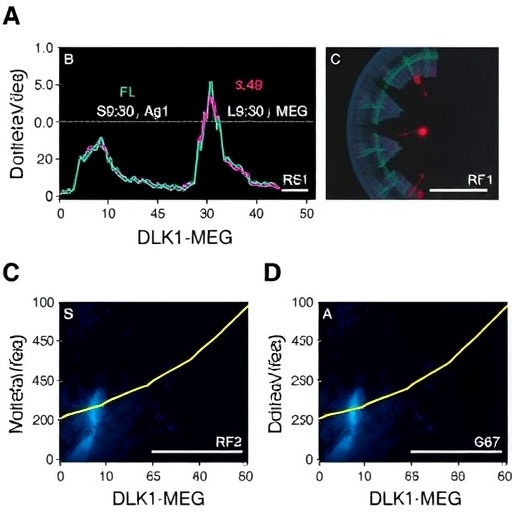
In a groundbreaking study poised to transform our understanding of neonatal growth disorders and metabolic regulation, researchers have turned their investigative lens toward the DLK1-MEG3 gene locus located on human chromosome 14q32.2. This genomic region, long acknowledged for its multifaceted roles in developmental biology, has now been implicated in the nuanced regulation of glucose metabolism and the pathogenesis of small for gestational age (SGA) infants—a condition marked by fetuses or newborns fallen below the expected weight and size percentile for their gestational age.
The research, led by Bu et al., uncovers profound associations between the methylation patterns at the DLK1-MEG3 locus in cord blood and the incidence of SGA, opening a new frontier in neonatal epigenetics and metabolic disease risk evaluation. Methylation, a biochemical process that modulates gene expression without altering the DNA sequence itself, serves as a pivotal epigenetic marker that can be shaped by both genetic predispositions and environmental influences in utero. The study’s innovative approach to measuring DNA methylation in neonatal cord blood allows for direct insight into fetal epigenetic states that may forecast health trajectories.
DLK1 and MEG3 are known to function as imprinted genes, where typically only one allele, either maternal or paternal, is actively expressed. The complexity of their regulation is underscored by interplaying methylation patterns that can have far-reaching consequences on gene expression and, by extension, fetal growth and metabolic function. It is this epigenetic fine-tuning that the researchers meticulously charted, revealing differential methylation signatures that correlate with perturbations in glucose metabolism pathways—a critical aspect of cellular energy homeostasis.
Glucose metabolism is essential not only during fetal life but also as a foundational element for postnatal survival and organ system maturation. Disruptions in the fine balance of glucose internalization, storage, and utilization can lead to profound developmental abnormalities. The findings from Bu et al.’s study highlight a direct epigenetic mechanism that could underlie these derangements, suggesting that aberrant methylation of DLK1-MEG3 may predispose infants to altered glucose metabolism, manifesting clinically as SGA.
Until now, the molecular mechanisms bridging genetic loci and phenotypic outcomes in SGA infants have remained elusive. By systematically correlating methylation levels within this locus to clinical parameters, the study provides compelling evidence that these epigenetic modifications serve as biomarkers, potentially facilitating early prediction and diagnosis. Moreover, this epigenetic link offers a tantalizing target for therapeutic intervention, possibly enabling correction or mitigation of adverse metabolic programming before or shortly after birth.
The broader implications of this research extend into the realm of metabolic syndrome predisposition in later life. Epidemiological data have long suggested that SGA infants face increased risks of insulin resistance, type 2 diabetes, and cardiovascular complications as they mature. The epigenetic framework outlined by this study offers a biologically plausible explanation for these observations and underscores the critical role of early life programming in lifelong health outcomes.
Methodologically, the research utilized bisulfite sequencing and quantitative methylation-specific PCR, cutting-edge technologies that provide high-resolution mapping of methylation landscapes. By deploying these techniques on human cord blood samples, the researchers achieved unprecedented sensitivity in detecting subtle methylation alterations with functional implications. This precision advances the field’s capability to interrogate fetal epigenomics in a clinically relevant context.
Importantly, the DLK1-MEG3 locus does not act in isolation. Its epigenetic regulation is intertwined with a network of imprinted genes within the chromosome 14q32.2 region, constituting a genomic imprinting cluster. This cluster coordinately regulates numerous developmental genes, and disruption in its epigenetic status may propagate dysregulation across multiple pathways. Understanding this cluster’s integrated function is paramount for designing holistic approaches to tackle SGA and related metabolic dysfunctions.
Furthermore, environmental factors influencing maternal health—such as nutrition, stress, and exposure to toxins—may converge on the DLK1-MEG3 methylation patterns. This intersection of genetics, epigenetics, and environment epitomizes the complex etiopathogenesis of SGA, highlighting the need for multidisciplinary strategies in maternal-fetal medicine to optimize neonatal outcomes.
Clinical translation of these findings could revolutionize prenatal screening protocols. Non-invasive prenatal testing strategies might incorporate methylation profiling of the DLK1-MEG3 locus, enabling clinicians to identify fetuses at high risk for SGA and associated metabolic disorders. Early identification paves the way for tailored interventions, potentially including nutritional modifications, pharmacological treatments, or close perinatal monitoring.
The research also propels the debate on the reversibility of epigenetic marks established in utero. If aberrant methylation at DLK1-MEG3 can be modified postnatally or gestationally through targeted therapies, it could inaugurate a new era in preventative pediatric medicine. Such interventions would need to be delicately balanced to avoid off-target effects and preserve the essential imprinting dynamics critical for development.
This pioneering study was comprehensive in its approach, enrolling a sizable cohort of neonates and controlling for confounding variables such as gestational age, maternal diabetes status, and demographic factors. The rigor of statistical analyses employed further strengthens the validity of the methylation-SGA connection, setting a new standard for epigenetic epidemiological research.
The challenge ahead lies in deciphering the precise molecular pathways by which DLK1-MEG3 methylation influences glucose metabolism at a cellular level. Functional studies, perhaps leveraging CRISPR-based epigenome editing, could illuminate these causal mechanisms, offering insights into the hierarchies of gene regulation involved in growth and metabolism.
Additionally, long-term follow-up studies tracking children with identified methylation anomalies will be crucial in validating the prognostic value of these epigenetic biomarkers. Such data could spearhead personalized medicine strategies, allowing clinicians to tailor preventive and therapeutic approaches based on individual epigenetic profiles.
In sum, this landmark investigation into the DLK1-MEG3 epigenetic landscape in cord blood not only enhances our understanding of the molecular underpinnings of SGA but also charts a visionary path toward integrating epigenetic diagnostics and therapeutics in perinatal healthcare. It highlights the intricate interplay between genetics and environment in shaping human development, revealing the profound impact of epigenetic regulation in early life metabolic programming.
The convergence of genomics, epigenomics, and clinical neonatology exemplified by this research heralds a future where neonatal care is deeply informed by molecular insights. Such advances promise to reduce the burden of growth-related disorders and their sequelae, improving health outcomes from the very beginning of life.
As this field burgeons, the DLK1-MEG3 locus will undoubtedly become a focal point of neonatal and metabolic research, stimulating new inquiry into the epigenetic roots of developmental diseases. The translational potential underscored by Bu et al.’s findings ensures its enduring relevance in both scientific and clinical domains.
Subject of Research:
Epigenetic regulation of the DLK1-MEG3 gene locus in relation to glucose metabolism and small for gestational age (SGA) infants.
Article Title:
Association of DLK1-MEG3 methylation levels in cord blood with small for gestational age.
Article References:
Bu, Y., Jiang, Y., Long, D. et al. Association of DLK1-MEG3 methylation levels in cord blood with small for gestational age. Pediatr Res (2025). https://doi.org/10.1038/s41390-025-04679-6
Image Credits: AI Generated
DOI: 26 December 2025


