

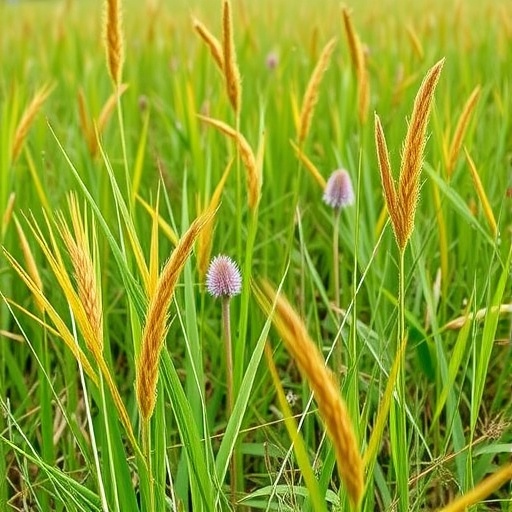
In the wake of escalating climatic changes and growing concerns surrounding carbon emissions, the importance of understanding ecological interactions within semi-arid grasslands has surged. A recent study has illuminated a vital correlation between species diversity and carbon cycling, particularly during autumn senescence. The researchers, Cheng et al., meticulously examined how variations in species composition can lead to significant modifications in belowground carbon allocation processes, thus influencing broader ecological outcomes in semi-arid regions.
The semi-arid grasslands under investigation have often been overlooked in global carbon studies, despite their critical role in the carbon cycle. As these ecosystems face increasing pressures from climate change, the study’s revelations bear critical implications for biodiversity conservation and climate mitigation strategies. It underscores a pivotal narrative: enhancing species diversity may facilitate not just resilience but also a more effective carbon sequestration mechanism.
Central to their findings, the research emphasizes that diverse plant species not only compete for light and nutrients but also interact in ways that can enhance carbon allocation to root systems. This belowground allocation is crucial for mitigating the effects of climate change as it directly impacts soil organic carbon stocks. Specifically, the study demonstrated that grasslands with higher species diversity exhibited prolonged periods of carbon uptake, likely aiding in the transition from summer growth phases to autumn senescence, which is a critical period for carbon dynamics.
One of the novel aspects of this work is its focus on autumn senescence, a time when plants typically reduce their aboveground biomass in preparation for winter. This phase, often characterized by the browning of leaves and reduced photosynthetic activity, surprisingly showed marked activity concerning roots. The researchers found that in more diverse ecosystems, senescence did not signify a drastic decline in carbon uptake. Instead, these systems maintained their carbon flux by enhancing root growth and activity in the soil.
Moreover, the study utilized advanced methodologies, combining field observations with high-resolution analyses of soil carbon dynamics. This integrative approach allowed them to track not only carbon stocks but also the microbial communities associated with root systems during different phenological phases. Insights into how varied species influence microbial processes served to deepen the understanding of belowground interactions that support carbon cycling.
Cheng et al. also navigated the implications of their findings for ecosystems under threat from anthropogenic activities. The decline in species diversity, driven by agricultural intensification and habitat destruction, can inadvertently reduce the ability of these ecosystems to sequester carbon effectively. This loss of biodiversity not only leads to reduced carbon stocks but also impacts soil health, nutrient cycling, and overall ecosystem resilience. Their work argues passionately for enhanced protective measures to conserve these vital grassland habitats.
This research is set against a backdrop of increasing global attention on biodiversity loss and its associated risks. Amid diverse discussions on how to tackle climate change, Cheng and colleagues point to species diversity as an often underappreciated mitigating factor in carbon dynamics. By advocating for biodiversity as a climate adaptation strategy, their research contributes meaningfully to ongoing dialogues in ecology and environmental science.
A particularly striking aspect is the potential for policy implications stemming from this research. As policymakers grapple with ways to enhance carbon sequestration technologies, recognizing the value of preserving and restoring species-rich grasslands could serve as a practical solution. The study encourages consideration of biodiversity not merely as a hallmark of conservation but as an essential element in combating climate change through natural processes.
Further, the study opens avenues for future investigations concerning how individual species within these diverse assemblages contribute uniquely to root versus shoot biomass allocation. Understanding these interactions at finer scales may illuminate specific mechanisms by which certain species enhance soil carbon. Such research could guide strategic conservation efforts by identifying keystone species in carbon cycling processes.
The ramifications of these findings extend to agricultural practices as well. Grasslands are often integral to agricultural livelihoods, and implementing practices that promote biodiversity could result in dual benefits: enhancing ecosystem services including carbon storage while also improving agricultural yields. Thus, the research lays the groundwork for appreciating the intertwined fate between agricultural practices and ecological health in the face of climate variability.
In conclusion, Cheng et al. have provided a significant contribution to our understanding of plant ecology and its implications for carbon cycling in semi-arid grasslands. Their findings are a clarion call for the scientific community and environmental stakeholders alike to recognize the multifaceted benefits of biodiversity. In a world facing unprecedented environmental challenges, the preservation of species-rich ecosystems emerges as a promising pathway not only to sustain biodiversity but also to mitigate climate change effects effectively.
Through their rigorous examination, the researchers have reinvigorated the conversation about biodiversity’s role in carbon dynamics—an issue that resonates not only with ecologists but also with legislators, conservationists, and the global public who are increasingly concerned about climate-related issues. Their study reinforces the critical need to get ahead of biodiversity loss, tap into nature’s potential to mitigate climate change, and establish enduring strategies that enact protective measures for vital ecosystems.
Subject of Research:
The relationship between species diversity and belowground carbon allocation during autumn senescence in semi-arid grasslands.
Article Title:
Species diversity advances autumn senescence via enhanced belowground carbon allocation in semi-arid grasslands.
Article References:
Cheng, H., Qiao, Y., Zhu, H. et al. Species diversity advances autumn senescence via enhanced belowground carbon allocation in semi-arid grasslands.
Commun Earth Environ (2025). https://doi.org/10.1038/s43247-025-03109-z
Image Credits: AI Generated
DOI:
Keywords:
Biodiversity, Carbon cycling, Semi-arid grasslands, Autumn senescence, Ecosystem resilience, Climate change, Soil organic carbon, Conservation strategies.


