


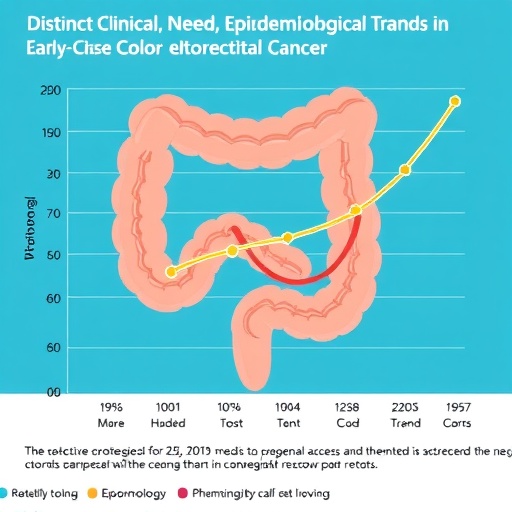
The landscape of colorectal cancer is shifting dramatically, with early-onset colorectal cancer (EOCRC) emerging as a pressing public health concern across the globe. Recent analyses combining extensive data from the Surveillance, Epidemiology, and End Results (SEER) 17 database and the Global Burden of Disease (GBD) 2021 study have uncovered nuanced distinctions between very early onset colorectal cancer (VEOCRC), affecting individuals aged 15 to 29, and middle-aged early onset colorectal cancer (MAEOCRC), encompassing ages 30 to 49. This rigorous investigation sheds light on how these subgroups differ significantly in clinical presentation, pathological severity, prognosis, and epidemiological trends.
The study underscores a markedly aggressive clinical profile for VEOCRC compared to MAEOCRC. Patients diagnosed with VEOCRC exhibit a substantially higher prevalence of mucinous adenocarcinoma and signet ring cell carcinoma—histological subtypes notorious for poor outcomes. Specifically, 18.1% of the VEOCRC cohort presented with these subtypes, more than double the 8.7% observed in the MAEOCRC group. This histological makeup aligns closely with the noted advanced histologic grade (grades III and IV) found in 32.2% of VEOCRC cases versus 18.9% in MAEOCRC, indicating a more aggressive tumor biology in the younger demographic.
Prognostically, VEOCRC patients face a worse outlook, particularly those diagnosed at stage III. Survival analyses revealed diminished outcomes for this subgroup, emphasizing the urgent need for targeted early detection initiatives and tailored therapeutic strategies. In contrast, no significant pathological differences were discerned between MAEOCRC and late-onset colorectal cancer (LOCRC), suggesting that the pathophysiological demarcation may be most profound in extremely young patients.
From an epidemiological lens, the global incidence of VEOCRC has surged alarmingly over the past 15 years. The age-standardized incidence rate (ASIR) experienced a notable average annual percentage change (AAPC) of 0.78 worldwide, outpacing the 0.63 AAPC noted for MAEOCRC. This ascending trajectory is significantly pronounced in countries categorized as having a high-middle Socio-demographic Index (SDI), where VEOCRC’s AAPC skyrocketed to 2.01 compared to 1.44 for MAEOCRC. Such data indicate underlying socioeconomic, lifestyle, and possibly environmental factors disproportionately influencing younger populations.
A particularly intriguing epidemiological trend surfaced when excluding carcinoid tumors from the analysis. In high SDI countries, the incidence of VEOCRC stabilized over the analyzed timespan. However, in high-middle SDI nations, VEOCRC rates surpassed those in high SDI counterparts as early as 2013 and have since climbed to unprecedented global heights. This shift pinpoints how transitional economies are confronted with emerging cancer burdens as they navigate modernization and lifestyle changes.
Decomposition analysis offered a deeper understanding by revealing that epidemiological factors—such as changes in incidence, population structure, and risk exposures—substantially contribute to the observed increase in VEOCRC in high-middle SDI countries. These elements are far more influential in driving VEOCRC trends than they are for MAEOCRC, spotlighting the possibility that very young patients are being uniquely impacted by evolving risk patterns.
Mechanistically, the aggressive histopathological nature and poor outcomes associated with VEOCRC may stem from distinct genetic, epigenetic, and environmental influences compared to other colorectal cancer types. The higher frequency of mucinous and signet ring cell subtypes suggests underlying molecular pathways that favor more invasive tumor behavior, necessitating further research dedicated to understanding oncogenic drivers in this subpopulation.
Clinically, these insights challenge the traditional age thresholds used for colorectal cancer screening and diagnosis. With VEOCRC patients facing distinct risks and poorer prognostic markers, there is an urgent imperative to revise screening guidelines and heighten awareness amongst healthcare providers. Early recognition and intervention could dramatically improve survival and quality of life among these younger patients.
From a public health standpoint, the study’s revelations encourage targeted policy interventions in high-middle SDI countries, where health systems must brace for growing disease burdens tied to young-onset colorectal cancers. Preventive strategies focusing on lifestyle modification, increasing access to diagnostic services, and community education are vital components of a multifaceted response.
Moreover, the findings propel a call for enhanced molecular profiling and research collaboration worldwide. Understanding the biological underpinnings specific to VEOCRC could pave the way for novel therapeutic avenues, including precision medicine approaches tailored to these aggressive subtypes. This could range from biomarker development to innovative chemotherapeutic and immunotherapeutic regimens designed to improve prognosis.
The rapidly evolving epidemiology of EOCRC also highlights broader societal shifts, implicating factors such as diet changes, sedentary lifestyles, antibiotic use, and microbiome alterations that might disproportionately affect younger populations. Investigating these relationships is essential to crafting effective prevention frameworks that adapt to the complex interplay of genetics and environment.
In summary, this comprehensive analysis identifies VEOCRC and MAEOCRC as clinically and epidemiologically distinct entities. The notably poorer pathology and survival outcomes in VEOCRC demand an urgent recalibration of both clinical practice and global health policy. Recognizing and addressing the unique challenges faced by very young colorectal cancer patients is imperative to curbing the upward tide of this disease.
As early-onset colorectal cancer rates continue their troubling ascent worldwide, the study serves as a critical wake-up call for clinicians, researchers, and policymakers alike. It highlights the importance of granular, age-focused research in revealing hidden patterns that inform better prevention, diagnosis, and treatment strategies.
These findings emerge at a time when colorectal cancer remains one of the leading causes of cancer-related morbidity and mortality worldwide. Tackling the distinct challenges posed by VEOCRC, especially in economically transitional regions, could markedly shift the landscape of colorectal cancer burden in the coming decades.
Future studies must interrogate the drivers behind these epidemiological differences with refined granularity, integrating genomics, lifestyle assessments, and socioeconomic frameworks. Ultimately, an integrative approach combining clinical vigilance and robust public health interventions promises the best hope for reversing these concerning trends in early-onset colorectal cancer.
Cite Scienmag News
Nathaniel Bowman. (November 22, 2025). Distinct Clinical, Epidemiological Trends in Early-Onset Colorectal Cancer. Scienmag. https://scienmag.com/distinct-clinical-epidemiological-trends-in-early-onset-colorectal-cancer/
Nathaniel Bowman. "Distinct Clinical, Epidemiological Trends in Early-Onset Colorectal Cancer." Scienmag, 22 November 2025, https://scienmag.com/distinct-clinical-epidemiological-trends-in-early-onset-colorectal-cancer/. Accessed 5 September 2026.
Nathaniel Bowman. "Distinct Clinical, Epidemiological Trends in Early-Onset Colorectal Cancer." Scienmag. November 22, 2025. https://scienmag.com/distinct-clinical-epidemiological-trends-in-early-onset-colorectal-cancer/


