


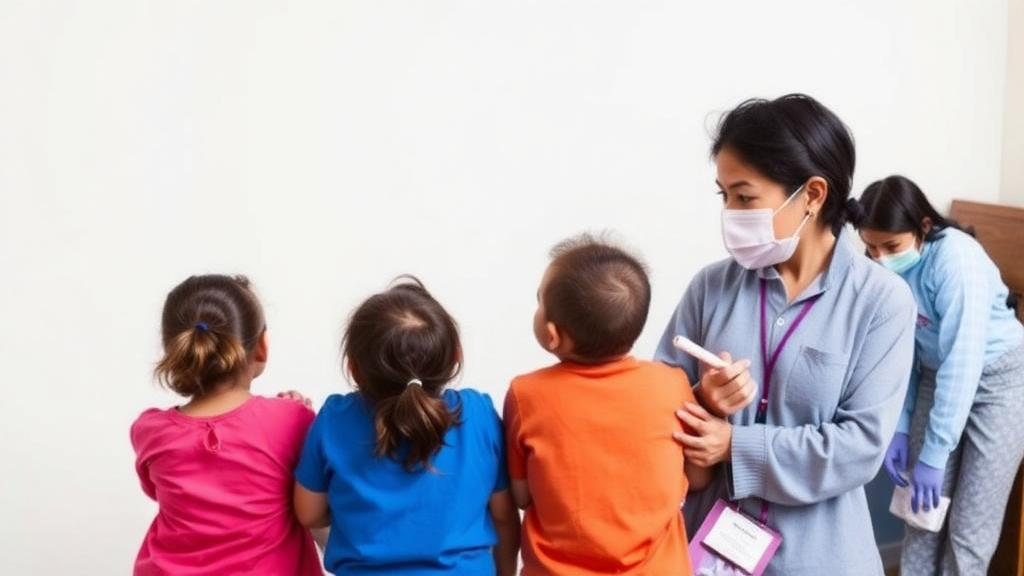
For families of children living with chronic liver disease, the moment of hospital discharge is often the most frightening part of an already exhausting journey. The medical team that has managed a child’s condition for weeks suddenly hands over responsibility to parents and caregivers who must now monitor medications, recognize warning signs, coordinate follow-up appointments, and cope with the emotional weight of a lifelong illness. A new study published in BMC Health Services Research suggests that a carefully structured continuity of care program, built around the concept of discharge readiness, can significantly ease that transition and improve outcomes for these vulnerable young patients.
The research, conducted by a team at The Third People’s Hospital of Shenzhen in Guangdong Province, China, enrolled 92 children aged zero to fourteen years who had been diagnosed with chronic liver disease. Chronic liver disease in children, which encompasses conditions such as biliary atresia, metabolic liver disorders, and cirrhosis of various origins, imposes a heavy physical toll on patients and a profound burden on families. Unlike acute illnesses that resolve with a single course of treatment, chronic liver disease demands sustained management, frequent monitoring of liver function, careful nutritional support, and in severe cases, preparation for transplantation. The period immediately after discharge, when families must translate hospital-based care into home-based routines, has long been recognized as a point of vulnerability where complications can emerge and readmissions become more likely.
The study’s central innovation lies in its systematic approach to building the intervention. Rather than designing a care program from assumptions alone, the research team integrated findings from questionnaire surveys, qualitative interviews with families, a structured review of the existing literature, and consultation with clinical experts. This multi-method development process allowed the program to be tailored to the actual needs and concerns reported by caregivers, and critically, to be adjusted according to each child’s individual level of discharge readiness. Discharge readiness, as a concept, refers to the degree to which a patient and family are prepared, both practically and psychologically, to manage care outside the hospital. It encompasses knowledge of the condition, technical skills such as medication administration, emotional preparedness, and the availability of expected support resources.
The study employed a comparative design in which children were assigned to an intervention group receiving the continuity of care program and a control group receiving standard discharge procedures. At baseline, the two groups were well matched: the researchers report no significant differences in demographic or clinical characteristics, nor in levels of social support available to the families. This methodological rigor matters because social support is one of the strongest confounders in studies of post-discharge outcomes. Families with robust networks of relatives, friends, and community resources tend to fare better regardless of the formal care they receive, so demonstrating equivalence at baseline strengthens the argument that any observed differences in outcomes can be attributed to the intervention itself.
The results were striking. Children in the intervention group demonstrated significantly higher discharge readiness across all measured dimensions compared with those in the control group, with differences reaching statistical significance at p less than 0.001. This threshold indicates that the probability of such a large difference arising by chance is less than one in a thousand, a level of statistical confidence that lends considerable weight to the finding. The intervention group also received higher-quality discharge guidance scores, suggesting that the program improved not only the preparedness of families but also the performance of the clinical staff responsible for preparing them for the transition home.
Beyond the technical measures of readiness and guidance quality, the program appeared to deliver meaningful psychological benefits. Anxiety scores were significantly lower in the intervention group, with differences reaching significance at p less than 0.05. This finding deserves particular attention because anxiety among caregivers of children with chronic illness is not a peripheral concern. Elevated parental anxiety has been linked to impaired caregiving behaviors, difficulty retaining medical instructions, and worse health outcomes for the child. A parent who is overwhelmed by worry may hesitate to administer medications correctly, may miss early signs of decompensation, or may avoid seeking timely medical help. By reducing anxiety, the continuity of care program may have created a virtuous cycle in which calmer, better-prepared caregivers provide more effective home care, which in turn reinforces their confidence and competence.
The architecture of a continuity of care program of this kind typically involves several coordinated elements that extend the hospital’s reach into the home. While the source study describes the program as being tailored to discharge readiness levels, the underlying logic is that families at different stages of preparedness require different intensities and types of support. A family that scores low on readiness might need intensive education sessions, hands-on demonstrations of care techniques, and frequent telephone follow-up in the first days after discharge, whereas a family that is already well prepared might benefit primarily from scheduled check-ins and access to a consultation channel for questions as they arise. This stratified approach stands in contrast to one-size-fits-all discharge instructions, which often overwhelm some families while leaving others with unmet informational needs.
The theoretical case for such programs rests on a well-established observation in health services research: the transition from hospital to home is a period of heightened risk, particularly for patients with complex chronic conditions. Medication errors, missed follow-up appointments, and failure to recognize deteriorating symptoms cluster in the days and weeks after discharge. For children with chronic liver disease, the stakes are especially high because hepatic decompensation can progress rapidly, and because many of these children are on complicated medication regimens that may include immunosuppressants, diuretics, or nutritional supplements whose dosing requires careful adjustment. A structured continuity of care program acts as a bridge across this risky interval, ensuring that the expertise of the hospital team remains accessible while families gradually build the self-care abilities the study’s authors highlight as a key intended outcome.
The study’s conclusions extend beyond the immediate endpoints of readiness and anxiety. The authors suggest that the program may promote the development of self-care abilities among both children and their caregivers, enhance satisfaction with nursing care, and ultimately improve quality of life. These are ambitious claims, and the study’s design, which measured readiness, guidance quality, and anxiety directly, supports the first two more firmly than the longer-term quality-of-life outcomes, which the authors frame as potential downstream benefits. Still, the logic of the pathway is coherent: families who leave the hospital feeling prepared and supported are better positioned to manage daily care, maintain follow-up schedules, and sustain the child’s health over time, all of which contribute to a better lived experience with a chronic condition.
The research carries practical implications for pediatric hepatology services far beyond Shenzhen. Hospitals caring for children with chronic liver disease could adopt the program’s development methodology, combining quantitative surveys, qualitative family interviews, literature synthesis, and expert consultation, to build discharge support systems matched to their own patient populations. The finding that discharge readiness can be measurably improved across all dimensions suggests that readiness is not a fixed family trait but a modifiable clinical target, something that skilled nursing intervention can move. As health systems worldwide grapple with rising rates of chronic disease in children and pressure to reduce readmissions, this study offers a concrete, evidence-based template: assess each family’s readiness before discharge, tailor the continuity of care program to that readiness level, and maintain structured contact after the child goes home. For the families navigating the daily realities of childhood liver disease, that structured support may transform the daunting journey from hospital ward to home into a managed, supported transition rather than a leap into the unknown.
Subject of Research: A discharge readiness-based continuity of care program for children with chronic liver disease
Article Title: Efficacy of a continuity of care program based on discharge readiness for children with chronic liver disease
Article References: Liao, Q.-H., Fu, K.-H., Ma, S., Zhang, S.-Y., Ning, X.-L., Hu, X.-Q., Sun, L.-L., & Xiao, W.-L. (2026). Efficacy of a continuity of care program based on discharge readiness for children with chronic liver disease. BMC Health Services Research. https://doi.org/10.1186/s12913-026-15630-8
Image Credits: AI Generated
DOI: 10.1186/s12913-026-15630-8
Keywords: chronic liver disease, pediatrics, discharge readiness, continuity of care, nursing, caregivers, anxiety, health services research, patient transition, hospital discharge, self-care, quality of life
Cite Scienmag News
Ophelia Keating. (October 7, 2026). Discharge Readiness Program Eases the Journey Home for Children With Chronic Liver Disease. Scienmag. https://scienmag.com/discharge-readiness-program-eases-the-journey-home-for-children-with-chronic-liver-disease/
Ophelia Keating. "Discharge Readiness Program Eases the Journey Home for Children With Chronic Liver Disease." Scienmag, 7 October 2026, https://scienmag.com/discharge-readiness-program-eases-the-journey-home-for-children-with-chronic-liver-disease/. Accessed 7 October 2026.
Ophelia Keating. "Discharge Readiness Program Eases the Journey Home for Children With Chronic Liver Disease." Scienmag. October 7, 2026. https://scienmag.com/discharge-readiness-program-eases-the-journey-home-for-children-with-chronic-liver-disease/


