

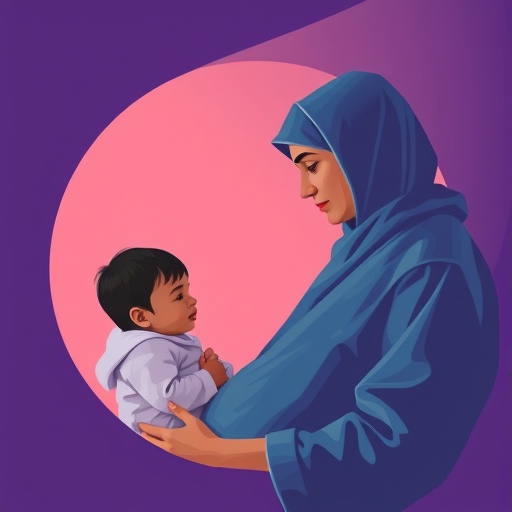
In today’s rapidly digitalizing world, the integration of mental health resources into digital platforms has emerged as a promising avenue to enhance access to care, especially among vulnerable populations. Among these, migrant women experiencing perinatal mental health challenges represent a group with specific and complex needs that often go unmet. A newly published qualitative study titled “Lost in translation?” delves deeply into the digital perinatal mental health resource use among migrant women, revealing intricate barriers and facilitators that define their experiences. This exploration, carried out by Altun, Oxlad, Hine, and colleagues, offers a pivotal contribution toward understanding how digital health initiatives can be optimized for equitable healthcare outcomes.
The term “perinatal mental health” encompasses the emotional and psychological well-being of women during pregnancy and the postnatal period, critical phases marked by profound biopsychosocial transformations. Migrant women residing far from their countries of origin face unique stressors such as cultural dissonance, social isolation, linguistic challenges, and limited access to healthcare systems, heightening their vulnerability to perinatal mood disorders like depression and anxiety. As digital health platforms proliferate, they promise anonymity, 24/7 accessibility, and personalized support, potentially circumventing some traditional barriers. Yet, to what extent these platforms are accessible, relevant, and effective for migrant women has remained insufficiently understood until this critical inquiry.
At the core of the research lies a rigorous qualitative methodology designed to elucidate lived experiences rather than quantify usage metrics or intervention outcomes. Through in-depth interviews and focus groups with migrant women from varied backgrounds, the researchers captured nuanced narratives that highlight disparities in digital literacy levels, cultural appropriateness of content, and trust toward digital health providers. The findings underscore that many migrant women encounter a digital divide, not solely in terms of access to devices or reliable internet connections but also shaped by literacy in host-country languages and unfamiliarity with navigation of digital health ecosystems.
An illuminating aspect of the study revealed that cultural relevancy remains a decisive factor in digital resource engagement. Many participants expressed frustration with mental health content and applications that failed to acknowledge specific cultural beliefs, traditional practices related to pregnancy, and postnatal care rituals. This absence fosters a sense of alienation, raising questions about how digital health interventions must be co-designed with input from diverse cultural communities to enhance inclusivity and resonance.
Further technical analysis within the research points to the linguistic limitations inherent in current resources. While some applications offer multilingual interfaces, the quality of translation and contextual meaning often falls short. Literal translations without cultural contextualization compromise comprehension and diminish the therapeutic potential of digital resources. Such challenges reflect the broader complexity of delivering culturally and linguistically competent mental health care in digital formats, a task that necessitates sophisticated algorithmic and human-centered design approaches.
The researchers also identified trust and confidentiality concerns linked to digital data privacy as significant barriers. Migrant women, particularly those from communities with histories of marginalization or persecution, expressed apprehension about sharing sensitive health information on digital platforms, fearing data breaches or misuse by authorities. This dimension highlights the imperative for transparent, secure, and ethically governed digital health infrastructures that reassure users and comply with rigorous data protection standards.
Interestingly, the study found a bifurcation in digital resource use behaviors: some women embraced social media and informal online communities for peer support, while others displayed skepticism about the accuracy and reliability of such information. This divergence signals the importance of integrating evidence-based content curated by professionals with moderated peer support mechanisms to foster both credibility and community building.
Beyond individual user factors, the research provides insights into systemic obstacles faced by healthcare providers attempting to link migrant women to digital perinatal mental health resources. Communication gaps between clinicians and patients, lack of culturally adapted digital tools, and insufficient training for healthcare professionals to recommend and demystify digital interventions all contribute to underutilization. Addressing these systemic issues requires holistic healthcare models embedding cultural competence, technology literacy training, and multilingual digital services.
Moreover, the study advocates for leveraging emerging technologies such as artificial intelligence and natural language processing to personalize digital interventions. These technologies have the potential to tailor content dynamically by interpreting users’ cultural context, emotional state, and language nuances, thereby enhancing engagement and therapeutic efficacy. However, the ethical deployment of AI in sensitive health domains demands continuous scrutiny to prevent biases and ensure equity.
This research enriches the broader discourse on health equity by illustrating that digital transformation alone does not guarantee improved outcomes unless accompanied by culturally and linguistically informed design, robust privacy safeguards, and integrated healthcare provider support. For policymakers and developers, these findings emphasize the value of participatory design methodologies that center the voices of migrant women, ensuring technological solutions reflect real-world complexities rather than one-dimensional assumptions.
The implications extend beyond migrant populations, urging a reconceptualization of digital health resource frameworks to encompass intersectional identities and diverse lived realities. As the global migration landscape evolves, healthcare systems must adapt rapidly to the shifting epidemiology of perinatal mental health burdens and the sociocultural determinants shaping service accessibility.
Notably, the study’s qualitative depth reveals emotional and psychosocial dimensions that quantitative metrics may overlook. Feelings of invisibility, stigma, and trauma interweave with technical challenges to form multifaceted barriers requiring multidisciplinary intervention strategies. Consequently, mental health professionals, technologists, sociologists, and policymakers must collaborate to forge integrative, culturally responsive digital ecosystems.
In summation, the investigation “Lost in translation?” serves as a clarion call for nuanced, culturally sensitive digital health innovation in perinatal mental health care for migrant women. Its revelations about digital resource utilization and barriers underscore the complexity entailed in translating technological promise into therapeutic reality. As digital health platforms continue to expand globally, incorporating cultural and linguistic competence is not an optional enrichment but a fundamental imperative to achieve health equity in the perinatal period.
The study encourages a future where migrant women can access digital mental health resources that resonate with their cultural identities, communicate in their first languages, and respect their privacy, ultimately fostering improved mental health outcomes. Through evidenced-based, collaborative efforts, technology can be harnessed not only to transcend geographical divides but also to bridge cultural chasms in perinatal mental health support worldwide.
Subject of Research: Digital perinatal mental health resource use among migrant women.
Article Title: “Lost in translation?“: A qualitative exploration of digital perinatal mental health resource use among migrant women.
Article References:
Altun, A., Oxlad, M., Hine, R. et al. (2025). “Lost in translation?“: A qualitative exploration of digital perinatal mental health resource use among migrant women. Int J Equity Health. https://doi.org/10.1186/s12939-025-02715-9
Image Credits: AI Generated


