


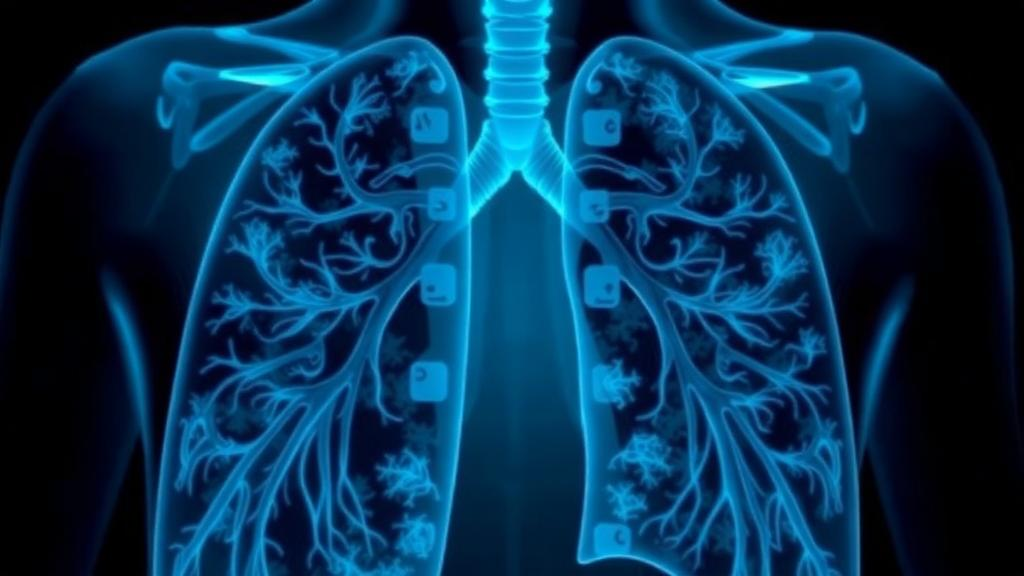
Diesel exhaust has been classified as carcinogenic to humans since 2012, yet a stubborn gap has always separated what toxicologists measure in laboratory animals from what actually lodges inside human lungs during a working day. A new modeling study published in Air Quality, Atmosphere & Health closes part of that gap by calculating, particle by particle, how much diesel soot a person inhales, where it settles in the respiratory tract, how much the body manages to clear, and what the resulting long-term lung burden would mean if translated into the rats whose tumor data underpin much of modern carcinogen risk assessment. The answer is sobering: the equivalent rat dose lands squarely in the region where rodent experiments begin to show lung tumors, with a modeled carcinogenicity estimate of 2.42 percent.
The research team, led by Sofia Eirini Chatoutsidou of the Technical University of Crete together with colleagues from the N.C.S.R. Demokritos research center and the National and Kapodistrian University of Athens, built their simulation around a realistic exposure pattern. They assumed eight hours per day of breathing diluted diesel exhaust, chosen to approximate an occupational setting such as a depot, loading dock, or roadside workplace, followed by sixteen hours of ordinary urban air pollution. That split matters because the two aerosols differ sharply in character. Diesel exhaust particles are soot agglomerates roughly 70 to 80 nanometers across, studded with polycyclic aromatic hydrocarbons, semi-volatile organics, and metals, while urban particles are fewer in number and spread across a broader size range.
The particle data came from measurements in Toronto, where urban air was sampled at a central intersection of two high-traffic roads, and from a heavy-duty diesel engine run at low load and intermediate speed, conditions that mimic urban cruising. Using a Scanning Mobility Particle Sizer, the diesel exhaust showed a number concentration of about 5.37 × 10⁴ particles per cubic centimeter, peaking near 70 to 80 nanometers, while urban air carried roughly 1.76 × 10⁴ particles per cubic centimeter. The authors checked these values against the wider literature and found them plausible: vehicles without diesel particulate filters can emit particles in the range of 10⁶ to 10⁷ per cubic centimeter, whereas filter-equipped vehicles drop to around 10⁴, though active filter regeneration events can spike concentrations back up by orders of magnitude.
To track where those particles go, the team used ExDoM2, a dosimetry model built on the semi-empirical respiratory tract framework of the International Commission on Radiological Protection. The model divides the human respiratory tract into five regions: the anterior nose, the posterior nasal passages with pharynx and larynx, the bronchial region, the bronchiolar region, and the deep alveolar-interstitial zone where gas exchange happens. Each region acts as a series of filters, and deposition in each depends on particle size, breathing rate, and the balance between aerodynamic mechanisms like impaction and settling and thermodynamic mechanisms like diffusion. For nanoparticles, diffusion dominates, which is precisely why particles smaller than 100 nanometers penetrate so effectively into the lung’s deepest recesses.
The headline result of the deposition simulations is stark. For an adult male of normal weight engaged in light exercise such as walking, 69 percent of inhaled nanoparticles from either diesel exhaust or urban air deposited in the alveolar-interstitial region, and combining that with the tracheobronchial zone means 86 percent of the inhaled nanoparticles ended up in the lungs after a single day. In absolute terms, one hour of diesel exposure delivered about 2.7 × 10¹⁰ particles to the lungs, corresponding to a surface dose of 4.15 × 10¹⁴ square nanometers and a mass dose of 9.9 micrograms. Surface area, rather than mass, turns out to be the critical metric, because rodent toxicology studies have shown that the tumor response to poorly soluble particles tracks the accumulated particle surface in lung tissue.
Clearance told an equally important story. During an eight-hour diesel exposure, 19.3 micrograms deposited in the extrathoracic region and 79.2 micrograms in the lungs, but after clearance only 9.4 and 71.6 micrograms respectively remained. That means the upper airways shed just over half of their deposited load, while the lungs cleared a mere 9.5 percent. Meanwhile, small fractions of the dose migrated elsewhere: 10.5 micrograms traveled to the esophagus, 5.9 micrograms were absorbed into the blood, and a trace amount reached the lymph nodes. The deep lung, with its slow macrophage-mediated clearance, effectively becomes a reservoir for diesel soot, and it is exactly this retained burden that the model projects forward over years.
When the simulations were extended to long-term exposure, the retained lung mass followed an exponential curve that reached a plateau after roughly 1,000 days, or about three years of constant exposure. Projected out to 10,000 days, approximately 27 years, the retained dose stabilized at around 7,786 micrograms for combined diesel and urban exposure, compared with 7,761 micrograms for diesel alone, a difference so small it underscores how overwhelmingly the eight-hour diesel window dominates the total burden. The saturated dose was roughly 77 times the initial one-day dose. The authors caution that this plateau reflects the assumption of unchanging exposure conditions; in reality, shifts in concentration or episodes of very high exposure can overwhelm alveolar macrophages, the lung’s first-line scavenger cells, and change the deposition picture entirely.
The most innovative step came next. Using the allometric scaling approach recommended by the Environmental Protection Agency, in which toxicity doses between species scale with body mass to the power of three-quarters, the team converted the long-term retained human lung dose into an animal equivalent dose. Because the target tissue is the lung itself, the scaling used lung masses rather than body masses: about 1,000 grams for a human lung versus 1.5 grams for a rat lung, a ratio of roughly 667. Smaller animals have higher metabolic rates and correspondingly higher dose accumulation, so the equivalent rat dose came out higher than the human dose. The converted values fell in the lower range of the experimental dose-response curve compiled from classic rat inhalation studies by Oberdörster, Miller, and others, where the logistic fit predicts a lung tumor proportion of 2.42 percent, with a 95 percent confidence interval of 0.073 to 6.12 percent.
Notably, this tumor estimate was essentially identical across all the receptor types the model examined, including normal-weight and overweight men and women at different activity levels. Variations in inhalation rate and body composition did shift the deposited dose, with males under light exercise receiving the highest doses among normal-weight individuals, while overweight females sitting at the same activity level received higher doses than their normal-weight counterparts. But once those doses were scaled to the rat equivalent, they all landed in the flat lower portion of the logistic curve, where the predicted tumor proportion barely changes. The implication is that, within the physiological variation explored here, exposure conditions, not personal characteristics, are the dominant driver of the modeled carcinogenic risk.
The study has clear limitations that the authors acknowledge. It relied on a single particle size distribution for all simulations, whereas real-world exposure varies constantly; it assumed fixed receptor characteristics and constant exposure conditions; and the allometric and clearance formulations carry their own uncertainties, as does fitting a logistic curve to a limited set of in vivo observations. Still, the work represents a meaningful bridge between two worlds that rarely speak directly: computational dosimetry of human inhalation and experimental rodent carcinogenicity. By quantifying exactly how much diesel soot accumulates in human lungs over a working lifetime and showing that the scaled equivalent sits within the tumor-producing range observed in rats, the study gives risk assessors a concrete, mechanistically grounded link between everyday traffic pollution and the cancer endpoint that regulators care about most. For the millions of workers who spend their shifts beside idling diesel engines, the message is hard to ignore.
Subject of Research: Respiratory tract dosimetry of diesel exhaust particles and its allometric link to lung tumor responses in rats
Article Title: Linking human respiratory tract dose from diesel exhaust particles to lung tumor responses observed in rats
Article References: Chatoutsidou, S. E., Chalvatzaki, E., Mammi-Galani, E., Diapouli, L., Gini, M. I., Manousakas, M. I., Kasdagli, M.-I., Samoli, E., Katsouyanni, K., Eleftheriadis, K., & Lazaridis, M. (2026). Linking human respiratory tract dose from diesel exhaust particles to lung tumor responses observed in rats. Air Quality, Atmosphere & Health, 19(10), Article 226. https://doi.org/10.1007/s11869-026-02115-0
Image Credits: AI Generated
DOI: 10.1007/s11869-026-02115-0
Keywords: diesel exhaust particles, lung dosimetry, nanoparticles, allometric scaling, lung cancer, air pollution, respiratory tract, clearance, occupational exposure, risk assessment, ExDoM2 model, rat toxicology
Cite Scienmag News
Nathaniel Bowman. (October 7, 2026). Diesel Soot in Human Lungs: New Model Links Inhaled Dose to Rat Tumor Risk. Scienmag. https://scienmag.com/diesel-soot-in-human-lungs-new-model-links-inhaled-dose-to-rat-tumor-risk/
Nathaniel Bowman. "Diesel Soot in Human Lungs: New Model Links Inhaled Dose to Rat Tumor Risk." Scienmag, 7 October 2026, https://scienmag.com/diesel-soot-in-human-lungs-new-model-links-inhaled-dose-to-rat-tumor-risk/. Accessed 7 October 2026.
Nathaniel Bowman. "Diesel Soot in Human Lungs: New Model Links Inhaled Dose to Rat Tumor Risk." Scienmag. October 7, 2026. https://scienmag.com/diesel-soot-in-human-lungs-new-model-links-inhaled-dose-to-rat-tumor-risk/


