

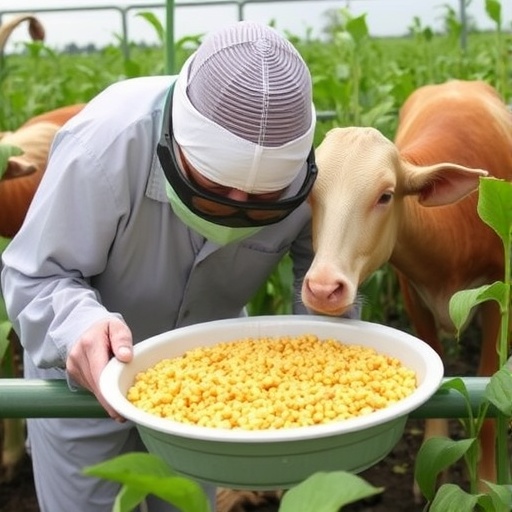
In an era where food safety and public health have taken center stage, recent research illuminates the intricate world of mycotoxins, particularly aflatoxins and ochratoxin A, which are produced by certain toxigenic fungi. The implications of this study reveal alarming insights into how these toxins affect food safety, human health, and agricultural practices. Researchers, led by El-Fawal et al., have employed advanced molecular techniques to identify and quantify these mycotoxins, signaling a crucial step towards ensuring the safety of animal feed and, subsequently, the food chain that culminates in human consumption.
Aflatoxins are a group of toxic compounds primarily produced by the fungi Aspergillus flavus and Aspergillus parasiticus. These potent carcinogens can contaminate a variety of agricultural products, including grains, nuts, and seeds, often leading to severe economic losses and health risks. The research team conducted their study with the aim of providing a deeper understanding of the prevalence and levels of these toxins in different feedstuffs, shedding light on a pressing concern for farmers, feed manufacturers, and nutritional health experts alike.
Ochratoxin A, another nefarious mycotoxin, is predominantly produced by Aspergillus ochraceus and Penicillium species. Its presence is particularly concerning due to its nephrotoxic properties and its potential role as a teratogen and carcinogen. The comprehensive detection and quantitative analysis of both aflatoxins and ochratoxin A in feedstuff is critical, as these mycotoxins can lead to significant health repercussions not just for animals consuming contaminated feed but also for humans who may consume animal products.
The methodology employed by El-Fawal and colleagues exemplifies cutting-edge approaches in mycotoxin research. Utilizing molecular detection techniques, such as polymerase chain reaction (PCR) and high-performance liquid chromatography (HPLC), allowed the researchers to efficiently detect and quantify these fungal toxins in feed samples. Such techniques offer unparalleled sensitivity and specificity, which are vital when dealing with complex samples that may contain numerous contaminants.
Furthermore, the study highlights the importance of routine monitoring of feed ingredients for mycotoxin contamination. This proactive approach can mitigate risks associated with aflatoxins and ochratoxin A, assuring the safety of the food supply. The findings underscore the necessity for stringent regulatory frameworks governing the use of feedstuff, which could play a pivotal role in safeguarding public health.
The implications of this research extend beyond immediate health concerns. As agricultural practices evolve, the risk of mycotoxin contamination remains a perennial threat. With climate change affecting weather patterns and agricultural productivity, the proliferation of toxigenic fungi may increase, elevating the risks associated with aflatoxins and ochratoxin A. This highlights the urgent need for adaptive strategies in agricultural management and food safety protocols.
Moreover, the economic ramifications of mycotoxin contamination are far-reaching. Farmers may face severe financial losses not only due to decreased crop yields but also through penalties and fines associated with selling contaminated products. The study by El-Fawal et al. is a clarion call to the agricultural sector to prioritize mycotoxin management as part of their quality assurance processes.
Engaging stakeholders at various levels, from farmers to food processors, is essential for addressing the mycotoxin challenge. Education and training initiatives surrounding the safe handling and processing of agricultural products can lead to more informed decision-making, ultimately reducing the prevalence of these hazardous compounds in the food chain.
Public health organizations and regulatory authorities must remain vigilant in monitoring and addressing mycotoxin risks. Collaborative efforts between scientists, health professionals, and regulatory agencies can lead to the development of robust guidelines and standards that prioritize food safety and public health. The insights provided by this research serve as a foundation for future studies aiming to unravel the complexities of mycotoxins and their impact on health and agriculture.
In conclusion, the molecular detection and quantification of aflatoxins and ochratoxin A, as highlighted by El-Fawal et al., represent a significant advancement in our understanding of mycotoxin contamination in feedstuff. As consumers become increasingly aware of food safety issues, the demand for transparency in food production will only grow. By embracing innovation in detection and establishing rigorous safety standards, stakeholders across the spectrum can ensure the integrity of the food supply chain.
As this research paves the way for more stringent controls and better understanding of mycotoxins, it also serves as a reminder of the interconnectedness of agriculture and public health. The fight against mycotoxins is ongoing, but with continued research and cooperation, a safer food future is within reach.
Subject of Research: Mycotoxins in Animal Feed
Article Title: Molecular detection and quantification of aflatoxins and ochratoxin A produced by toxigenic fungi in feedstuff.
Article References:
El-Fawal, M.F., El-Fallal, A.A., El-Sayed, A.K.A. et al. Molecular detection and quantification of aflatoxins and ochratoxin A produced by toxigenic fungi in feedstuff.
Int Microbiol (2026). https://doi.org/10.1007/s10123-025-00772-2
Image Credits: AI Generated
DOI:
Keywords: Mycotoxins, Aflatoxins, Ochratoxin A, Food Safety, Animal Feed, Molecular Detection, Toxigenic Fungi, Public Health


