


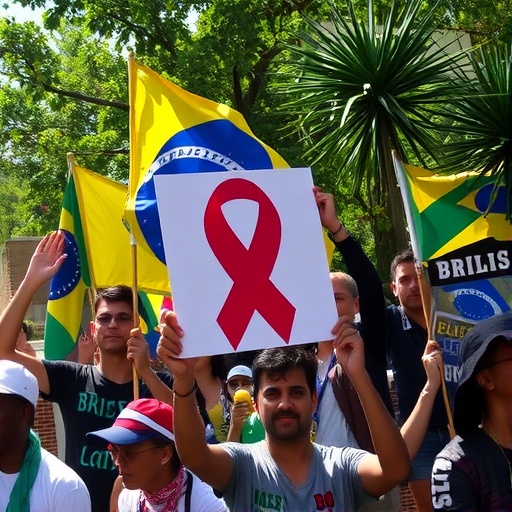
Brazil’s HIV/AIDS response has long been hailed as a global model. Beginning in 1987, the country became the first developing nation to guarantee free treatment, combining activism with evidence-based public health and human-rights oriented policy. A coalition of civil society, clinicians, and government helped expand the Unified Health System (SUS) and build access to antiretroviral therapy. Key milestones included domestic diagnostic production and—after sustained advocacy—a patent waiver for the antiretroviral drug efavirenz in 2007.
Yet a new analysis suggests that Brazil’s once dominant momentum has slowed. The study argues that the decline of anti-AIDS activism cannot be attributed solely to reduced funding. Instead, it links demobilization to shifts in who is affected by HIV and how movement priorities are shaped. This “pauperization” of the epidemic, along with changes in national health policy, has altered the landscape of advocacy.
The research is conducted through a sociological lens associated with Pierre Bourdieu’s theory of practice, treating the AIDS movement as a “field” of struggle. Within this field, different actors—NGOs, networks, and the state—compete for power and legitimacy to define what counts as legitimate activism. The paper emphasizes how activists’ internalized dispositions, or habitus, influence their priorities and strategies over time.
Achcar’s argument centers on resources that are contested within the field: economic, social, cultural, and symbolic capital. As the dominant narrative shifts, what once appeared politically necessary can become framed as secondary to administrative targets and clinical outputs. This naturalized discourse, referred to as doxa, helps explain why activism may lose its earlier political framing.
Historically, the 1980s movement was radical and intellectualized, framing AIDS as a matter of democracy and social justice. Leaders helped forge alliances with public health advocates, producing a unified, politically grounded culture. From the 1990s onward, HIV increasingly affected more disadvantaged populations, introducing urgent demands for food, housing, and basic services—demands that reshaped internal debate and fragmented earlier consensus.
From the 2010s, medicalization accelerated, supported by narratives of “ending AIDS.” The study contends that this framing reduces HIV to a biomedical problem and can obscure structural drivers of inequality. At the same time, politicized NGOs were pushed toward professionalization to secure funding, shifting from activist capital toward service provision.
External pressures also mattered. In the late 2000s, Brazil became less central to international donor agendas, while domestic budget constraints limited social participation. Together, these changes reinforced the idea that medication alone could resolve the epidemic, downplaying broader debates about inequality.
Interviews described today’s activism as weakened, with intensified tensions between long-standing universalist NGOs and newer identity-based networks. The resulting disputes over legitimacy and scarce resources have further fragmented collective action.
The authors conclude that Brazil’s future HIV response depends on rebuilding alliances, restoring activism’s political character, and directly addressing the inequalities that continue to fuel transmission and inequitable outcomes.
Cite Scienmag News
Courtney Benton. (July 16, 2026). Depoliticization Erodes AIDS Activism in Brazil. Scienmag. https://scienmag.com/depoliticization-erodes-aids-activism-in-brazil/
Courtney Benton. "Depoliticization Erodes AIDS Activism in Brazil." Scienmag, 16 July 2026, https://scienmag.com/depoliticization-erodes-aids-activism-in-brazil/. Accessed 3 September 2026.
Courtney Benton. "Depoliticization Erodes AIDS Activism in Brazil." Scienmag. July 16, 2026. https://scienmag.com/depoliticization-erodes-aids-activism-in-brazil/


