


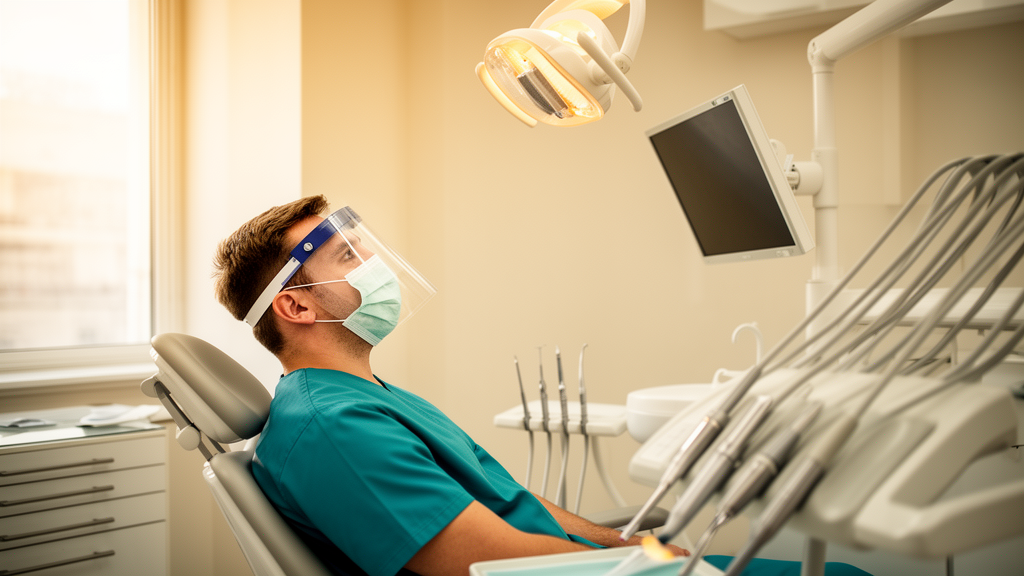
When the COVID-19 pandemic swept across the world in early 2020, few professions were thrust into the line of fire as abruptly as dentistry. Dental care involves close proximity to patients’ mouths, aerosol-generating procedures, and instruments that can spray contaminated droplets across an operatory. Overnight, dentists found themselves working in one of the highest-risk clinical environments imaginable, often without clear guidance, adequate protective equipment, or a steady income. A new qualitative study published in BMC Psychology by researchers at Hamadan University of Medical Sciences in Iran now offers one of the most detailed psychological portraits to date of what dentists actually lived through during that crisis, and how many of them moved from suffering to resilience and even personal growth.
The research team, led by Marjaneh Meschi and Samaneh Shirahmadi of the Dental Research Center, together with Farshid Shamsaei and Saeid Bashirian, took a deliberately intimate approach. Rather than measuring stress with questionnaires, they used a descriptive phenomenological method, a qualitative technique designed to capture the essence of lived experience as described in the participant’s own words. In 2020, in the city of Hamadan in western Iran, the investigators recruited 23 dentists who were clinically active during the pandemic, using purposeful sampling to find individuals with rich, relevant experience. Each participant gave written informed consent, and the researchers conducted in-depth, unstructured interviews that were digitally audio-recorded and transcribed verbatim.
The analytical engine of the study was Colaizzi’s descriptive phenomenological method, a rigorous seven-step procedure in which researchers repeatedly read transcripts, extract significant statements, formulate meanings, cluster those meanings into themes, and then validate the resulting structure against the original accounts. The scale of the data was striking: the team generated 648 initial codes and 201 secondary codes, which were distilled into four main themes and ten subthemes. This code-to-theme architecture is what gives phenomenological studies their explanatory power, because every theme remains anchored in concrete statements made by real clinicians rather than in abstract theory.
The first main theme captured the dentists’ lived psychological and emotional experiences during the COVID-19 crisis. Participants described intense fear of infection, not only for themselves but for their families, knowing that a dentist who becomes infected at work can carry the virus home. They reported anxiety, uncertainty, and in some cases symptoms consistent with post-traumatic stress, a finding that echoes broader literature on frontline healthcare workers during the pandemic. The interviews also revealed the emotional weight of professional isolation: dentists faced the pandemic largely outside the hospital system, in private offices that received little institutional support, with conflicting information about which procedures were safe and which patients could be treated.
The second theme identified individual and psychological factors influencing adaptation and resilience. Here the data showed that dentists were not passive recipients of stress; their personal characteristics actively shaped how they coped. Participants who reported stronger self-efficacy, spiritual beliefs, optimism, and a sense of professional duty described better psychological adaptation. Others leaned on family support and peer networks to buffer the pressure. This theme carries a technically important message for occupational psychology: resilience in healthcare workers is not a fixed trait but a dynamic process, built from identifiable psychological resources that can be strengthened through training and support programs before the next crisis arrives.
The third theme examined the dentists’ beliefs and perceptions regarding the pandemic itself. Participants’ interpretations of the crisis, whether they saw it as an existential threat, a manageable professional challenge, or a test of their vocation, strongly influenced their emotional responses and behavior. The researchers found that perceptions of the healthcare system played a particularly corrosive role. Inefficiencies within the system and inconsistent policies amplified work-related and psychological pressures, creating barriers to service delivery. Dentists described contradictory directives, unreliable supply chains for personal protective equipment, and a sense of being forgotten by policymakers, which deepened their distress and undermined their ability to keep treating patients safely.
The fourth and perhaps most surprising theme documented experiences of growth and transformation following the crisis. Consistent with the concept of post-traumatic growth, a well-established psychological phenomenon in which adversity can produce positive change, several dentists reported that the pandemic ultimately strengthened their appreciation of life, deepened their relationships, and enhanced their sense of professional meaning. Some described developing new clinical caution and communication skills; others reported renewed commitment to their vocation after periods of doubt. The trajectory the study traces, from suffering to resilience and growth, is therefore not a slogan but an empirically derived pathway that many participants walked in stages.
The authors conclude that psychological and emotional experiences, individual characteristics, and personal beliefs played a significant role in dentists’ adaptation and resilience during the pandemic. But the study’s systemic findings may be its most actionable contribution. Because dentists operate largely in private practice, they fell outside the institutional safety nets that supported hospital staff, and the researchers argue that this structural blind spot turned an occupational health crisis into a mental health crisis. Their recommendation is twofold: comprehensive supportive programs must address both the individual and psychological dimensions of clinician stress and the systemic shortcomings, from policy consistency to protective equipment supply, that amplified the pressure.
For the global dental community, the implications reach well beyond Iran. Dentists in every country faced the same technical hazards: aerosol-generating procedures in an airborne-transmission pandemic, prolonged use of personal protective equipment, financial collapse from reduced patient volumes, and the psychological burden of deciding which treatments could be safely postponed. The Hamadan study suggests that the mental health consequences of those hazards were shaped as much by perception, belief, and system design as by the virus itself. That insight reframes pandemic preparedness for dentistry as a psychological and organizational challenge, not merely an infection-control one.
As the world prepares for future crises, whether pandemics, natural disasters, or climate-related emergencies, the study offers a template for understanding how clinicians in high-risk, low-support settings experience catastrophe. The dentists of Hamadan described fear, exhaustion, and institutional neglect, but also adaptation, meaning, and growth. Capturing both halves of that story, the suffering and the resilience, is what makes phenomenological research like this so valuable, and what the authors hope will guide the design of targeted, effective supportive programs for the mental health and professional performance of dentists in the crises to come.
Subject of Research: Dental Psychology
Article Title: The lived experience of dentists facing crisis: from suffering to resilience and growth
Article References: Meschi, M., Shirahmadi, S., Shamsaei, F., & Bashirian, S. (2026). The lived experience of dentists facing crisis: from suffering to resilience and growth. BMC Psychology. https://doi.org/10.1186/s40359-026-05631-x
Image Credits: AI Generated
DOI: 10.1186/s40359-026-05631-x
Keywords: COVID-19, dentists, mental health, resilience, post-traumatic growth, qualitative research, BMC Psychology, pandemic, lived, experience, facing, crisis
Cite Scienmag News
Glenn Wilkins. (October 18, 2026). Dentists in crisis: how suffering forged resilience and growth during COVID-19. Scienmag. https://scienmag.com/dentists-in-crisis-how-suffering-forged-resilience-and-growth-during-covid-19/
Glenn Wilkins. "Dentists in crisis: how suffering forged resilience and growth during COVID-19." Scienmag, 18 October 2026, https://scienmag.com/dentists-in-crisis-how-suffering-forged-resilience-and-growth-during-covid-19/. Accessed 18 October 2026.
Glenn Wilkins. "Dentists in crisis: how suffering forged resilience and growth during COVID-19." Scienmag. October 18, 2026. https://scienmag.com/dentists-in-crisis-how-suffering-forged-resilience-and-growth-during-covid-19/


