


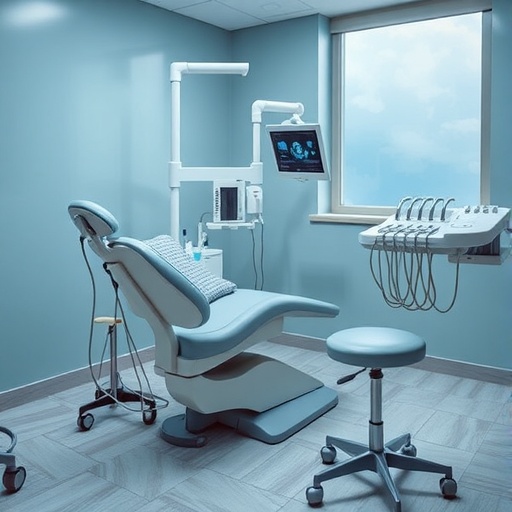
Haemophilia, a rare genetic disorder impairing the blood’s ability to clot, transforms routine dental procedures into potential medical emergencies. A new review in The Open Medicine Journal consolidates cutting-edge insights into safely managing haemophilia patients during dental treatment, highlighting how evolving therapies are reshaping clinical practice. Led by Dr. Amit Kumar and colleagues from Santosh Dental College in India, the research emphasizes the urgent need for enhanced dental training and interdisciplinary collaboration.
Haemophilia predominantly manifests as two forms: Haemophilia A, caused by factor VIII deficiency affecting 1 in 5,000 males globally, and the rarer Haemophilia B, characterized by a lack of factor IX. Both conditions place patients at grave risk during any invasive dental procedure—such as extractions or deep scaling—where even minor breaches in gum or bone tissue can trigger catastrophic bleeding. The oral cavity’s constant exposure to saliva and mechanical forces further exacerbates this risk.
Traditional haemophilia management in dentistry hinges on preemptive clotting factor replacement injections tailored to the patient’s specific type and severity of deficiency. However, the landscape is rapidly changing with breakthroughs like extended half-life clotting factor concentrates, bispecific antibodies such as emicizumab that simulate factor VIII, and pioneering gene therapies that may one day correct the genetic defect permanently. These developments demand that dentists stay abreast of each patient’s unique therapeutic regimen to accurately anticipate bleeding risks.
Local haemostatic modalities remain essential adjuncts in controlling oral bleeding. Absorbable sutures, collagen or gelatin-based sponges, fibrin sealants, and tranexamic acid–containing antifibrinolytic mouthwashes provide critical support alongside systemic therapies. Additionally, dental lasers are gaining prominence for their precision and efficacy in minimizing soft tissue trauma and bleeding during procedures.
The review underscores that thorough patient assessment must include screening for inhibitor antibodies—immune factors that neutralize replacement therapies—since their presence significantly complicates perioperative management. Close liaison between dentists and hematologists is irreplaceable, ensuring that tailored treatment plans encompass prophylactic factor dosing, appropriate local measures, and safe postoperative monitoring.
Beyond acute care, the article calls attention to the vicious cycle perpetuated by poor oral hygiene in haemophilia patients. Fear of bleeding discourages routine brushing and flossing, escalating risks of decay and periodontal disease, which eventually necessitate more invasive and hazardous interventions. Dentists proficient in providing gentle, preventive care can disrupt this cycle and reduce the need for risky procedures.
Pain management protocols also require vigilance. The recommendation is to avoid NSAIDs such as aspirin—due to their antiplatelet effects—and instead prioritize paracetamol to mitigate bleeding complications. Finally, the authors advocate for standardized clinical guidelines and ongoing professional education to bridge the knowledge gap that currently endangers haemophilia patients under dental care.
As gene therapy and novel biologics reshape haemophilia treatment, the dental community faces both a challenge and an opportunity: to incorporate emerging science into practice and transform the dental chair from a danger zone into a place of safe healing for these vulnerable patients.
Keywords
Haemophilia, dental bleeding, clotting factor replacement, emicizumab, gene therapy, oral surgery safety, antifibrinolytic agents, dental lasers
Cite Scienmag News
Denise Maddox. (July 9, 2026). Dental Chairs Pose Risks for Haemophilia Patients Without Proper Care. Scienmag. https://scienmag.com/dental-chairs-pose-risks-for-haemophilia-patients-without-proper-care/
Denise Maddox. "Dental Chairs Pose Risks for Haemophilia Patients Without Proper Care." Scienmag, 9 July 2026, https://scienmag.com/dental-chairs-pose-risks-for-haemophilia-patients-without-proper-care/. Accessed 4 September 2026.
Denise Maddox. "Dental Chairs Pose Risks for Haemophilia Patients Without Proper Care." Scienmag. July 9, 2026. https://scienmag.com/dental-chairs-pose-risks-for-haemophilia-patients-without-proper-care/


