


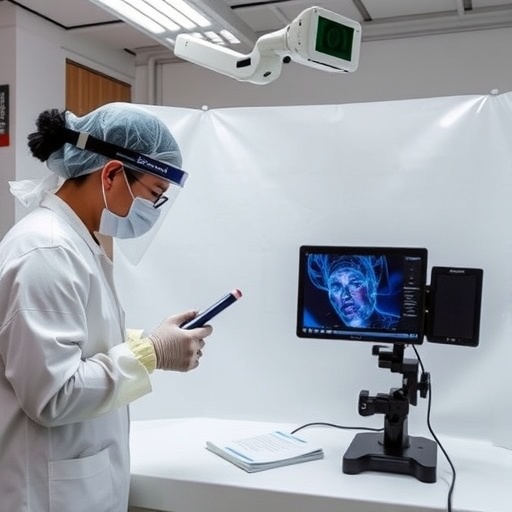
In a landmark initiative to enhance the quality of emergency medicine training in South Korea, a recent Delphi study has set forth a consensus on core Point-of-Care Ultrasound (POCUS) applications deemed essential for medical practitioners in emergency settings. As emergency medicine evolves, so too does the need for precise and rapid diagnostic tools that can significantly impact patient outcomes. Emphasizing the role of POCUS, this study aims to outline clear and actionable recommendations for educators and medical practitioners alike.
The implications of this study extend beyond the realm of academia; it is a guiding light for medical institutions striving to integrate advanced diagnostic technologies into their curricula. Acknowledging the rapid advancements in medical imaging technologies, the researchers involved in this study recognize the importance of aligning educational content with the expectations of contemporary medical practice. This is vital for ensuring that future emergency medicine physicians are equipped with the necessary skills to leverage these tools effectively in high-pressure environments.
By conducting a Delphi study, which is characterized by a systematic approach to collating expert opinions through multiple rounds of questioning, the researchers managed to distill a set of core POCUS applications into a clear framework. This method allows for the gradual refinement of ideas and fosters a collaborative approach to consensus-building. As a result, the findings of this research not only illuminate the critical POCUS applications that should be prioritized in training, but also represent a collective effort to enhance the overall competence of emergency medicine professionals across Korea.
In detailing the specific POCUS applications identified, the study highlights key areas such as trauma assessment, cardiac evaluation, and abdominal examination. These applications are essential for timely diagnoses during emergencies—where every second counts—and underscore the transformative potential of POCUS in emergency settings. Each core application was deliberated upon rigorously, with experts evaluating its relevance, feasibility, and clinical utility within the context of emergency medicine.
One prominent benefit of integrating POCUS into emergency medicine training is its capacity to improve diagnostic accuracy. Traditional diagnostic methods may often require lengthy assessments or advanced imaging techniques that are not always readily available in emergency situations. Conversely, POCUS allows clinicians to visualize internal structures in real-time, facilitating prompt decision-making. This capability not only enhances the speed of patient care but can also lead to better health outcomes, as appropriate interventions can be initiated sooner.
Moreover, such technology encourages a hands-on learning experience, making the training process more engaging for medical students and residents. As part of the consensus reached in the study, the authors emphasize the necessity of incorporating practical training sessions where trainees can familiarize themselves with ultrasound equipment and techniques. These sessions are anticipated to bolster the confidence of trainees, thereby enabling them to utilize these skills proficiently in actual clinical scenarios.
Collaboration amongst educators, practicing physicians, and hospital administrations is critical in implementing the recommendations of the study. Advocates of POCUS suggest forming dedicated committees within training programs to oversee the integration of ultrasound training into curricula. Such committees can ensure that training remains current with technological advancements and that resources are available to instructors and trainees alike.
As part of an ongoing commitment to excellence in medical education, the findings from this Delphi study serve as a springboard for further research in the realm of POCUS applications. Future studies might delve into the effectiveness of different teaching methods, the impact of POCUS on patient outcomes, and the long-term retention of ultrasound skills in emergency medicine trainees. The intention is not only to elevate the standards of training but also to continuously improve the delivery of emergency medical care through evidence-based practices.
As healthcare systems globally increasingly recognize the essential role of diagnostic imaging in emergency medicine, South Korea’s initiative could serve as a model for other countries. By establishing a clear framework for POCUS education, the nation is taking important strides toward fostering a new generation of emergency medicine practitioners who are adept in real-time diagnostics. The comprehensive approach detailed in the study underscores a commitment to medical education that prioritizes innovation, collaboration, and excellence.
In summary, the consensus reached through the Delphi study marks a significant advancement in professional training for emergency medicine in South Korea. By delineating core POCUS applications, the study equips educators with the foundational elements needed to revamp curricula and improve training models. As a result, practitioners will not only be able to meet the challenges of contemporary emergency medicine but also redefine standard practices through improved diagnostic techniques.
Emergency medicine, by its very nature, requires agility and precision, and the integration of POCUS into training regimens promises to cultivate a generation of well-prepared physicians. Ultimately, this initiative reflects a forward-thinking approach to medical education that will undoubtedly leave a lasting impact on patient care in emergency settings, potentially inspiring similar advancements across the globe.
Hong, J.Y., Lee, J.H., Cho, Y.S. et al. Consensus on core POCUS applications for Korean emergency medicine training: a Delphi study.
BMC Med Educ (2026). https://doi.org/10.1186/s12909-025-08484-x
Cite Scienmag News
Courtney Benton. (January 23, 2026). Delphi Study Defines Key POCUS Uses in Korea. Scienmag. https://scienmag.com/delphi-study-defines-key-pocus-uses-in-korea/
Courtney Benton. "Delphi Study Defines Key POCUS Uses in Korea." Scienmag, 23 January 2026, https://scienmag.com/delphi-study-defines-key-pocus-uses-in-korea/. Accessed 4 September 2026.
Courtney Benton. "Delphi Study Defines Key POCUS Uses in Korea." Scienmag. January 23, 2026. https://scienmag.com/delphi-study-defines-key-pocus-uses-in-korea/


