Saturday, October 24, 2026
Science
No Result
View All Result
  • Login
  • HOME
  • SCIENCE NEWS
  • CONTACT US
  • HOME
  • SCIENCE NEWS
  • CONTACT US
No Result
View All Result
Scienmag
No Result
View All Result
Home Science News Medicine

Delayed umbilical catheter migration linked to respiratory decline in preterm neonate

October 24, 2026
in Medicine
Ophelia Keating
By Ophelia Keating Scienmag Editorial Profile - Health Services Research
Reading Time: 2 mins read
0
Delayed umbilical catheter migration linked to respiratory decline in preterm neonate

Delayed umbilical catheter migration linked to respiratory decline in preterm neonate

65
SHARES
587
VIEWS
Share on FacebookShare on Twitter
ADVERTISEMENT

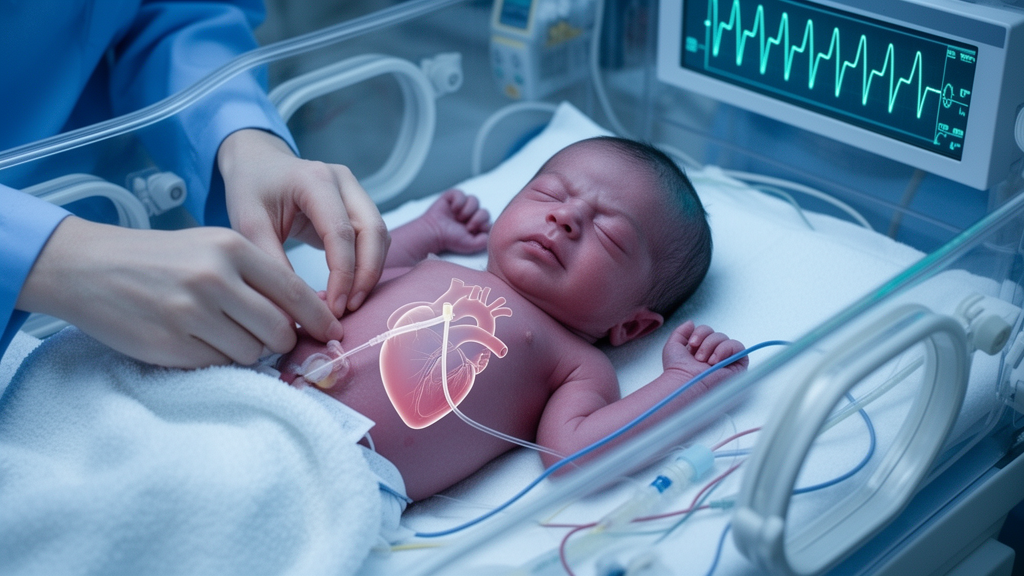
A 33-week-old neonate weighing 1,310 grams developed sudden respiratory deterioration on day 6 of life after initially improving with nasal continuous positive airway pressure, according to a BMC Pediatrics case report. Imaging identified a massive right pleural effusion, and subsequent investigation linked the deterioration to delayed migration of an umbilical venous catheter, with infused fluid entering the pleural space.

Umbilical venous catheters are often used in neonatal intensive care units and are generally considered relatively safe. Pleural effusion caused by extravasation of fluid from a catheter is an uncommon but potentially life-threatening complication. In the reported case, the catheter appeared appropriately positioned on the initial radiograph. Later imaging showed that its tip had migrated downward and developed a distal kink below the diaphragm, demonstrating that its position had changed after the earlier examination.

The infant’s abrupt respiratory decline required invasive ventilation. Chest radiography and bedside lung ultrasound showed a massive right pleural effusion. Clinicians drained the pleural space and obtained clear, straw-colored fluid classified as transudative, but the fluid had a markedly elevated glucose concentration. Together with the imaging findings and the infant’s intravenous fluid therapy through the umbilical venous catheter, this result suggested that infused fluid had extravasated into the pleural cavity. The combination of pleural-fluid glucose measurement and bedside point-of-care ultrasonography helped clinicians rapidly diagnose the catheter-related complication.

Removal of the umbilical venous catheter was followed by rapid resolution of the pleural effusion. The neonate then recovered completely, and the effusion did not recur. The temporal sequence, together with the evidence of catheter migration and the composition of the drained fluid, supports the conclusion that delayed catheter displacement caused the fluid leak and acute respiratory deterioration. The case also shows why a catheter that was well positioned earlier cannot necessarily be assumed to remain correctly positioned throughout continued use.

As a single case report, the study documents one instance of delayed umbilical venous catheter migration in a preterm neonate. It does not establish how frequently this complication occurs or how many infants would experience rapid recovery after catheter removal. The authors nevertheless emphasize serial assessment of catheter position throughout the entire catheterization period, noting that it may facilitate earlier detection of migration and potential complications. In this patient, bedside ultrasound revealed the large effusion, while the unusually high glucose concentration in the drained pleural fluid pointed toward extravasated intravenous fluid rather than an unexplained accumulation of fluid alone.

Subject of Research: Delayed umbilical venous catheter migration causing pleural effusion and respiratory deterioration in a preterm neonate

Article Title: Delayed umbilical venous catheter migration causing acute respiratory deterioration in a preterm neonate: a case report

Article References: Sahoo, D. P., Krishnegowda, V. K., & Nanda, D. (2026). Delayed umbilical venous catheter migration causing acute respiratory deterioration in a preterm neonate: a case report. BMC Pediatrics. https://doi.org/10.1186/s12887-026-07583-y

Image Credits: AI Generated

DOI: 10.1186/s12887-026-07583-y

Keywords: umbilical venous catheter, preterm neonate, catheter migration, pleural effusion, fluid extravasation, respiratory deterioration, neonatal intensive care, bedside ultrasound, case report, Delayed, umbilical, venous

Cite Scienmag News

Ophelia Keating. (October 24, 2026). Delayed umbilical catheter migration linked to respiratory decline in preterm neonate. Scienmag. https://scienmag.com/delayed-umbilical-catheter-migration-linked-to-respiratory-decline-in-preterm-neonate/


Ophelia Keating. "Delayed umbilical catheter migration linked to respiratory decline in preterm neonate." Scienmag, 24 October 2026, https://scienmag.com/delayed-umbilical-catheter-migration-linked-to-respiratory-decline-in-preterm-neonate/. Accessed 24 October 2026.

Ophelia Keating. "Delayed umbilical catheter migration linked to respiratory decline in preterm neonate." Scienmag. October 24, 2026. https://scienmag.com/delayed-umbilical-catheter-migration-linked-to-respiratory-decline-in-preterm-neonate/

Tags: bedside ultrasoundcase reportcatheter migrationdelayedDelayed umbilical venous catheter migrationextravasation of infused fluidsfluid extravasationinvasive ventilation in preterm neonateslife-threatening catheter-related complicationslung ultrasound in neonatal diagnosismanagement of neonatal pleural effusionneonatal fluid extravasationneonatal intensive careneonatal intensive care unit proceduresneonatal respiratory declinepleural effusionpleural effusion in preterm infantspreterm neonateradiographic imaging in neonatesrespiratory deteriorationumbilicalumbilical catheter complicationsumbilical venous cathetervenous
Share26Tweet16
Previous Post

3D-Printed Modular Accessory Brings Low-Cost Magnetic Field Testing to Standard Rheometers

Next Post

Footstep Sounds Could Identify People, But Microphone Distance and Footwear Complicate It

Related Posts

Nurses’ Ability to Apply the Nursing Process Falls into Three Distinct Profiles
Medicine

Nurses’ Ability to Apply the Nursing Process Falls into Three Distinct Profiles

October 24, 2026
Pharmacists Weigh In on Patients Turning to AI for Medication Advice
Medicine

Pharmacists Weigh In on Patients Turning to AI for Medication Advice

October 24, 2026
Influenza Hit Daily Functioning Harder Than COVID-19 in Japanese Healthcare Workers
Medicine

Influenza Hit Daily Functioning Harder Than COVID-19 in Japanese Healthcare Workers

October 24, 2026
MRI-measured arterial enhancement volume flags early recurrence after liver cancer surgery
Medicine

MRI-measured arterial enhancement volume flags early recurrence after liver cancer surgery

October 24, 2026
More Than Half of Pakistani Women Report Domestic Violence, Review Finds
Medicine

More Than Half of Pakistani Women Report Domestic Violence, Review Finds

October 24, 2026
Gut Receptor Loss Lets Fungus Worsen Neutrophilic Allergic Airway Disease in Mice
Medicine

Gut Receptor Loss Lets Fungus Worsen Neutrophilic Allergic Airway Disease in Mice

October 24, 2026
Next Post
Footstep Sounds Could Identify People, But Microphone Distance and Footwear Complicate It

Footstep Sounds Could Identify People, But Microphone Distance and Footwear Complicate It

  • Mothers who receive childcare support from maternal grandparents show more optimized

    Mothers who receive childcare support from maternal grandparents show more parental warmth, finds NTU Singapore study

    27656 shares
    Share 11059 Tweet 6912
  • University of Seville Breaks 120-Year-Old Mystery, Revises a Key Einstein Concept

    1061 shares
    Share 424 Tweet 265
  • Bee body mass, pathogens and local climate influence heat tolerance

    682 shares
    Share 273 Tweet 171
  • Researchers record first-ever images and data of a shark experiencing a boat strike

    546 shares
    Share 218 Tweet 137
  • Groundbreaking Clinical Trial Reveals Lubiprostone Enhances Kidney Function

    531 shares
    Share 212 Tweet 133
Science

Embark on a thrilling journey of discovery with Scienmag.com—your ultimate source for cutting-edge breakthroughs. Immerse yourself in a world where curiosity knows no limits and tomorrow’s possibilities become today’s reality!

RECENT NEWS

  • Nurses’ Ability to Apply the Nursing Process Falls into Three Distinct Profiles
  • Calcium Switches Mitochondrial Motors to Drive Filopodia and Cell Migration
  • Data-driven model maps Kabul’s shrinking groundwater and redraws its well network
  • Copper cell death splits into two distinct routes converging on mitochondria

Categories

  • Agriculture
  • Anthropology
  • Archaeology
  • Athmospheric
  • Biology
  • Biotechnology
  • Blog
  • Bussines
  • Cancer
  • Chemistry
  • Climate
  • Earth Science
  • Editorial Policy
  • Marine
  • Mathematics
  • Medicine
  • Pediatry
  • Policy
  • Psychology & Psychiatry
  • Science Education
  • Science News
  • Social Science
  • Space
  • Technology and Engineering

Subscribe to Blog via Email

Enter your email address to subscribe to this blog and receive notifications of new posts by email.

Join 5,152 other subscribers

© 2025 Scienmag - Science Magazine

Welcome Back!

Login to your account below

Forgotten Password?

Retrieve your password

Please enter your username or email address to reset your password.

Log In
No Result
View All Result
  • HOME
  • SCIENCE NEWS
  • CONTACT US

© 2025 Scienmag - Science Magazine

Discover more from Science

Subscribe now to keep reading and get access to the full archive.

Continue reading