


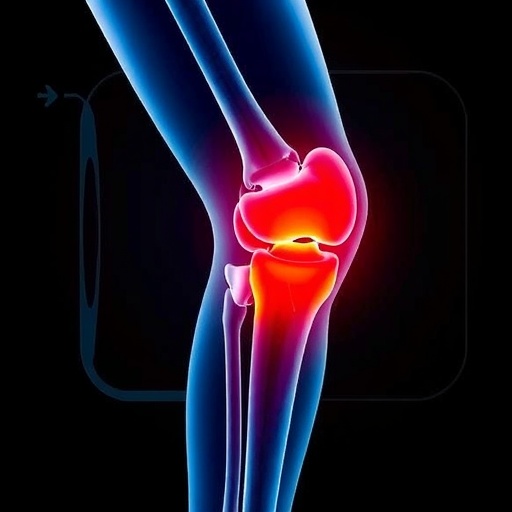
In an alarming trend, obesity and age-related muscle loss—collectively termed sarcopenia—are posing significant challenges to the geriatric population, particularly for those undergoing total knee arthroplasty (TKA). As the global demographic shifts toward an older population, the need for scalable and effective interventional strategies is at the forefront of medical research. A recent article published in European Geriatric Medicine sheds light on the operational definition of sarcopenia and its implications for patients undergoing TKA, namely how it can influence recovery outcomes and overall health post-surgery.
The study led by Lee, Park, and Kwon meticulously investigates the relationship between sarcopenia—a deterioration of muscle mass and strength—and surgical outcomes. It is hypothesized that the presence of sarcopenia may increase surgical risks and complicate postoperative recovery, which is particularly crucial for elderly patients. The research team adopted a longitudinal approach at a single-center facility, allowing for in-depth observation of a specific patient cohort over time. This methodology not only provides robust data but also ensures that the operational definitions of sarcopenia are relevant to the demographic being studied.
Sarcopenia is not an isolated phenomenon; it is influenced by various factors including nutrition, lifestyle, and comorbidities. The research highlights that a multi-faceted approach is essential to understand sarcopenia’s pathophysiology better. Participants in the study underwent comprehensive assessments that included evaluations of muscle mass, strength, and functional capability, aiding the researchers in establishing a clinical definition for sarcopenia applicable to TKA patients. Such operational definitions are critical as they inform healthcare providers and surgeons about the preoperative risks that patients may face.
From an operational standpoint, establishing a clear definition of sarcopenia aids in clinical decision-making, enhancing the road to effective perioperative care. Patients identified as having sarcopenia could be directed toward prehabilitation programs aimed at improving muscle strength and nutritional status before surgery. The researchers also emphasize that an intervention-focused approach not only enhances recovery post-surgery but also aims to reduce hospital readmission rates, length of stay, and, ultimately, overall healthcare costs.
Interestingly, the study aims to align the operational definitions of sarcopenia with international standards, ensuring that findings can be generalized across diverse populations. This alignment is pivotal as it facilitates comparative studies and broader applications in clinical practice. By engaging in this discourse, the research contributes to the essential conversation surrounding universal health guidelines for elderly patients undergoing complex surgical procedures like TKA.
Furthermore, the difficulties associated with diagnosing sarcopenia cannot be overlooked. The criteria for diagnosis are often not straightforward due to variations in muscle measurement techniques. This study meticulously outlines methods for assessing muscle mass, including bioelectrical impedance analysis and dual-energy X-ray absorptiometry. Comparing these methodologies underpins their findings, providing insights into which diagnostic tools yield the most accurate results for identifying sarcopenia in the TKA population.
Patient-centered approaches are integral to the research, as the authors advocate for a systematic assessment of individual patient needs. The research posits that understanding personal lifestyle factors, such as activity levels and dietary habits, can inform tailored interventions, promoting not only surgical success but advancements in the quality of life post-surgery. This nuanced focus highlights a movement towards more holistic healthcare, where the patient’s voice is integral to the treatment landscape.
Collaboration among healthcare providers is also emphasized in the study. The involvement of physical therapists, nutritionists, and geriatricians is crucial in managing patients with sarcopenia. A multidisciplinary approach can streamline patient care, aligning objectives from preoperative evaluation to postoperative rehabilitation. Such collaboration can potentially address the complications that can arise during recovery, including poor mobility and increased falls, ultimately leading to better patient outcomes.
Lee, Park, Kwon and their team offer an extensive review of existing literature on sarcopenia, enriching their analysis with data collated from various studies. This literature review serves as an invaluable resource, highlighting gaps in knowledge and identifying future research needs. The need for longitudinal studies, such as theirs, becomes increasingly vital in establishing causative relationships between sarcopenia and surgical outcomes, contributing to a growing body of evidence that underscores the importance of tailored interventions.
Moreover, their findings shine a light on the psychosocial aspects of recovery, which are often overshadowed by physical rehabilitation. Factors like patient motivation, emotional wellbeing, and social support systems significantly influence recovery trajectories. Thus, the study underscores that addressing mental health in conjunction with physical rehabilitation holds promise for improving outcomes in this vulnerable cohort.
Ultimately, this research underscores the urgency of addressing sarcopenia as a critical element of preoperative care for TKA patients. The definitions and assessments laid out aim to set a standard that could ripple through various disciplines in healthcare, potentially enhancing surgical protocols, rehabilitation measures, and long-term care for elderly individuals. In an era where healthcare systems are overwhelmed by aging populations, the proactive management of conditions like sarcopenia is not merely beneficial—it is essential.
As we look ahead, continued research into the complex interplay between sarcopenia, aging, and surgical outcomes will be paramount. This study serves as a crucial stepping stone toward better understanding and mitigating the risks associated with sarcopenia. The establishment of actionable frameworks and the promotion of interdisciplinary collaboration will pave the way for improved surgical care, ultimately contributing to healthier aging and enhanced quality of life in our aging population.
While further investigations and distinct classifications are necessary to advance the field of geriatric surgery, the contributions of this research provide essential insights and encourage the adoption of best practices across medical disciplines. Researchers, clinicians, and healthcare policymakers must heed these findings, as they hold the key to unlocking better health outcomes for seniors navigating the intricacies of total knee arthroplasty and beyond.
Lee, WS., Park, K., Kwon, H. et al. A prospective, single-center longitudinal study on the operational definition of sarcopenia in patients undergoing total knee arthroplasty.
Eur Geriatr Med (2025). https://doi.org/10.1007/s41999-025-01368-9
Cite Scienmag News
Ophelia Keating. (November 28, 2025). Defining Sarcopenia in Total Knee Arthroplasty Patients. Scienmag. https://scienmag.com/defining-sarcopenia-in-total-knee-arthroplasty-patients/
Ophelia Keating. "Defining Sarcopenia in Total Knee Arthroplasty Patients." Scienmag, 28 November 2025, https://scienmag.com/defining-sarcopenia-in-total-knee-arthroplasty-patients/. Accessed 4 September 2026.
Ophelia Keating. "Defining Sarcopenia in Total Knee Arthroplasty Patients." Scienmag. November 28, 2025. https://scienmag.com/defining-sarcopenia-in-total-knee-arthroplasty-patients/


