


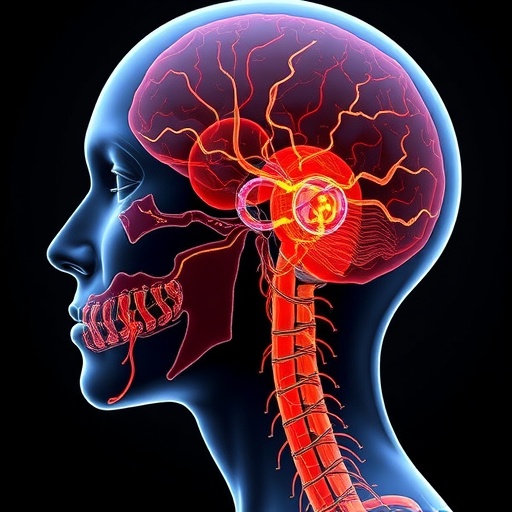
In the ever-evolving realm of neuromodulation, the pursuit to harness the therapeutic potential of vagus nerve stimulation (VNS) has captured the imagination of neuroscientists and clinicians alike. The vagus nerve, a sprawling neural conduit interfacing the brain with the body’s internal organs, is increasingly targeted for treating a range of debilitating disorders such as epilepsy, depression, and inflammatory diseases. However, a persistent challenge remains: predicting which patients will respond favorably to VNS therapy. This conundrum forms the core of a groundbreaking study led by Suresh, Mithani, Li, and colleagues, recently published in Nature Communications in 2026. Their research leverages advances in deep representation learning—a sophisticated branch of artificial intelligence—to develop a model that prognosticates patient responsiveness to VNS with unprecedented accuracy.
At the heart of this innovation lies the conceptual integration of biomedical data with cutting-edge computational techniques. Traditional approaches to VNS patient selection have largely relied on clinical factors, trial and error, or rudimentary biomarkers, which are plagued by mediocre predictive power. This new model sidesteps these limitations by learning complex, non-linear patterns embedded in multi-modal neural and physiological data. Deep representation learning, a subset of deep learning, creates abstract representations of raw inputs, enabling the model to dissect subtle relations in data that elude classical machine learning methods. Consequently, the researchers harness a data-driven paradigm that captures the nuanced interplay between neural activity, patient-specific traits, and treatment outcomes.
To construct their predictive framework, the team accessed a rich dataset comprising electrophysiological recordings, neuroimaging scans, and comprehensive clinical profiles from a cohort of individuals treated with VNS. These data sources embody the intricate biological substrates and functional networks modulated by the vagus nerve. Preprocessing involved rigorous cleaning and normalization, ensuring data robustness and consistency. Subsequently, they fed these heterogeneous inputs into a tailor-made deep representation learning architecture, composed of multiple layers of artificial neurons designed to encode information hierarchically. The model effectively distilled critical biomarkers and latent features indicative of therapeutic responsiveness, transcending the conventional use of simple features like heart rate variability or baseline nerve conduction metrics.
One of the remarkable outcomes of this study is the model’s ability to identify predictive signatures that correlate with treatment efficacy before initiation of VNS therapy. The implications here are profound: clinicians can preemptively ascertain the likelihood of positive response, thereby personalizing intervention strategies and avoiding unnecessary exposure to invasive procedures or costly device implantation. Moreover, the deep learning framework also revealed novel insights into the underlying physiological mechanisms mediating VNS response. For example, specific neural oscillatory patterns and connectivity profiles emerged as robust predictors, hinting at the functional circuits engaged by VNS that may govern symptom amelioration.
The team validated their model extensively using cross-validation techniques and independent test datasets, achieving impressive accuracy metrics that surpass existing benchmarks. This robustness underscores the model’s potential translational value in everyday clinical settings. Importantly, the approach is scalable and adaptable, capable of integrating additional real-world data modalities such as genetic markers or longitudinal monitoring signals, thereby continually refining its predictive capacity. This iterative learning capability situates the model as a dynamic tool in the armamentarium of precision neuromodulation.
Beyond its immediate clinical utility, the study opens intriguing avenues for exploring brain-body interactions through computational neuroscience. The vagus nerve’s pleiotropic roles—in autonomic regulation, neuroimmune communication, and mood modulation—make it a fertile ground for multi-disciplinary research. The deep representation learning model effectively acts as a “virtual interpreter” of these complex signals, potentially accelerating discovery pipelines for other neuromodulatory therapies as well. Furthermore, this approach may elucidate personalized neurobiological phenotypes, fostering a shift from one-size-fits-all medical paradigms to tailored patient care.
The ethical and practical considerations surrounding the deployment of AI-driven predictive models in healthcare are also thoughtfully addressed by the authors. Transparency, interpretability, and fairness remain critical to gaining clinician and patient trust. The researchers adopted techniques to visualize learned features and generate interpretable outputs, allowing clinicians to comprehend decision rationales and avoid “black box” biases. Moreover, ongoing efforts aim to mitigate disparities by ensuring diverse representation in training datasets, thereby promoting equitable access to advanced neuromodulatory guidance.
From a broader perspective, the convergence of neurology, data science, and bioengineering exemplified by this research epitomizes the next frontier of medical innovation. The fusion of biological understanding with algorithmic intelligence paves the way for bespoke therapies targeting the nervous system’s vast complexities. As deep learning models continue to evolve in capability and scope, their application to neuromodulation could redefine treatment paradigms for neurological and psychiatric disorders, enhancing efficacy and reducing adverse effects.
This breakthrough also casts light on the importance of interdisciplinary collaboration. The success of this predictive model was predicated not only on technical expertise in machine learning but also deep neurophysiological insights and clinical acumen. Such synergy is crucial to bridge gaps between data scientists, neurologists, and healthcare providers. The resulting translational impact highlights how computational tools can be harnessed to decode the intricate language of neural circuits and guide therapeutic interventions in a patient-centered manner.
Future research inspired by this work will likely explore broader patient populations, diverse neurostimulation modalities, and longitudinal treatment outcomes. Integrating wearable biosensors and remote monitoring technologies within the deep learning framework could further enhance real-time response prediction and therapy optimization. Additionally, multi-institutional collaborations and data sharing initiatives will be vital to scale these models’ validation and ensure generalizability across demographics and clinical conditions.
Ultimately, the innovation reported by Suresh, Mithani, Li et al. represents a seminal advance in the personalized application of vagus nerve stimulation. By demystifying the complex biological signals underpinning therapeutic response through deep learning, their work ushers in a new era where artificial intelligence complements clinical judgment to maximize patient benefits. This fusion of technology and medicine illuminates a promising pathway toward more effective, individualized neuromodulation therapies, potentially transforming the lives of millions affected by neurological disorders worldwide.
As the field of neuromodulation rapidly expands, the implications of this study resonate beyond vagus nerve stimulation alone. The methodologies and principles demonstrated could be extrapolated to other forms of brain and peripheral nerve stimulation, including transcranial magnetic stimulation and spinal cord stimulation. The capacity to predict and understand patient-specific responses before deploying such interventions could drastically improve outcomes, reduce healthcare costs, and determine the most appropriate therapeutic course, underscoring the profound impact of artificial intelligence in redefining modern neurotherapeutics.
In conclusion, the advent of a deep representation learning model tailored to predict vagus nerve stimulation response signifies a paradigm shift in neuromodulatory treatment strategies. The integration of complex data modalities, advanced computational techniques, and clinical relevance coalesce in this pioneering effort, charting a visionary path toward precision neurotherapy. As this technology matures and becomes embedded in clinical workflows, it promises to enhance decision-making, optimize patient care, and unlock deeper understanding of the nervous system’s modulation, marking a transformative milestone in neurological science and medicine.
Suresh, H., Mithani, K., Li, V. et al. A deep representation learning model to predict response to vagus nerve stimulation.
Nat Commun (2026). https://doi.org/10.1038/s41467-026-71555-0
Cite Scienmag News
Blake Davidson. (April 7, 2026). Deep Learning Model Predicts Vagus Nerve Stimulation Response. Scienmag. https://scienmag.com/deep-learning-model-predicts-vagus-nerve-stimulation-response/
Blake Davidson. "Deep Learning Model Predicts Vagus Nerve Stimulation Response." Scienmag, 7 April 2026, https://scienmag.com/deep-learning-model-predicts-vagus-nerve-stimulation-response/. Accessed 5 September 2026.
Blake Davidson. "Deep Learning Model Predicts Vagus Nerve Stimulation Response." Scienmag. April 7, 2026. https://scienmag.com/deep-learning-model-predicts-vagus-nerve-stimulation-response/


