


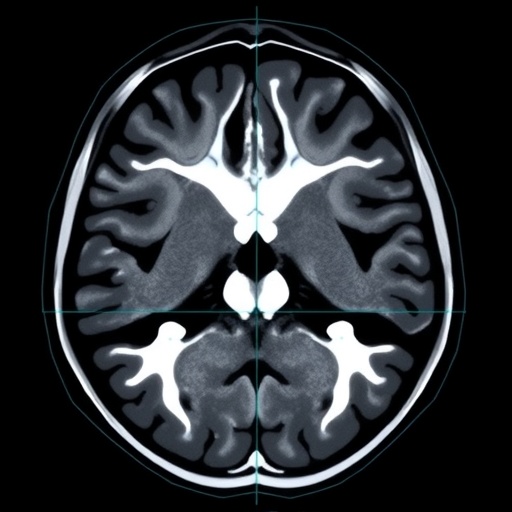
In an era where technology incessantly pushes the boundaries of medical imaging, the integration of deep learning methodologies into standard practices is proving revolutionary. The field of pediatric neuroimaging, in particular, stands significantly to benefit from the advancements in magnetic resonance imaging (MRI) technologies. A notable study recently brought to light the potential of accelerated brain MRI using deep learning reconstruction techniques. This research not only enhances imaging speed, but it also aims to maintain, if not improve, image quality—a critical consideration when working with the vulnerable population of children.
Traditionally, MRI has been a lengthy process that involves substantial time spent in the scanner, which can be challenging for pediatric patients. The physical confinement of entering an MRI machine coupled with the necessity to remain still can often lead to anxiety and motion artifacts in the images produced. The need for efficient imaging protocols that mitigate these drawbacks is paramount. By employing advanced deep learning algorithms, researchers are investigating ways to significantly reduce scan times while ensuring the integrity and diagnostic quality of the resulting images.
The study conducted by Choi, Cho, and Lee et al. showcases a comparative analysis that examines the effectiveness of deep learning in pediatric neuroimaging settings. The researchers leveraged an innovative deep learning reconstruction algorithm that promises accelerated imaging without sacrificing image fidelity. By articulating the intricate dynamics of this technology, the study serves to illuminate how deep learning can streamline the MRI process, making it less traumatic for younger patients and more efficient for healthcare providers.
A central aspect of the study focuses on the quantitative and qualitative metrics of image quality. The researchers meticulously compared conventional MRI techniques with those employing deep learning reconstruction, examining key parameters such as signal-to-noise ratio, contrast resolution, and overall diagnostic accuracy. Such benchmarks are essential not just in quantifying image clarity but also in assessing how well these images can be interpreted by radiologists in a clinical context—an often underestimated yet critical factor in radiological assessments.
In practical terms, the findings of this research could herald a new chapter in pediatric diagnostics. The implications extend beyond mere convenience; accelerated scanning could dramatically improve throughput in busy clinical settings, allowing healthcare systems to serve more patients without compromising care quality. Moreover, the enhanced comfort levels for pediatric patients could result in significantly heightened cooperation during scans, leading to more accurate diagnostic results.
The study’s authors also underscore the importance of training radiologists on interpreting images generated by new technologies. As machine learning plays an increasingly central role in medical imaging, there is a pressing need for medical professionals to adapt to these advancements. Imaging algorithms are evolving rapidly, and ensuring that healthcare providers are equipped with the skills to interpret and trust these new modalities is critical for patient safety and effective treatment planning.
An additional avenue explored in the study pertains to the customization of deep learning algorithms for unique clinical situations, such as different age groups, body types, or specific neurological conditions. This adaptability is crucial for ensuring that pediatric patients receive the most tailored and effective care possible. The use of artificial intelligence can prevent the one-size-fits-all approach that often characterizes medical imaging, potentially leading to significant improvements in diagnostic outcomes.
The researchers did not shy away from discussing the challenges encountered during their study. One significant obstacle in the implementation of deep learning reconstruction algorithms remains the variability in imaging systems and protocols across various medical institutions. While specific algorithms may show outstanding results in one setting, their performance might not translate seamlessly across different MRI machines or clinical environments. Standardization, therefore, is key to maximizing the efficacy of such advanced technologies.
Furthermore, considerations around data security and patient privacy in the context of artificial intelligence and machine learning have been sorely highlighted. The integration of machine learning into healthcare systems raises profound ethical questions, particularly as these technologies become more entrenched within patient data handling processes. Civil discourse around how to safeguard patient privacy while leveraging these technologies is necessary to address public concerns about data misuse.
As this study lays the groundwork for future exploration, the potential for deeper investigations into the synergistic applications of AI and machine learning in radiology is vast. The intersection of technology and medical science presents tantalizing opportunities for innovations that can refine diagnosis and treatment pathways in pediatric healthcare.
In conclusion, the pioneering efforts highlighted in Choi, Cho, and Lee’s research unveil a promising frontier in pediatric neuroimaging. Deep learning’s capability to expedite MRI while preserving image quality marks a significant step toward enhancing the diagnostic process for children. This study is a timely reminder of the influential role technology can play in overcoming longstanding barriers in healthcare, ultimately leading to improved patient outcomes and streamlined clinical procedures.
As the healthcare landscape continually evolves, studies like these remind us of the critical importance of integrating technological advancements responsibly and effectively. The future directions suggested by this research open up avenues for collaborative efforts across technology, healthcare, and clinical training, all aimed at achieving one shared objective: enhancing the quality of care for the youngest and most vulnerable members of society.
Choi, J., Cho, Y., Lee, S. et al. Accelerated brain magnetic resonance imaging with deep learning reconstruction: a comparative study on image quality in pediatric neuroimaging.
Pediatr Radiol (2025). https://doi.org/10.1007/s00247-025-06314-2
Cite Scienmag News
Blake Davidson. (August 8, 2025). Deep Learning Enhances Pediatric MRI Image Quality. Scienmag. https://scienmag.com/deep-learning-enhances-pediatric-mri-image-quality/
Blake Davidson. "Deep Learning Enhances Pediatric MRI Image Quality." Scienmag, 8 August 2025, https://scienmag.com/deep-learning-enhances-pediatric-mri-image-quality/. Accessed 4 September 2026.
Blake Davidson. "Deep Learning Enhances Pediatric MRI Image Quality." Scienmag. August 8, 2025. https://scienmag.com/deep-learning-enhances-pediatric-mri-image-quality/


