


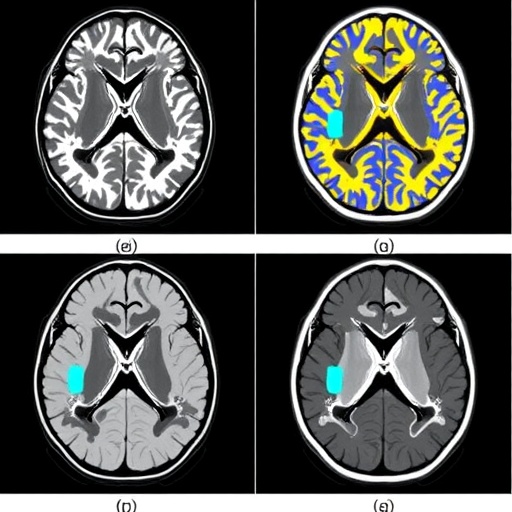
In recent years, advancements in medical imaging technologies have revolutionized the field of radiology, especially in the context of pediatric healthcare. One of the latest breakthroughs in this domain comes from a study conducted by Peng, Zhu, and Shao, published in Pediatric Radiology. Their research focuses on the accelerated magnetic resonance imaging (MRI) of hippocampal sclerosis in pediatric patients, specifically utilizing deep learning-based reconstruction techniques. This innovative approach presents a significant advancement over traditional imaging methods, promising enhanced image quality and improved diagnostic outcomes for young patients.
The relevance of this study cannot be overstated, as pediatric patients with hippocampal sclerosis, a condition often associated with epilepsy, require accurate and timely imaging to initiate effective treatment strategies. Conventional MRI techniques, though effective, are often limited by prolonged scanning times and potential motion artifacts that can impact the clarity of the images. The advent of deep learning technology in MRI reconstruction offers a solution to these challenges, potentially transforming the workflow within pediatric radiology departments and leading to quicker diagnosis.
By integrating deep learning algorithms into the MRI reconstruction process, researchers have shown significant promise in increasing the efficiency of imaging procedures. Deep learning models can analyze and reconstruct images from fewer raw data inputs, thereby decreasing the overall scan duration without compromising diagnostic quality. This is particularly important in pediatric imaging, where young patients may have difficulty remaining still during scans, leading to suboptimal images with traditional techniques.
In their study, Peng and colleagues conducted a series of comparisons between the traditional MRI reconstruction methods and their newly developed deep learning-based approaches. The aim was to objectively assess the differences in image quality and the subsequent impact on diagnostic efficacy. By utilizing pediatric participants diagnosed with hippocampal sclerosis, the study provided a solid clinical backdrop to examine these technological advancements.
One key aspect of this research was the rigorous methodology employed to rank and evaluate the quality of the MRI images produced by both methodologies. The study not only involved subjective assessments from radiologists but also quantitative metrics, including signal-to-noise ratios and other imaging parameters that can indicate the clarity and resolution of the captured images.
Results from this comprehensive analysis indicated a clear trend: deep learning-based reconstruction techniques yielded images of superior quality when compared to those generated through conventional methods. The enhanced quality of deep learning images allowed for more accurate and detailed visualizations of hippocampal structures, aiding clinicians in making more informed diagnostic decisions.
Moreover, the researchers explored how these technological advancements could influence clinical practice in pediatric neurology. They posited that the enhanced imaging capabilities would allow for improved differentiation of various pathologies, which is essential for tailoring treatment strategies in children suffering from diverse neurological conditions. For instance, the ability to accurately visualize subtle anatomical changes in the hippocampus could significantly alter treatment plans for patients with epilepsy stemming from hippocampal sclerosis.
In light of these findings, the implications for future research and clinical applications are substantial. The potential for integrating such advanced imaging techniques into routine clinical practice suggests that pediatric patients can receive quicker diagnoses, which could dramatically improve their overall treatment trajectories. This rapid turnaround time is particularly vital in urgent situations where timely intervention can have lasting effects on patient outcomes.
Additionally, the research highlights the importance of ongoing collaboration between the fields of artificial intelligence and radiology. As more studies embrace these modern technologies, the potential will only increase for developing customized algorithms tailored to specific imaging needs—particularly within the pediatric demographic. This collaboration could lead to further refinements in imaging resolution and even shorter scan times, positioning these methodologies at the forefront of patient care.
As the study comes to light within the broader context of pediatric healthcare, it raises questions about the future of imaging standards. With the demonstrated superiority of deep learning-based MRI reconstruction for pediatric patients with hippocampal sclerosis, it may prompt a paradigm shift in how radiologists approach pediatric imaging.
Furthermore, questions remain about accessibility and cost-effectiveness. As with any new technology, expanding the implementation of deep learning-based techniques will require thoughtful consideration of costs, training for radiologists, and the infrastructure necessary to support these systems.
As we move forward, continued research will be crucial in further validating these findings across more diverse patient populations and imaging scenarios. The urgency and necessity of such studies cannot be underestimated, especially as the healthcare sector continues to evolve, aiming to provide the best possible outcomes for our youngest patients.
In summary, the intersection of deep learning technology with traditional imaging practices heralds a new era in pediatric radiology. As demonstrated by the research of Peng and colleagues, the benefits of accelerated MRI imaging through advanced algorithms not only enhance image quality but also bear the potential to revolutionize diagnostic processes for diseases such as hippocampal sclerosis. This research is a compelling example of how technological advancements can translate into more effective, efficient, and ultimately life-changing solutions for pediatric patients.
Peng, X., Zhu, B. & Shao, J. Accelerated magnetic resonance imaging of hippocampal sclerosis in pediatric patients with deep learning-based reconstruction: comparison of image quality and diagnostic performance with conventional reconstruction.
Pediatr Radiol (2025). https://doi.org/10.1007/s00247-025-06419-8
Cite Scienmag News
Ophelia Keating. (October 13, 2025). Deep Learning Enhances MRI Quality in Pediatric Hippocampal Sclerosis. Scienmag. https://scienmag.com/deep-learning-enhances-mri-quality-in-pediatric-hippocampal-sclerosis/
Ophelia Keating. "Deep Learning Enhances MRI Quality in Pediatric Hippocampal Sclerosis." Scienmag, 13 October 2025, https://scienmag.com/deep-learning-enhances-mri-quality-in-pediatric-hippocampal-sclerosis/. Accessed 3 September 2026.
Ophelia Keating. "Deep Learning Enhances MRI Quality in Pediatric Hippocampal Sclerosis." Scienmag. October 13, 2025. https://scienmag.com/deep-learning-enhances-mri-quality-in-pediatric-hippocampal-sclerosis/


