

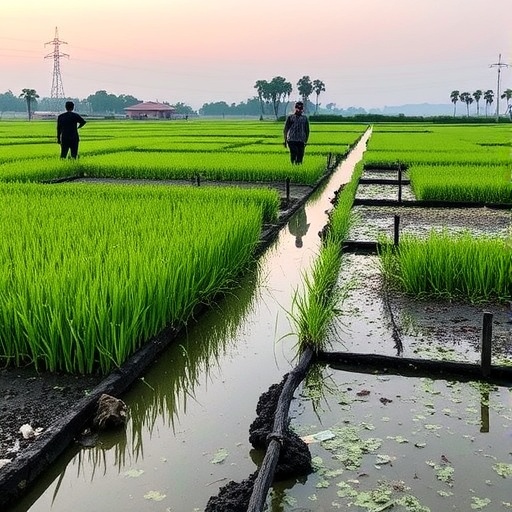
Phosphorus is an elemental cornerstone of life on Earth, pivotal for the growth and development of plants, and consequently, for global food security. Yet, despite its abundance in soils worldwide, a substantial fraction of phosphorus remains chemically bound and biologically unavailable to crop roots, locked in forms that plants cannot easily access. This persistent challenge in agriculture — maintaining sufficient levels of “labile” phosphorus, which refers to the easily mobilizable and bioavailable fraction — has long vexed farmers and agronomists alike. Traditional methods focused predominantly on the direct application of phosphorus-containing fertilizers, often overlooking the subtle yet powerful biochemical processes that govern nutrient availability in the soil. Now, groundbreaking research published in the journal Carbon Research illuminates a complex subterranean dialogue in paddy soils, where the type of carbon introduced—be it carbon-rich organic amendments or synthetic microplastics—dramatically reshapes the microbial communities and their biochemical strategies to release phosphorus into plant-accessible pools.
In a meticulous experimental study conducted by researchers at the Jiangsu Key Laboratory of Chemical Pollution Control and Resources Reuse within the School of Environmental and Biological Engineering at Nanjing University of Science and Technology, the impact of two distinct carbon inputs on labile phosphorus accumulation was examined. Manure-derived hydrochar (HC), a biochar-like product generated from animal waste, was compared against thermoplastic polyurethane (TPU) microplastics (MPs), a prevalent pollutant in agricultural environments through irrigation and runoff. Despite their disparate origins—one organic and nutrient-enriched, the other synthetic and persistent—both substances significantly enhanced the concentration of bioavailable phosphorus in paddy soils. This phenomenon prompted a deeper ecological and molecular exploration into the mechanisms by which these materials interface with soil microbiota to unlock phosphorus reservoirs.
Quantitative assessments revealed that hydrochar amendment elevated labile phosphorus by 21.1%, while TPU microplastics contributed to a 14.2% increase. Concurrently, both treatments engendered a substantial surge in dissolved organic matter (DOM), an intricate mixture of low-molecular-weight organic compounds critical to microbial metabolism and nutrient cycling. However, beneath these apparent similarities lay profoundly divergent microbial strategies that orchestrated phosphorus mobilization. The study’s authors emphasize that the soil bacteria are the primary biogeochemical engines, mediating phosphorus turnover through interactions intricately linked to the carbon quality and availability in their environment.
Hydrochar’s influence on the soil microbiome unfolds as a rapid microbial feast. Its rich supply of labile carbon compounds incited an intense competitive dynamic among soil bacteria, particularly favoring copiotrophic species—microbes adapted to thrive in nutrient-rich conditions with fast growth rates. This heightened microbial activity accelerated the decomposition of organic matter and stimulated enzymes involved in phosphorus solubilization, effectively freeing phosphorus previously locked in mineral and organic complexes. The swift and robust microbial turnover catalyzed by HC display an ecological paradigm of resource exploitation and competition, showcasing how organic amendments can directly fuel microbial processes critical to nutrient cycling.
In stark contrast, the introduction of TPU microplastics elicits a more nuanced and cooperative microbial response. Rather than spurring a competitive frenzy, TPU particles appear to stimulate bacteria to secrete specialized proteinaceous organic substances. These secretions serve as molecular scaffolds that facilitate the formation of complex, highly interconnected microbial consortia. This structured microbial network promotes biochemical collaboration, where metabolic intermediates and signaling molecules are exchanged effectively, enhancing the collective capacity to transform soil-bound phosphorus into its bioavailable forms. This discovery highlights a novel, microplastics-induced mode of microbial organization with implications far beyond nutrient cycling, shedding light on previously uncharted microbial community dynamics linked to anthropogenic pollutants.
By delineating these two distinct microbial pathways—the rapid, competitive hydrochar-driven mechanism and the complex, cooperative TPU microplastic-mediated network—the research advances our understanding of how anthropogenic carbon inputs can reshape fundamental soil biochemical processes. It challenges the traditional view of soil nutrient management that often treats fertilizer application as a straightforward solution, urging instead for a nuanced approach that considers microbial ecology and carbon footprint implications at the microenvironmental level. Recognizing that different carbon types can invoke starkly different microbial dynamics with disparate effects on phosphorus availability paves the way for innovative, precision soil management strategies aimed at sustainable agriculture.
This investigation also raises critical environmental and ecological questions about the unintended consequences of pervasive microplastic contamination in agricultural soils. While TPU microplastics do promote phosphorus bioavailability through microbial network formation, their long-term effects on soil health and ecosystem services remain underexplored. Plastic-derived inputs are generally considered harmful pollutants due to their persistence and potential toxicity, yet here they demonstrate a paradoxical benefit by modulating microbial communities in ways that can enhance nutrient cycling. This duality underscores the complexity of anthropogenic impacts on soil ecosystems and highlights the urgent need for integrated assessments balancing agricultural productivity with environmental integrity.
Moreover, the elucidation of dissolved organic matter’s role as a mediating agent between carbon amendments and microbial P cycling adds another layer of complexity to soil chemistry. The quantity, composition, and bioavailability of DOM influence not only microbial metabolism but also the physicochemical interactions that govern phosphorus mobilization. Tailoring carbon amendments to optimize DOM characteristics could represent a promising frontier in controlling soil nutrient dynamics and mitigating phosphorus deficiency in cropping systems.
From a biotechnological perspective, these findings inspire new avenues for engineering soil amendments that harness beneficial microbial traits. Biochar formulations or synthetic polymers could be designed to target specific microbial responses—either stimulating rapid nutrient liberation through enhanced microbial activity or fostering cooperative microbial consortia that stabilize nutrient transformations. Developing such precision amendments could help reconcile agricultural intensification with sustainability goals, reducing reliance on non-renewable phosphorus fertilizers and minimizing environmental pollution.
This study, helmed by Huifang Xie and Bingyu Wang, represents a crucial leap forward in our comprehension of soil biochemical ecology, especially within paddy soils which are critical to global rice production and food security. Their work exemplifies the power of interdisciplinary research, integrating soil chemistry, microbiology, and environmental engineering to unravel complex nutrient cycling mechanisms. These insights not only contribute to academic knowledge but also have tangible implications for agricultural policy and resource management frameworks.
Looking ahead, further investigations are warranted to examine the long-term stability of phosphorus pools under varied carbon amendments and field conditions. It is essential to explore how seasonal variations, crop types, and soil physicochemical properties modulate these microbial processes. Additionally, advancing molecular techniques such as metagenomics and metabolomics could unveil specific microbial taxa and metabolic pathways responsible for phosphorus mobilization, refining our capability to manipulate soil microbiomes for agricultural benefit.
In conclusion, this pioneering research confirms that the road to sustainable phosphorus management lies not merely in external nutrient inputs, but in fostering the right microbial environments through strategic carbon amendments. Whether through the aggressive, competition-driven proliferation induced by manure-derived hydrochar or the intricate microbial networking stimulated by TPU microplastics, soil bacteria are the unseen architects of nutrient availability. Harnessing and guiding these microbial mechanisms can transform agriculture into a more resilient and sustainable enterprise, securing food production in the face of growing global demand and environmental challenges.
Subject of Research: Not applicable
Article Title: Divergent mechanisms of labile phosphorus accumulation in paddy soils under TPU microplastics versus manure-derived hydrochar: roles of dissolved organic matter and bacterial communities
News Publication Date: 13-Mar-2026
Web References:
http://dx.doi.org/10.1007/s44246-026-00259-3
Image Credits:
Xudong Zhong, Yanfang Feng, Rixing Zhu, Yang Song, Yuanyuan Feng, Huifang Xie, Bingyu Wang, and Gerrard Eddy Jai Poinern
Keywords:
Environmental sciences, Soil chemistry, Microbial ecology, Bioremediation, Renewable resources, Sustainable development, Sustainable agriculture


