


As embryos, all complex organisms are partially made up of pluripotent stem cells, a term for cells that have the capacity to differentiate into any kind of cell: nerve cells, muscle cells, blood cells, skin cells, and the like. As the ultimate biological “shape-shifters,” these cells are proving key to regenerative medicine, drug development, genetic research, and related fields.

Credit: Lewis & Clark College
As embryos, all complex organisms are partially made up of pluripotent stem cells, a term for cells that have the capacity to differentiate into any kind of cell: nerve cells, muscle cells, blood cells, skin cells, and the like. As the ultimate biological “shape-shifters,” these cells are proving key to regenerative medicine, drug development, genetic research, and related fields.
Within a pluripotent stem cell, certain genes get activated and express information that ultimately decides a cell’s fate. The first step in this expression process is called transcription, a process that turns out to be incredibly complex, in part because each cell contains thousands of genes and only a portion are utilized at any given time.
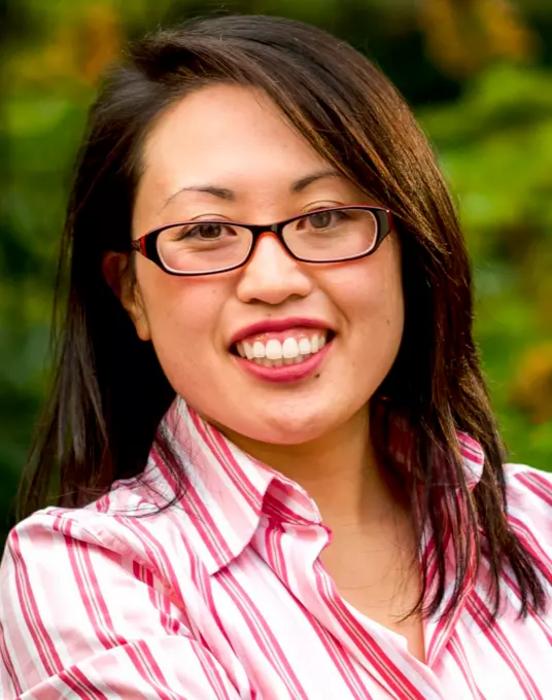
And, it should be complex, according to Sharon Torigoe, assistant professor of biology, and a molecular biologist, who studies how transcription is controlled
“It shouldn’t be easy to derail any of these processes, right?” says Professor Torigoe. “They’ve been perfecting themselves over the millennia to have the most selectively advantageous system.”
Torigoe is investigating a small part of these complicated systems. Her work was recently recognized by the National Science Foundation (NSF) with a three-year Research in Undergraduate Institutions (RUI) grant. The grant is from NSF’s Molecular and Cellular Biosciences (MCB) program’s Genetic Mechanisms Cluster, which funds inventive ideas and research to address fundamental questions about genetics, epigenetics, and gene expression mechanisms. Torigoe’s grant will support work she leads with Lewis & Clark College undergraduate students to unlock the mechanisms behind what determines a pluripotent cell’s fate. A better understanding of these mechanisms is key to unlocking the potential of regenerative medicine.
Throughout the three-year grant period, the NSF funding will support at least seven students participating in full-time summer research experiences through the Rogers Science Research Program, a signature summer research program at Lewis & Clark College.
Taking it gene by gene
Torigoe is specifically focused on understanding enhancers. Enhancers are genomic sequences that serve as binding sites for proteins that control transcription. These sequences exist some distance away from the part of the genome where transcription takes place. But enhancers are important because they increase the likelihood that transcription of a certain gene will occur.
While some scientists learn about the rules of gene expression by studying thousands of genes simultaneously through machine learning, Torigoe’s approach is to examine one or two individual genes at a time.
“There could be a number of rules involved in what makes an enhancer function the way it does,” says Torigoe. “This diversity among enhancers is what makes it exciting. The diversity also makes it very daunting.”
Torigoe and her students use the embryonic stem cells of mice to investigate Klf4, an enhancer that is crucial for maintaining a cell’s pluripotency. Enhancer grammar, or its characteristics, are thought to be key to its function.
Scientists studying enhancers refer to their characteristics as grammar because, according to Torigoe, an enhancer’s protein binding sites could be likened to individual words. A series of binding sites are like a sentence built on multiple words that, when strung together, create meaning.
One thing Torigoe is looking for is what characteristics lead a protein to have affinity for a particular enhancer sequence.
“For example, can the protein ‘read’ the binding site as correct, even if there are ‘typos?’” she asks. “And then there’s syntax, or the order the words are in. If the subject and object are reversed, or the verb is in a different place, that can change the meaning of the sentence and, therefore, the function of the enhancer.”
Torigoe says her students sometimes find the complicated nature of investigating enhancer grammar frustrating because there is usually not a simple answer or explanation to their questions.
“Different parts of enhancer grammar interact, making it a challenge to study,” she says. “When we think we have answered one question, we realize there are 10 new questions.”
Still, Torigoe hopes to make headway on unlocking the mechanisms that govern the functioning of enhancer genes, like Klf4, and then apply that knowledge to other genes.
“I have to go after one gene,” she says. “And then after that one, maybe I can go after some more genes. And then we might discover that this one rule applies to 10 other genes. Then, there may be another 2,000 genes that do something else, so then we can investigate those.”
She adds: “In the end, enhancer grammar is probably going to be complicated because biology is ultimately very complicated.
Cite Scienmag News
Drew Townsend. (April 29, 2024). Decoding cellular ‘shape-shifters’. Scienmag. https://scienmag.com/decoding-cellular-shape-shifters/
Drew Townsend. "Decoding cellular ‘shape-shifters’." Scienmag, 29 April 2024, https://scienmag.com/decoding-cellular-shape-shifters/. Accessed 4 September 2026.
Drew Townsend. "Decoding cellular ‘shape-shifters’." Scienmag. April 29, 2024. https://scienmag.com/decoding-cellular-shape-shifters/

