

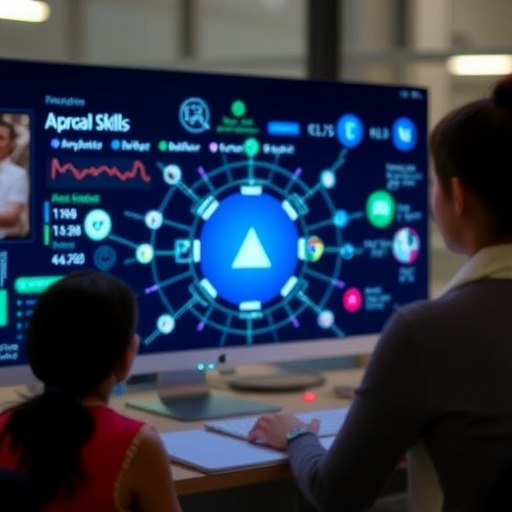
In an age dominated by rapid technological advancements, the need for higher education institutions to prepare students for the complexities of the digital economy has never been more pressing. The gap between academic learning and industry demands has persisted, often leaving graduates unprepared for the job market. However, recent research by Nyale, Karume, and Kipkebut presents an innovative solution to this long-standing issue. Their study introduces an intelligent curriculum alignment model designed specifically for integrating digital skills into higher education, representing a significant stride towards bridging the academia-industry divide.
The research underscores the importance of aligning educational curricula with the competencies sought by employers in today’s technology-driven job landscape. It highlights the prevalence of a disconnect between the skills taught in universities and those required in the workplace. By employing a data-driven approach, the authors aim to create a model that not only reacts to current industry needs but also anticipates future skills requirements, ensuring a more proactive rather than reactive educational strategy.
Central to the model proposed by Nyale and their colleagues is the use of sophisticated data analytics techniques. The researchers gathered extensive datasets, which included industry reports, employer surveys, and academic curricula from various institutions. By analyzing this information, the team was able to identify critical gaps in skillsets that are essential for students entering the workforce. This analytical process is crucial, as it empowers educational institutions to make informed decisions about curriculum changes that directly respond to industry needs.
One of the standout features of the proposed curriculum alignment model is its adaptability. The model’s design allows for modifications as industry demands evolve, thereby fostering a dynamic educational environment. This fluidity ensures that students are not only equipped with relevant skills upon graduation but also possess the ability to adapt as the workplace continues to transform with emerging technologies. By making education more agile, the model addresses the frequently criticized rigidity of traditional academic programs.
Moreover, the intelligent curriculum alignment model incorporates feedback loops that involve both students and industry stakeholders. Regular surveys and discussions with employers can provide additional insights into emerging skills requirements, while also allowing graduates to share their experiences in the job market. This dual feedback mechanism ensures that the curriculum remains relevant and effective, while also fostering stronger ties between academia and industry.
The importance of digital skills in modern employment cannot be overstated. The research findings indicate that employers increasingly prioritize candidates who possess strong digital competencies, including proficiency with data analysis, digital communication tools, and cybersecurity practices. The model developed by Nyale et al. emphasizes these skills, integrating them into the core curriculum so that graduates are not just familiar with theory but can apply their knowledge practically in real-world scenarios.
A noteworthy aspect of the research is its potential implications for policy-making within higher education. By showcasing a comprehensive and viable framework for curriculum development that aligns with industry needs, the authors provide a reference point for university administrators and policymakers alike. Their findings could influence funding decisions, program development, and accreditation processes by placing a greater emphasis on skill alignment with market trends.
Implementing this intelligent curriculum alignment model could also revolutionize how educational institutions approach internship and co-op programs. Traditionally, these experiences are often disjointed from academic learning. However, with a robust model in place, internship programs can be directly aligned with coursework, allowing students to gain hands-on experience that parallels their academic studies. This integration not only enhances learning but also solidifies students’ job readiness by exposing them to real-world challenges and problem-solving scenarios.
Furthermore, the study sheds light on the importance of interdisciplinary approaches to digital skills training. In a world where issues are rarely confined to a single domain, the integration of varied perspectives can lead to innovative solutions. The authors advocate for collaborative initiatives between departments within universities to foster a more holistic educational experience, where skills in programming, design, data science, and business acumen are taught in tandem.
The potential impact of this research on global education systems is substantial. Countries across the world grapple with the challenge of equipping their workforce for the digital age. The intelligent curriculum alignment model could serve as a blueprint for other nations looking to reform their educational structures. By adopting a similar data-driven methodology, policymakers can ensure that their institutions produce graduates capable of meeting both current and future workforce demands.
Another significant benefit of this model is the potential to boost student engagement and retention. Students often flourish in learning environments where they can see the relevance of their studies to their future careers. By integrating industrious skills and competencies into the curriculum, institutions can cultivate a more engaging educational experience that motivates students and reduces dropout rates. The compelling, real-world applicability of their studies can inspire lifelong learning and professional development.
However, the successful implementation of the model does come with challenges. Institutions must address potential resistance from faculty who may be accustomed to traditional teaching methods. Professional development opportunities will need to be provided to help educators adjust to the new curriculum frameworks and incorporate data-driven techniques into their pedagogy. This transition will require sustained commitment and investment from educational leaders to cultivate a culture that embraces innovation.
In essence, the research conducted by Nyale, Karume, and Kipkebut serves as a clarion call for educators, policymakers, and industry leaders. It lays bare the existing gaps between academia and industry while offering an actionable path forward. As the global economy continues to evolve rapidly, the need for a robust, adaptable, and data-informed educational model is paramount. The intelligent curriculum alignment model stands as a testament to the transformative power of education when approached with foresight and strategic planning.
In conclusion, this pioneering research highlights a crucial intersection of education, technology, and workforce preparedness. By advocating for a systematic, intelligent approach to curriculum alignment, Nyale and colleagues are not just proposing a solution; they are redefining how educational institutions can—and must—adapt in the face of relentless change. This research paves the way for a new era in higher education, where graduates emerge not only equipped with knowledge but also with the precise skills necessary to thrive in a rapidly evolving job market.
Subject of Research: Intelligent Curriculum Alignment for Digital Skills in Higher Education
Article Title: An intelligent curriculum alignment model for digital skills integration in higher education: a data-driven approach to bridge academia-industry gaps
Article References:
Nyale, D., Karume, S., Kipkebut, A. et al. An intelligent curriculum alignment model for digital skills integration in higher education: a data-driven approach to bridge academia-industry gaps. Discov Educ (2026). https://doi.org/10.1007/s44217-026-01180-y
Image Credits: AI Generated
DOI: 10.1007/s44217-026-01180-y
Keywords: Curriculum Alignment, Digital Skills, Higher Education, Data-Driven Approach, Academia-Industry Gap, Workforce Preparedness.


