


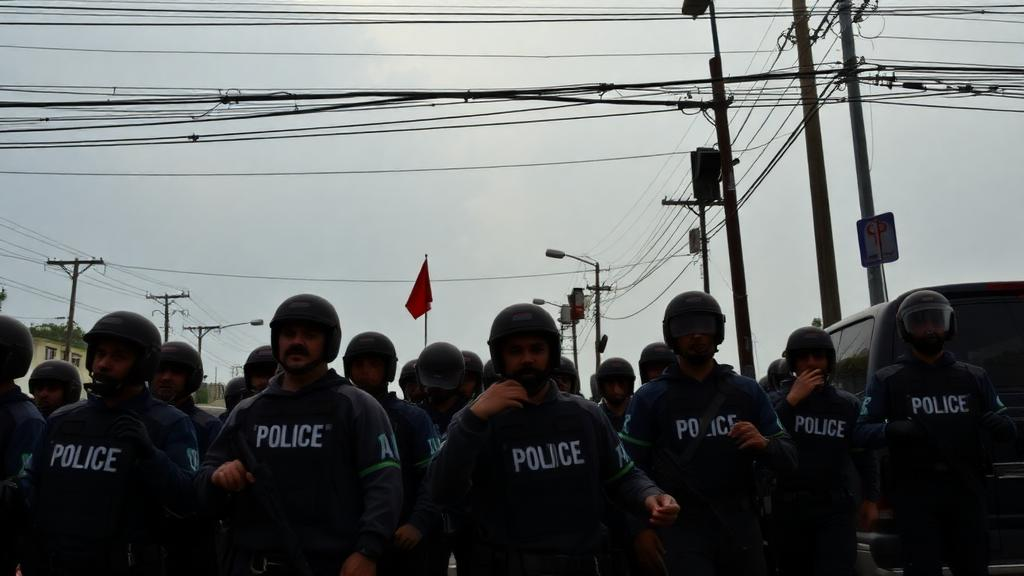
In one of the most violent countries in the world, a new study has asked a deceptively simple question: what makes some people stop reacting to violence? Researchers at the National Autonomous University of Honduras surveyed 328 adults and found that the answer is far narrower than popular theories might suggest. After applying unusually strict statistical safeguards, only a handful of factors survived scrutiny: being male, scoring high on Machiavellianism, and reporting direct exposure to street or neighborhood violence each predicted specific facets of desensitization, while a widely hypothesized cognitive mechanism failed to leave any detectable mark at all.
The study, published as an open access paper in Discover Psychology, was led by Denis Javier Muñoz with colleagues including corresponding author Miguel Landa-Blanco. It set out to test three candidate explanations for psychological desensitization to violence: the sheer amount of violence a person has witnessed or experienced, a tendency to process information in negative or threatening ways, and the cluster of socially aversive personality traits known as the Dark Triad, comprising Machiavellianism, narcissism, and psychopathy. Honduras, with its long history of gang activity, homicide, and community insecurity, offered a setting where such questions are not abstract but part of everyday life.
Desensitization to violence is not a single psychological state. The researchers treated it as a multidimensional construct with four distinct components: emotional habituation, meaning a reduced emotional reaction to violent events; justification of violence, meaning the belief that violent behavior can be legitimate or warranted; indifference toward victims, meaning reduced sympathy for people harmed by violence; and social naturalization, meaning the perception that violence is a normal, expected part of the social environment. This distinction matters because the drivers of each facet may differ, and interventions designed to blunt one form of desensitization may do nothing for another.
The sample consisted of 328 Honduran adults, roughly seventy percent of whom were women, with an average age of about twenty-six years. Participants completed measures of violence exposure, negative cognitive processing bias, Dark Triad traits, and the four desensitization dimensions. The research was approved by the Research Ethics Committee of the Faculty of Social Sciences at the National Autonomous University of Honduras in June 2025, conducted in accordance with the Declaration of Helsinki, and all participants gave informed consent with anonymity maintained throughout.
Methodologically, the team took an approach that many psychology studies still lack. They built four hierarchical regression models, one for each desensitization dimension, entering sociodemographic covariates first, then negative cognitive processing bias, then violence exposure, and finally Dark Triad traits. This ordering allowed them to see whether each block of predictors explained desensitization beyond what the earlier blocks already accounted for. Crucially, they used HC3-robust standard errors, a technique that protects significance tests when the data violate the tidy assumptions of ordinary regression, such as when residual variance is uneven across levels of a predictor.
The statistical caution did not stop there. Because the four final models together contained sixty coefficients, the researchers applied a Bonferroni correction across all of them, drastically lowering the threshold for declaring a result statistically significant and thereby reducing the risk that any single finding was a false positive. They also imposed a smallest-effect-size-of-interest threshold, a modern open science practice that asks not merely whether an effect differs from zero but whether it is large enough to matter in the real world. Effects falling below that floor were not treated as meaningful, no matter how statistically detectable they were.
What emerged after this gauntlet was a strikingly short list. Male sex was associated with three of the four dimensions: emotional habituation, justification of violence, and indifference toward victims, with standardized coefficients of roughly 0.24, 0.20, and 0.22 respectively. Machiavellianism, the Dark Triad trait characterized by strategic manipulation and a cynical view of human nature, was associated with justification of violence and indifference toward victims, showing the strongest coefficient in the entire study at approximately 0.42 for justification. Exposure to street or neighborhood violence was associated with social naturalization, with a coefficient of about 0.24. Everything else, including narcissism, psychopathy, and the entire negative cognitive processing bias hypothesis, failed to survive the global correction.
The implications of that pattern are worth unpacking. The finding that Machiavellianism predicted justification of violence and victim indifference, but not emotional habituation or social naturalization, suggests that this trait is tied specifically to the moral and interpersonal dimensions of desensitization rather than to blunted emotional reactivity per se. Meanwhile, the link between street violence exposure and social naturalization fits an intuitive picture: people who regularly encounter violence in their surroundings come to see it as an ordinary feature of community life, without necessarily endorsing it or losing sympathy for its victims. Male sex emerging as a correlate of three dimensions echoes a broad literature on gender and aggression, though as a cross-sectional correlate it cannot explain why the gap exists.
Equally notable is what did not appear. Negative cognitive processing bias, the idea that people who habitually interpret ambiguous information in threatening or negative ways become more accepting of violence, received no support in the final models. The authors themselves are explicit that the hypotheses concerning violence exposure and Dark Triad traits earned only partial support, and that the findings identify a limited, dimension-specific set of correlates. They also caution that the study is cross-sectional, meaning all variables were measured at a single point in time, so nothing here can be read as causal. It is entirely possible, for instance, that desensitization changes how much violence people notice or report rather than the reverse.
For a country where community violence remains a pressing public health concern, the study offers both a sobering lesson and a practical one. The sobering lesson is that simple exposure-based narratives, in which seeing more violence mechanically numbs people to it, capture only one narrow facet of the phenomenon. The practical one is that any prevention or intervention program aimed at reducing tolerance for violence in Honduras may need to target different mechanisms for different outcomes: addressing Machiavellian manipulation and moral disengagement where justification of violence is concerned, and tackling the normalization of violence in neighborhoods where it has become part of the social fabric. As the authors emphasize, these are correlates, not causes, but in a setting where every data point is hard-won, even a short list of survivors after rigorous correction is a finding worth taking seriously.
Subject of Research: Predictors of psychological desensitization to violence among Honduran adults
Article Title: Violence exposure, negative cognitive processing, and Dark Triad traits as predictors of desensitization to violence in Honduran adults
Article References: Muñoz, D. J., Carias-Lagos, M., Suazo-Cervantes, I., Mejía-Sánchez, R., Cárcamo-Zepeda, E., & Landa-Blanco, M. (2026). Violence exposure, negative cognitive processing, and Dark Triad traits as predictors of desensitization to violence in Honduran adults. Discover Psychology. https://doi.org/10.1007/s44202-026-00947-6
Image Credits: AI Generated
DOI: 10.1007/s44202-026-00947-6
Keywords: violence desensitization, Dark Triad, Machiavellianism, violence exposure, Honduras, community violence, hierarchical regression, Bonferroni correction, cross-sectional study, aggression, personality psychology, violence prevention
Cite Scienmag News
Glenn Wilkins. (October 13, 2026). Dark Triad Traits and Street Violence Shape How Honduran Adults Become Desensitized to Violence. Scienmag. https://scienmag.com/dark-triad-traits-and-street-violence-shape-how-honduran-adults-become-desensitized-to-violence/
Glenn Wilkins. "Dark Triad Traits and Street Violence Shape How Honduran Adults Become Desensitized to Violence." Scienmag, 13 October 2026, https://scienmag.com/dark-triad-traits-and-street-violence-shape-how-honduran-adults-become-desensitized-to-violence/. Accessed 13 October 2026.
Glenn Wilkins. "Dark Triad Traits and Street Violence Shape How Honduran Adults Become Desensitized to Violence." Scienmag. October 13, 2026. https://scienmag.com/dark-triad-traits-and-street-violence-shape-how-honduran-adults-become-desensitized-to-violence/


