

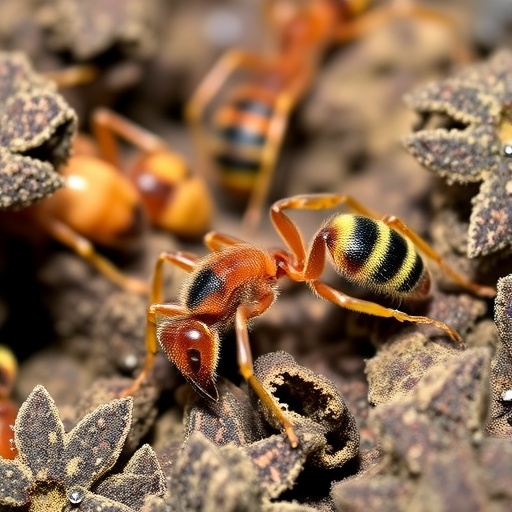
Recent research has unveiled a troubling relationship between the common pesticide cypermethrin and the behavior of non-target species, particularly the ant species Diacamma indicum. In an era where environmental concerns are at a peak, understanding the implications of pesticide usage on various ecosystems is paramount. The study, as outlined by Acharjee and colleagues, sheds light on the detrimental effects cypermethrin has on task performance and nest selection among these ants, raising critical questions about the broader ecological impact of such chemicals.
Pesticides like cypermethrin are often lauded for their effectiveness in controlling pest populations, but this comes at a severe cost to non-target species. Diacamma indicum, known for its unique behaviors and social structure, serves as an ideal model to investigate the ripple effects of pesticide exposure. The research highlights that not only are the ants affected behaviorally, but their fundamental responses to environmental pressures are altered, putting their survival at risk.
In the experimental setup, researchers meticulously observed the impact of cypermethrin on the foraging patterns and nest-site selection of these ants. The findings showed a marked decline in foraging efficiency, raising concerns about how exposure to such pollutants can disrupt essential behaviors required for survival. When ants are unable to forage effectively, this has direct consequences on their colony’s health and sustainability, emphasizing the need for a reevaluation of pesticide use in residential and agricultural settings.
Task performance in Diacamma indicum was significantly hampered in contaminated areas. The researchers noted that not only did individual foragers struggle to locate food, but they also exhibited erratic movements, indicative of neurological stress. This behavioral disarray disrupts the ants’ communication pathways, which are vital for cooperative behaviors essential for construction and maintenance of their nests. Consequently, this research underscores the necessity of understanding how toxicants affect communication within social insect communities.
Nest choice is another critical aspect impacted by cypermethrin exposure. The ants showed an aversion to nesting in contaminated areas, demonstrating an instinctive response to avoid environments that could compromise their health and survival. However, the consequences of this behavior could lead to overcrowding in uncontaminated areas, increasing competition for resources and raising the stakes for all involved ant populations. Such shifts in behavior can precipitate a collapse in localized ant communities, which play vital roles in their ecosystems.
Another vital dimension of this research is the emphasis on the long-lasting effects of pesticide exposure. Cypermethrin is known to persist in the environment, leading to prolonged exposure risks for non-target organisms. The ants hence face not just immediate distress, but potentially long-term alterations in colony dynamics and survival strategies. Such outcomes could render entire populations vulnerable, amplifying the risk of extinction for certain local ant species.
The implications of this research extend beyond the immediate plight of Diacamma indicum. The findings serve as a dire warning about the cascading effects of pesticide applications on biodiversity. As these insects are pivotal in pollination and soil aeration, their decline could have profound repercussions for agricultural systems and natural habitats alike. The interplay between chemical use, insect behavior, and ecological balance must be approached with caution, and further research is warranted.
As environmental policymakers grapple with the complexities of agricultural practices and pesticide regulations, studies like this one provide vital data to inform their decisions. There is a growing need for holistic approaches that consider the health of entire ecosystems rather than focusing solely on crop yields. The potential risks to non-target species must be factored into the decision-making process to ensure sustainable agricultural practices are adopted.
Moreover, the research opens a dialogue about alternatives to chemical pesticides. As public awareness grows regarding the harmful effects of synthetic chemicals, there is an increasing demand for biopesticides and integrated pest management strategies. Leveraging natural predators and implementing ecological practices could reduce reliance on harmful pesticides, preserving not only ant populations but the entire food chain.
Understanding the impacts of compounds like cypermethrin requires interdisciplinary collaboration—linking entomology, ecology, toxicology, and agricultural sciences. The interconnectivity of ecosystems means that the health of non-target species like Diacamma indicum can reflect the broader environmental conditions. In turn, this emphasizes the significance of safeguarding all components of our ecosystem to prevent unforeseen cascades of consequences.
Researchers urge further studies representing an array of environments and species to comprehend the full breadth of pesticide impacts on insect behavior. Such insights could lead to best practices that mitigate harm while still protecting crop yields. By educating farmers and policymakers on these issues, the scientific community can work towards a solution that balances economic needs with ecological preservation.
In conclusion, the implications of cypermethrin exposure on Diacamma indicum serve as a microcosm of the larger ecological dilemmas posed by pesticide usage. The need for thoughtful consideration of the broader impacts of such agricultural practices is clear. This research not only calls for immediate action to address existing pesticide use but also sets the stage for innovative approaches to sustainable farming that honors the interconnected fabric of life on Earth.
Subject of Research: The impacts of cypermethrin on the behavior of non-target ant species, Diacamma indicum.
Article Title: Relocating in contaminated terrains: cypermethrin impacts task performance and nest choice in a non-target ant species, Diacamma indicum.
Article References:
Acharjee, A., Murmu, S., Mukhopadhyay, S. et al. Relocating in contaminated terrains: cypermethrin impacts task performance and nest choice in a non-target ant species, Diacamma indicum.
Environ Sci Pollut Res (2026). https://doi.org/10.1007/s11356-026-37445-0
Image Credits: AI Generated
DOI: https://doi.org/10.1007/s11356-026-37445-0
Keywords: ecosystems, pesticides, Diacamma indicum, cypermethrin, behavior, environmental impact, sustainable agriculture.


