


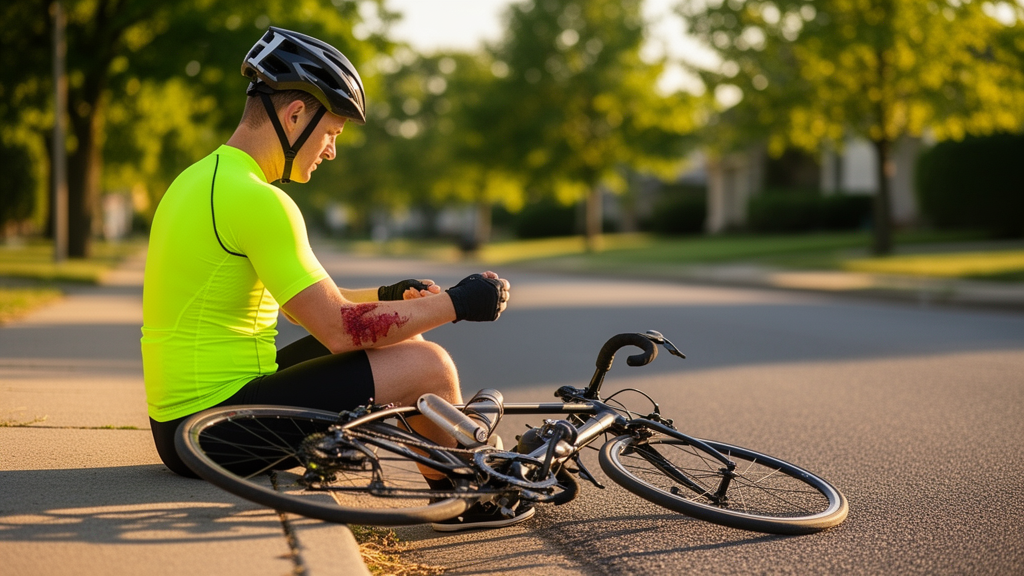
For decades, public health messaging has carried a quiet contradiction: exercise is medicine, but for older adults it is often framed as a hazard to be managed rather than a therapy to be embraced. Fear of injury looms large over recommendations for physical activity in later life, and many clinicians, family members, and older people themselves respond by encouraging caution, restraint, and sometimes outright avoidance of activities perceived as dangerous. A new nationwide analysis of trauma outcomes in the United States suggests that this risk-averse instinct may be built on a flawed premise. When researchers compared patients injured while bicycling with patients injured in ground-level falls, they found that the cyclists, across nearly every age group, did better. The finding challenges one of the most persistent assumptions in injury prevention and adds a provocative data point to a growing argument that sedentary living, not exercise, may be the greater threat to health in old age.
The study, published in PLOS Aging and Health, drew on the National Trauma Data Bank, the largest aggregation of trauma registry information in the United States. The research team, led by Adam Rowh and colleagues, analyzed injury-related healthcare encounters among patients aged 20 years and older between 2018 and 2021. From an enormous pool of records, they isolated two comparison groups: 119,451 patients whose injuries occurred while bicycling and 1,603,383 patients injured in ground-level falls, meaning falls occurring on the same level, without a staircase, ladder, or elevation involved. In total, 1,722,834 records entered the analysis, making this one of the largest head-to-head comparisons of injury mechanisms ever assembled.
The methodological design was a cross-sectional analysis with a statistical backbone designed to isolate the effect of the injury mechanism itself. The researchers compared outcomes across ten-year age bands using multinomial logistic regression, a technique suited to outcomes with more than two categories. Here the outcomes were threefold: death, discharge to long-term healthcare, or routine discharge home. Crucially, the models adjusted for injury severity and other key confounders, variables that could otherwise masquerade as differences in outcome. This adjustment matters because a skeptic might reasonably object that cyclists who reach trauma centers are simply more badly hurt than people who fall on a level surface, and that any apparent advantage reflects selection rather than resilience. The comparable injury severity between the two groups, combined with statistical adjustment, was intended to neutralize exactly that objection.
The baseline patterns were unsurprising. In both groups, the adjusted probabilities of death and of requiring long-term healthcare rose steadily with age, while the probability of a routine discharge declined. Aging tissue heals slowly, bone density diminishes, physiological reserve shrinks, and comorbidities accumulate, so trauma outcomes worsen with each passing decade regardless of how the injury happened. What was startling was the comparison between the groups. Beyond age 30, patients injured in ground-level falls experienced worse outcomes than cyclists in every single age band, and the disparity widened as patients got older. The mechanism conventionally viewed as benign, a fall from standing height, produced consistently poorer trajectories than the mechanism viewed as risky.
The contrast was most dramatic among the oldest patients. After age 80, the majority of fall patients, 52.7 percent, required discharge to long-term healthcare facilities such as skilled nursing or rehabilitation institutions. Among cyclists of the same age, the majority, 60.6 percent, were discharged home. In other words, an octogenarian or nonagenarian who arrived at a trauma center after a cycling crash was more likely to return directly home than a peer who arrived after falling on a level floor. For a population in which a single hip fracture or head injury frequently marks the transition from independent living to institutional care, this difference is not a statistical curiosity. It is the difference between two profoundly different versions of the rest of a person’s life.
Why would cycling injuries carry a protective association relative to falls? The authors point toward fitness as a plausible explanation. People who bicycle, particularly at older ages, are a self-selected group with higher levels of cardiovascular fitness, muscle strength, balance, and physiological resilience than the general population. Physical activity is known to preserve bone mineral density, maintain muscle mass, improve neuromuscular coordination, and enhance the capacity to withstand and recover from physiological stress. A fit older adult who crashes a bicycle may therefore arrive at the hospital with better reserves than a frailer adult who falls while walking across a room. The injury mechanism, in this framing, is a marker for the underlying health of the person experiencing it, and the ground-level fall may often be the first visible symptom of fragility rather than a random event.
This interpretation also helps explain a persistent puzzle in geriatric medicine: risk prediction models perform poorly among older adults, systematically underestimating resilience in some patients and overestimating it in others. Fitness, which is difficult to capture in administrative datasets and rarely measured in routine care, may be the hidden variable that separates older patients who recover from those who decline. A trauma registry records the mechanism of injury and its severity, but it does not record VO2 max, grip strength, gait speed, or years of habitual exercise. If those unmeasured attributes strongly influence outcomes, then models built on demographics and injury characteristics alone will miss much of the story. The cycling-versus-falls comparison offers an indirect window onto that hidden dimension of health.
The implications cut against a substantial body of conventional guidance. Risk-averse constraints on physical activity in late life, the authors argue, may be counterproductive. When guidelines emphasize the dangers of activity, they can inadvertently reinforce the sedentary lifestyles that accelerate the very frailty that makes falls so devastating. The physiology is well established: immobility promotes sarcopenia, the loss of muscle mass; it accelerates bone loss; it degrades balance and cardiovascular capacity; and it narrows the margin of physiological reserve available when illness or injury strikes. A person who avoids cycling, hiking, or even brisk walking out of fear of injury may be trading a small and partly manageable acute risk for a much larger chronic one, a slow erosion of the capacity to survive the falls that frailty eventually makes inevitable.
None of this means that cycling is safe, or that helmets, infrastructure, and traffic engineering do not matter. Bicycle crashes involving motor vehicles can be catastrophic, and the study’s comparison was restricted to patients who reached trauma centers, a population that already reflects the serious end of the injury spectrum. The finding is not that bicycles prevent harm, but that, conditional on being injured seriously enough to enter the trauma system, cyclists do better than fallers, and that this advantage grows with age. The appropriate conclusion is not that older adults should take up dangerous sports, but that the perceived risk of physical activity has been overweighted relative to its benefits, and that promoting active lifestyles, including activities commonly perceived as higher risk, may improve outcomes regardless of age.
The broader message is a reframing of what risk means in old age. For too long, the arithmetic of late-life activity has counted the dangers of the trail, the road, and the gym while ignoring the dangers of the armchair. This study, with its 1.7 million records and its consistent pattern across every age group beyond thirty, suggests that the ledger has been kept backwards. The fittest older adults are not merely more comfortable; they are more likely to walk out of the hospital after the worst day of their lives. Encouraging movement, rather than restricting it, may be one of the most powerful injury-prevention strategies available, precisely because the best protection against a devastating fall is a body strong enough to survive one.
Subject of Research: Comparative trauma outcomes after exercise-related cycling injuries versus ground-level falls across age groups in the United States
Article Title: Trauma outcomes following exercise-related injury versus ground-level falls in the United States: A nationwide cross-sectional study
Article References: Rowh, A., Moran, T., Giller, T., Bliton, J., Smith, R. N., & Rowh, M. (2026). Trauma outcomes following exercise-related injury versus ground-level falls in the United States: A nationwide cross-sectional study. PLOS Aging and Health, 1(1), e0000013. https://doi.org/10.1371/journal.page.0000013
Image Credits: AI Generated
DOI: 10.1371/journal.page.0000013
Keywords: trauma outcomes, cycling injuries, ground-level falls, older adults, National Trauma Data Bank, physical activity, injury severity, long-term healthcare, fitness, frailty, multinomial logistic regression, aging
Cite Scienmag News
Beatrice Stafford. (October 9, 2026). Cyclists Fare Better Than Fall Patients After Trauma, Nationwide Study Finds. Scienmag. https://scienmag.com/cyclists-fare-better-than-fall-patients-after-trauma-nationwide-study-finds/
Beatrice Stafford. "Cyclists Fare Better Than Fall Patients After Trauma, Nationwide Study Finds." Scienmag, 9 October 2026, https://scienmag.com/cyclists-fare-better-than-fall-patients-after-trauma-nationwide-study-finds/. Accessed 9 October 2026.
Beatrice Stafford. "Cyclists Fare Better Than Fall Patients After Trauma, Nationwide Study Finds." Scienmag. October 9, 2026. https://scienmag.com/cyclists-fare-better-than-fall-patients-after-trauma-nationwide-study-finds/


