

A Paradigm Shift in Neuroscience: The Unexpected Complexity of the Ctenophore Aboral Organ Reveals Insights into Early Brain Evolution
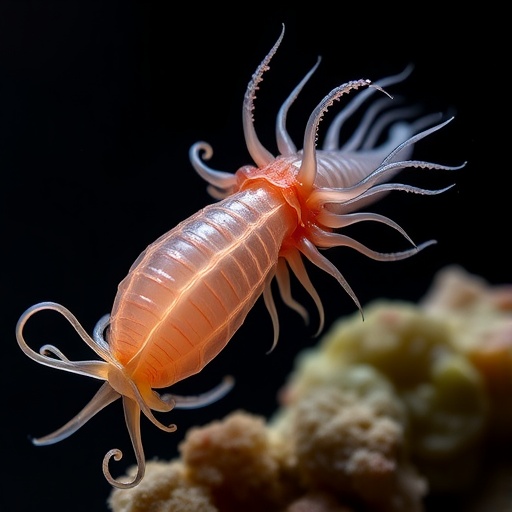
In a groundbreaking study that challenges long-held assumptions about the evolution of animal nervous systems, researchers have unveiled astonishing structural and functional complexity within the aboral organ (AO) of ctenophores, commonly known as comb jellies. These gelatinous marine animals, which emerged approximately 550 million years ago, have long fascinated scientists due to their enigmatic position in the animal tree of life. New revelations suggest that the AO, a specialized sensory structure once thought to be simple, may in fact constitute an elementary brain, fundamentally reshaping our understanding of how centralized nervous systems originated.
Ctenophores possess an array of sensory capabilities centered around the aboral organ, enabling them to detect environmental cues such as gravity, pressure variations, and light — essential modalities for survival in the marine realm. However, until recently, the internal architecture of this organ remained shrouded in mystery. The recent study, conducted by the Burkhardt group at the Michael Sars Centre, University of Bergen, leverages state-of-the-art volume electron microscopy to achieve unprecedented three-dimensional reconstructions of the AO at cellular resolution, illuminating an intricate cellular landscape.
Remarkably, the researchers identified 17 distinct cell types within the aboral organ, including 11 novel secretory and ciliated cells previously unknown to science. This discovery underscores the multimodal nature of the AO and establishes it not as a rudimentary cluster of cells but as a highly specialized and functionally diverse sensory apparatus. The morphological heterogeneity and cellular specialization observed in the AO suggest that this organ orchestrates sensory integration and signal processing in a manner reminiscent of more complex nervous systems.
The intricate anatomy revealed a neural connectivity unlike any previously observed in basal metazoans. The aboral organ is intimately coupled to the comb jelly’s nervous system, which consists of a continuous nerve net featuring fused neurons. Direct synaptic contacts between AO cells and the nerve net create pathways for bidirectional communication, enabling dynamic sensory processing. Additionally, the abundance of vesicles within many AO cells indicates the presence of volume transmission — a non-synaptic mode of signaling where chemical messengers diffuse to affect broader neural regions, supplementing point-to-point synaptic connections and reflecting a sophisticated hybrid communication strategy.
These findings challenge the prevailing dogma that complex centralized nervous systems evolved exclusively within bilaterians and cnidarians. The unique developmental gene expression patterns detected within ctenophores further corroborate this hypothesis. While ctenophores express many genes associated with body patterning in other animals, the divergence in their spatial-temporal gene activity implies that the aboral organ—and by extension the ctenophore nervous system—may have emerged independently, a case of convergent evolution of integrative neural centers.
Complementary research conducted in Japan by Kei Jokura and colleagues, including contributions from Burkhardt, bolsters this reevaluation by mapping the complete neural circuitry underlying gravity sensation in ctenophores. Their intricate reconstructions demonstrated how fused neural networks precisely coordinate ciliary beating to maintain body orientation — a functionality vital for navigation in the pelagic environment. The parallels between these circuits and those found in distantly related marine species suggest that similar evolutionary pressures drove the independent emergence of comparable neural architectures across divergent animal lineages, underscoring nature’s propensity for innovative problem-solving.
Together, these converging lines of evidence deliver a profound message: the origins of brain-like structures and centralized nervous systems likely predate the divergence of major animal groups and may have arisen multiple times through distinct evolutionary pathways. This revelation calls for a reassessment of the evolutionary framework surrounding nervous system complexity and brain origins, inviting further exploration into the molecular identities and synaptic properties of the newly identified aboral organ cell types.
The implications extend beyond evolutionary biology, offering a paradigm for the study of neural integration and sensory coordination in simple organisms. Understanding how ctenophores achieve behavioral sophistication through an unconventional neural architecture may inform biomimetic designs and inspire novel approaches in synthetic neurobiology.
The path forward involves dissecting the molecular underpinnings governing AO cell function and elucidating how these cells contribute to ctenophore behavior. The integration of advanced imaging techniques, genetic tools, and electrophysiological approaches promises to deepen insights into the operational principles of this unique sensory organ.
At the heart of this breakthrough lies the Michael Sars Centre, a hub of marine biological research at the University of Bergen, Norway. As a pioneering European Molecular Biology Laboratory (EMBL) partner, the Centre harnesses cutting-edge technologies to explore the molecular and cellular biology of marine lifeforms. Their collaborative ethos and international network have been instrumental in pushing the boundaries of knowledge around ancient animal lineages and their complex integrative systems.
This research invites us to rethink the evolutionary narrative by illuminating the hidden sophistication of marine invertebrates and the intricate biological solutions they embody. The discovery of the aboral organ’s complexity stirs both curiosity and admiration for the diversity and innovation inherent in life’s evolutionary tapestry.
Subject of Research: Evolutionary neuroscience and sensory biology in ctenophores.
Article Title: The 3D architecture of the ctenophore aboral organ and the evolution of complex integrative centers in animals.
News Publication Date: 4-Mar-2026.
Web References: http://dx.doi.org/10.1126/sciadv.aea8399
Image Credits: Alexandre Jan, Michael Sars Centre/University of Bergen
Keywords: ctenophore, aboral organ, nervous system evolution, centralized nervous system, sensory integration, volume electron microscopy, volume transmission, neural circuitry, evolutionary biology, marine organisms, integrative centers, comb jellies.


